" /> storytelling: September 2005 Archives

take me to the front page of the tttt weblog | back to the current weblog

« August 2005 | Main | October 2005 »

September 30, 2005

maps & illustrations


If you follow along here at all you know that I dearly love illustrated stories and maps. So I'm providing this reference map which would have been handy when I first posted about the bat, the knee, the bicycle helmet, the husband and Dick, the doctor.

she's okay

My sixteen year old daughter who has been driving for a month had a car accident this morning.

She's okay.

She called at 7:20, breathless. Her exact words: Mama, I crashed the car. It's really bad.

But really, she's okay. On the other hand, I'm having some trouble thinking straight.

Here's what happened. She got in the car to head out to school. This is the car we bought her a month ago, okay? Every possible safety feature, six airbags, antilock brakes, etc etc. We live on a beautiful but windy road that follows the coast. At one point it goes through a series of very sharp curves. When she was learning to drive, my heart rate always doubled when she drove those curves. But she handled it well. Except today she didn't.

So 7:20. My husband and I both jump into our cars and screech out of here. She was about seven minutes away. By the time we got there, there was a line of cars backed up. Two men were pushing her car off to the almost non-existant shoulder. I had a good look at her and what I saw was this:

a healthy sixteen year old, shaken up, with abrasions to her arms where the airbag hit her, and what looked like a sprained finger. She could move it, so it wasn't broken.

You can imagine what the next hour was like. Phone calls to police, AAA, insurance, school, etc etc. People, neighbors, stopping to see if everybody was okay. A guy pulled over and said: there's debris in the road. I'll pick it up for you. I was on the phone with 911 at that point and just nodded. The guy comes off the road with a large hubcap and some other bits and pieces. He sez, not even from her car. Maybe this is what caused the accident? I nod, still on the phone. Fast forward to the arrival of the traffic cop.

Let me pause here to say that in this town the traffic cops are well known entities. The two most famous are Rusty and Rick. Big men in their fifties, somber if they've got you at the business ends of their radar guns, but good guys in general. This was Rick. We relocated to a half mile down the road to a parking lot used by hikers, and he took the report. He asked her to tell what happened, and this is pretty much what she said:

I was coming around the corner and the car started to skid to the right and so I corrected and then it slid to the left and I ran into the guardrail.

He was very calm and kind. Spoke to her about driving too fast for conditions (there's a sprinkling of rain, and leaves on the road) and issued a ticket to that effect.

So we're driving her to school and I remember the debris. I said to her, did you swerve to avoid the hubcap and stuff in the road? And she says:

Well, there was a car parked on the other side of the curve and I was trying not to run into him.

Wait.

There was a car parked in the blind spot of a sharp curve on a narrow two lane, no shoulder road?

Yes.

And you lost control trying to go around that car?

Yes.

So, why didn't you mention this to the police? (or us?!)

Um, well. I didn't hit the car.

But the car was part of the reason you had the accident. What happened to the guy from the car?

He came over and asked me if I was okay. Then he left.

I'm thinking now about the guy picking up the debris from the road, where he left it (answer: no longer there), who he was. I am thinking about another man, maybe the same man, sitting there in that blind spot while my daughter's car went head first into a guardrail. Beyond that guardrail is a very long drop, so I'm glad it was there, but I'm wondering about this guy, why he was sitting there in the first place, and why he took off. She remembers nothing about him. Not the first thing. Not his hair color or his age or the car he was driving. Just that he came up and said: are you okay?

We're looking at a minimum of five thousand dollars of car damage, but you know what? It's far more upsetting to me to think about somebody contributing to an accident and then taking off.

So I called Rick the Traffic Cop and left a message on his machine saying we wanted to amend the accident report. It won't make any difference to the insurance company and there's nothing he can do about it, given the lack of information, but it's the one thing I can do. The only thing I can do. Not enough, but the only thing.

All the things in life that go wrong, that irritate or aggravate, all of them are insignificant compared to the fury I feel when I know that somebody did something that caused harm to my daughter and didn't have the guts to stick around and deal with it.

September 29, 2005

doldrums

Doldrums: what a great word for an awful state of being.

In the fall when every day is shorter and it's full dark by seven, the doldrums are just digging in around here. The full effect won't be felt until December when the days are so short it's almost not worth getting out of bed. And yet, I'm usually hit with insomnia at this time of year. A cosmic joke, or hormonal havoc? You decide.

One of the advantages to not sleeping is that I get a lot of reading done. Five novels in a week! Unfortunately three of them were really disappointing. Also, I cleaned off my desk, but now of course I can't find anything. Four in the morning is a great time to harvest Tom DeLay jokes off the internet, but I can't wake up my husband to share them.

Research for the book that's just started: a major character needs to learn a lot about the history, collection, sale and repair of fountain pens. If he has to learn it, I have to learn it. I once had a fountain pen I loved, a Namiki retractable point fountain pen in a lovely shade of green. Then I had my bag stolen at Heathrow and the pen was gone, along with (I added it up) about seven hundred dollars worth of odds and ends, from a leather bound notebook in which I had four years of notes on my daughter's language acquisition, and a signed first edition of The English Patient that was supposed to be a gift for a family member.

That was so upsetting that I never replaced the fountain pen, and now here I am having to learn all about them so this character can do what he needs to do. Here's the question: if I had unlimited funds ala Mr. Gates, would I spend five hundred dollars on a fountain pen? A beautifully made fountain pen, even?

I can't imagine it. I can't imagine spending four times that much on a rare collector's item fountain pen, either. But I'm in luck: neither can my character. He has to learn about the business, but he doesn't have to get on the bandwagon.

Everyone is in bed. Even the puppy boys are snoring, so I think I'll give it a try.

September 28, 2005

academic vs. commercial publishing outlets

There's a lot of action in the blogosphere about ex-DEA agent Paul Doyle's book deal with a university press. The gist is, the book didn't do well because of lack of marketing, and he made very little money. Authors who blog are saying he is at fault because he didn't hire a lawyer to read the contract.

Excuse me, but that's really beside the point. The guy wrote a book and submitted it on his own to a University Press. University presses do most of their work with professors and researchers. I know a lot of university professors, as I was one for twelve years, and I published a lot when I was one of them, so a few facts:

1. University professors and researchers almost never have agents or other representation. They work directly with a university press editor. Because...

2. Advances are minimal, or non-existant. Because...

3. The idea is not to make money off of academic work (although nobody would object -- they just don't expect it to happen) but to disseminate the work. Because...

4. Publishing is crucial to an academic career. When they are talking to a University Press about a new book, academics are most concerned about the prominence of the press. Academics live off their salaries (or try to) and not off of royalties. Marketing and other such real-world issues are secondary or non existant. An agent would raise those questions, but agents don't come into this situation because...

5. Agents only make money if the author makes money. Which isn't the case with a University Press.

So Paul Doyle's error wasn't his failure to consult a lawyer about a contract with a university press. If he had, he would have paid the lawyer a lot of money and then taken a list of demands to the press. And what then? The press passes. Because there are thousands of academics with books out there and they need to publish to keep their jobs and their salaries.

Edited to add: talking here about academic work, not textbooks. textbooks = proverbial different kettle of fish.

Paul Doyle did make some big mistakes:

1. He wrote a commercial book and took it to a University Press. The University Press was probably thrilled. A chance for real sales! Of course they weren't prepared to treat it like a commercial book; that's not what they do.

2. He did this without an agent. An agent would have submitted to commercial presses. If that agent got him an offer, and if that agent was good, he or she would have gone over the contract carefully and negotiated with the publisher. That's what a good agent does: first she sells the book, then she makes sure you get the best deal possible.

Really, it makes no sense to try to villanize the University Press. If you order organic sprouts and tofu on whole wheat bread, you can't complain that it's not the steak with bernaise sauce you would rather have had.

audiobook drawing: a change in direction

There have been a lot of problems with people signing up for the audiobook drawing, and so I think I have to scrap the current approach and come up with something new.

I apologize for the confusion and difficulties.

I've thought about a more traditional way of doing this: sending in a postcard. Given the fact that this is about five hundred bucks worth of audiobooks, I'm thinking people might be willing to go this route. On the other hand, computer-savvy folks might resist having to put pen to paper and find a stamp and mailbox.

So what do you think? Postcard, or some other approach? I'm open to suggestions.

oh, and: hollywood's take on academic publishing

Something that is guaranteed to make any academic convulse with laughter: the way Hollywood (usually) portrays professors who publish. A case in point:
The Mirror Has Two Faces. This is a really terrible movie. It's also unintentionally funny in many places. For example, a mathematician has a new book coming out. There is a release party with lots of food. The book is held up to the adoring crowd. It is a thick book with a dust cover, and there's a full color photo of the mathematician author on the back.

Problems:

1. Mathematicians mostly publish articles, and rarely whole books.
2. They are concise creatures. My husband's PhD thesis was 35 pages long, mostly equations.
3. I've never seen a dust cover on an academic treatise.
4. On the rare occasion you see any kind of dust cover on an academic book, you will not find a photo of the author. No photo at all, and certainly not a full color glamor shot on the back.
5. Book release party? Snort.
6. Food presented elegantly on linen covered tables at an academic book release party? Giggle.

I read somewhere that Barbra Streisand has always regretted not going to college and made this movie to make up for that lack. So really, this movie is her fantasy about college. The real thing would be a disappointment to her.

As an antidote to the awful Two Faced Mirror, try Wonder Boys. Great movie by people who know something about academics, universities, writers and neurosis.

September 27, 2005

the antlers, the gash, the tenant and the police. cha cha cha

I provide an excerpt of an email from a friend. Because I simply couldn't top this.

Today's headline:

"Police: Deer Head Cut Wife in Accident"

The newsworthy part here being NOT the "Deer head cut
wife" but the "in accident." In other words, when the police
responded to a domestic disturbance and had to take
the wife to the ER because she had a deep gash in her
leg where the husband had struck her while wildly
swinging a mounted trophy deer head... it was in fact
accidental. Because they had been jointly trying to
put some hurt on an unidentified man who had come back
to the house to try to retrieve some belongings. So it
was actually a tenant-gone-bad drama.

See? Story material all around you. In the paper, every day.

September 26, 2005

details

Here's the thing. You can write a really good novel -- beautiful prose, great characters, interesting and clever plot -- and still mess up.

Most people don't know very much about the fine points of carpentry, or papermaking, or deep sea fishing. I certainly don't. If I'm reading a novel in which one of these things shows up, I expect the author to have done some research and to get the details right. Will I know if the author is wrong about which tools you'd need to turn a table leg? No. But other people will, and those readers will be jolted out of the fictive trance. For them, the whole infrastructure of the novel has become wobbly.

In a book I'm reading now -- by an author I like, who tells a great story -- the main character has taken a room in a boarding house run by an elderly rural woman. The character observes closely. Wallpaper, beadboard, washbasin. Lots of good detail. Then he gets to embroidered lace curtains and a needlepoint bedspread. He examines the bedspread: handwork, took more than a year.

I want to point out again that I like this author and these stories. Havng said that: oh, no. No no no.

A character who doesn't know anything about needlework could be excused, but we are led to believe that this character does know what he's looking at. This is a guy who has a wide range of talents and interests, and up until now I've trusted him when he gives me his observations. But now my trust has been undermined, for a couple of reasons. You might have lace curtains. You might have embroidered curtains with lace edging or inset lace, but you don't embroider lace. A simple search would have provided the necessary details in under five minutes. antique lace curtains pulled up a website dedicated to this very topic topic with photos and descriptions (a linen panel with inset lace):

Homespun linen handmade figural lace panel or curtain circa 1800's
This is a homespun linen and handmade figural lace panel that appears to have been used as a curtain from the 1800’s, it was de-accessioned from a museum. This linen and lace panel measures 29 inches wide and 76 inches long including the fringe, all the stitching is done by hand. The lace shows figures of Elks and trees in a wrapped type of drawnwork. There is one hand darn, the piece is otherwise in very good condition.

Even worse is the idea of a needlepoint bedspread. Needlepoint is done on canvas. It is stiff. You'll find decorative needlepoint pillows, needlepoint chair covers, needlepoint pictures in frames, but a needlepoint bedspread? In seventeenth century Italy, on the bed of a prince, sure. Not in this day in age. The author almost certainly meant that the bedspread was embroidered, but throughout this part of the novel we get needlepoint, embroidery and cross-stitch used as though they were synonyms.

If this seems minor to you, substitute something you know about. Think about an author who repeatedly confuses boars, sows and gilts or boat and ship:

Ship: large craft in which persons and goods may be conveyed on water. In the U.S. Navy the term boat refers to any vessel that is small enough to be hoisted aboard a ship, and ship is used for any larger vessel; all submarines, no matter what size, are designated as boats, and ship-sized vessels are often referred to colloquially as boats (e.g. steamboats).

So I know a lot about needlework, and this mention of hand-embroidered lace and needlepoint bedspreads really stopped me, took me out of the story, and set me down in front of the computer to write this little diatribe. The moral: check your facts. You may still miss something once in a while, sure, but you will get fewer letters from irritated readers. And for the record: no, I'm not going to write to this author to wag a finger in his face.

I'm wagging it in your face instead. I hope you'll forgive me.

September 24, 2005

overheard: NEW AND IMPROVED!

One younger woman to another: "I don't believe in symbolism."

I can't stop thinking about this. It strikes me as funny and sad for reasons I haven't been able to articulate to myself very well. To try to sort it out, I have been making substitutions, trying to come up with a parallel:

I don't believe in gravity.
I don't believe in mathematics.
I don't believe in the alphabet.

None of these feels quite right, or helps me understand (a) the statement; (b) my reaction to the statement.

Edited to add: I figured it out. If she had said "I am not interested in symbolism" I probably wouldn't have remembered the exchange. It was the idea that she could believe or not believe in symbolism. By saying "I don't believe in" she is claiming the authority to sanction (or banish) a way of thinking. I hereby declare her a twit. What abominable conceit.

But anyway, the rest of the original post:

Next step: a dictionary definition, from the OED;

The practice of representing things by symbols, or of giving a symbolic character to objects or acts; the systematic use of symbols; hence, symbols collectively or generally.

The human mind deals in symbols. Symbols = basic building blocks of communication and cognition. How can you not believe or not believe in symbols?

Back to the original statement. My sense was that the two women were talking about literature, which reminds me of an episode while I was teaching.

The class was introduction to creative writing, and they had been assigned the short story "Spunk" by Nora Zeale Hurston. (Short version: One man kills another man to get his wife; the killer is tormented by the ghost of the man he murdered, who takes revenge from beyond the grave. Very Hamlet.) In the class discussion, somebody suggested that there was no ghost at all, that it was Spunk's own suppressed feelings of guilt and wrong-doing at the bottom of what he was experiencing. The black bob cat which so frightens the previously brave Spunk is a symbol: he is confronted by his own darker side and can't face it.

A young woman in the class was not having any. She said something like: it's a ghost story. Why can't it just be a ghost story? Why do you have to look for something beneath the surface? Does everything have to stand in for something else? It's a cat, for heaven's sake.

In other words: She didn't believe in symbolism.

This kind of thing fascinates me, the fear of looking below the surface. I have a feeling I'm going to be thinking about this for a long time.

That's enough geekishness for one day, I think.

comment delays

Robyn just reminded me of something I've been meaning to say here: If you post a comment with more than one link, it will be held for review. You'll see this message:

Thank You for Commenting. Or trying to.

Your comment has been received. To protect against malicious comments, MT has included an overly pious and rigorous screening system that may decide to hold your comment hostage until I sacrifice a dozen sheep. I am trying to convince MT that this is not strictly necessary, and that people who have posted here many times in the past are indeed safe, and not casino managers hiding in friend's clothing.

However, MT is a tricksy beast and deeply paranoid at heart. If you are reading this message, it could be that it has found a way around my demands that it relax and cut back on the caffeine, and gone back to pouncing on perfectly innocent commentary. Please don't submit the comment again, as this will only encourage further bad behavior on MT's part. I check (with great regularity) the hidey hole where MT puts all the comments it whisks away, and should yours end up there, I will restore it to its proper place in the universe in short order.

If you happen to be someone with a deeper understanding of the newest release of Movable Type than mine (which is a very large club) and you know why MT refuses to take my "trusted commenter" list into consideration, please do let me know.

wiki love

I have a not-so-secret fascination with Wikis. To me, a Wiki embodies the real potential of the internet. So over at the new RBA forum (hint hint) I posted about the possibility of creating a Wiki for the romance genre. I'm going to reproduce the post here in part, because I want to raise some questions. Here it is:

I'm thinking there's something we can start as a community that has potential for real, wide-reaching positive effect for the genre.

A Wiki is an open source encyclopedia type website where any registered participant can add material, and everything is cross referenced and linked. It's easy to use -- no knowledge of any coding language required -- and easy to administer. There is Wiki software built right into this site, we only would have to activate it and do some initial setup.

'Wiki' means "quick!" in Hawai'ian Creole, in part because once a Wiki is established, it can grow exponentially. People suggest categories for articles, write new articles or add to existing ones. Comments to existing articles are a necessary part of the process and evolution.

An excellent overview article about wikis, what they can be and their potential, is here. Here is a shorter, "plain English" explanation. For an excellent example of a hugely successful Wiki, there's Wikipedia.org, which is a good place to explore to see how the whole concept works. Wikis can be small or large, confined to a single topic (many professors and teachers are now setting up Wikis for a particular class) or expansive and inclusive (Wikipedia is the best example of that).

So tell me the truth, is this the ultimate in geekishness? Am I the only person who sees this possibility as fun? I have ideas for a couple different Wikis. My fondest dream is to do one for Dorothy Dunnett's novels. Particularly (or at least, the part that would interest me most) would be the Niccolo novels, but the wondrous think about a Wiki is that when they work, you've got enough people to cover everything. I can leave Lymond for the Lymond lovers.

Or I could, if I weren't the only person in the world whose heart beats faster at the idea.

September 22, 2005

The French Lieutenant's Woman

Right now I am listening to this novel -- which I have read many times -- in unabridged audiobook format. Really excellent narrator, I have to say.

FLW is one of my all time favorite novels, for a couple reasons:

1. Fowles raises author intrusion to an art in this novel. There are long passages in which he simply contemplates the story he is telling, the art of interacting with characters, and the sociopolitical realities of Victorian England. I laugh out loud on a regular basis, not necessarily because he's witty (which he is), but because he is insightful and unapologetic about his need to explore the process. For example:


2. He is such a source of interesting trivia about the Victorian era, and he provides it without hitting you over the head. For example, Charles is always dragging along his ash-plant on his fossil-hunts. I kept imagining him with a potted plant in one hand, which made me giggle. So I went to the OED, and it turns out that an ash-plant is a kind of walking stick:

A sapling of the ash tree, used as a walking-stick, whip, goad, etc.


1850 ‘H. HIEOVER’ Pract. Horsemanship 180 Sit tight, and lay your ash plant well into his ears. 1852 MUNDY Our Antipodes III. i. 26 He..trudges away..supported by his son on one hand and an ash-plant in the other. 1918 P. MACGILL Glenmornan vi. 140 He hit a bullock near him with his ash-plant. 1935 S. SPENDER Destructive Element 82 Stephen..is only recognizable at all by being made inseparable from his ashplant.


3. I have a weakness for strong female characters, and Fowles has created one in Sarah. Every time I read (or listen to) this novel, I want to climb into the novel and sit down with her, tell her a few things about the future -- not necessarily her own, but what things are like for women in the year 2000. I think she would find some comfort in that information.


4. Whenever I really think about the Victorian age, I am reminded again about how religion can be used as a cudgel to beat a whole generation of people into unhappiness and denial. It's important to be reminded of this, and also very scary. The best way to counter the fear is to watch John Stewart, which gives me hope.

September 21, 2005

be vewy vewy quiet


I come from superstitious rural Italian stock. Never mind all those years of education: when push comes to shove, I err on the side of caution.


So you want to know how the writing is going? You'll have to use your cursor to unveil the answer right here: Very well. Long may it last..

If I get to the point of offerings to Minerva, I'll let you know.

September 20, 2005

tardy pirate

Yesterday was International Talk Like a Pirate Day, and I was too busy telling stories about bat bites on the head to do my part.

So here, a day late, is my contribution by way of Anne Bonney. Anne was more than ninety when she and I grapled over her dialogue in Dawn on a Distant Shore, and she always won. Here she's known as Anne Bonney Stoker, or Granny Stoker. Here's one of her better scenes:

The captain of the Leopard kept Stoker with him while the marines searched the ship, took weapons and herded the sullen crew to the quarterdeck.

"Bloody Tory arsh wipers! You can kiss me blind cheeks, fookin' cowards, the lot of youse!" Granny had lost her musket and her knife to a marine three times her size, but her mouth was her own.

She perched on a water cask now, as there was no intact mast left on which to hang her sling. "Give me back me musket. Do you bloody hear me, boyo? I want me musket so I can stick it up your captain's arse! At least he'll die with a smile on his ugly phiz!"

Hawkeye heard Giselle draw in a breath, in disgust or distraction he couldn't tell. It was true that the captain of the Leopard was a younger man, but Hawkeye wasn't so quick as Granny to discount a man with so much firepower at his back. The wind was high and there was no hope of catching anything of the conversation, at least not while Granny kept up her steady stream of curses, spattering the circle of marines with her spittle.
"Godforsook shite-brained maw-dickers!"

Giselle grabbed the old lady by the shoulder. "Annie," she said sternly. "Enough. We cannot hear when you carry on so."

Granny Stoker peered at Giselle anxiously, one hand clawing at her arm. "Ah, there you be, sweetings."

Robbie stiffened in surprise, but the crew covered their mouths with tarry hands, trying to hold back their uneasy smiles.

"Christ," Connor muttered, wiping his sweaty brow with his cap. "She's off again."

The old lady grinned sweetly as if she had not heard this. "You'll fetch me musket, won't you Mary me love?"

"Later," said Giselle evenly. "When the time is right."

The old lady slumped down in Robbie's arms. She hung there, staring glumly at the marines and at the crew gathered around, all of them nervous enough to jump ship and swim for France, if that would keep them off the Leopard. At least the cutters had been signaled back to the fleet, which seemed to take no more interest in them, now that the gunplay was over. The Royal Navy was bound for France; and so might this crew be, by nightfall.

"Cowards," Granny muttered thickly. "Not a real man in the lot of youse."

The captain of the Leopard turned and pointed in their direction.
"Here we are then, mates," said Jemmy with a sigh. "Tories or sharks."

He was a man of no more than average height but with a keen look about him, battle scarred and burned deeply by the sun. His gaze slid over the crew, hesitated at Giselle and moved on to Hawkeye and Robbie. When he came to Granny she reared up and grinned at him.

"Hello, luvy. Come closer and give us a kiss."

"Connor," snapped Stoker. "Take her below."

She puckered up her toothless mouth. "Ooh, that's not very friendly. All these lovely big marines. Look at the doodle sack on that one, will ye? A yard like an iron pike."

September 19, 2005

the bat, the knee, the bicycle helmet, the husband and Dick, the doctor

Rachel reminded me that I raised this topic in the comments here, but didn't tell the story. So here it is. Settle in, children.

Imagine, if you will, an evening in the fall. Here in the Pacific Northwest the weather is cool but pleasant, and it's dark at seven.

My husband the oh so logical Mathematician (remember this for later in the story, please) is in the habit of going to a local brew pub to meet a friend, every Wednesday evening. They drink beer and play darts. On this particular Wednesday evening, the Mathematician decides to ride his bike into town rather than driving. This is so he can drink more beer, of course. He is not only logical, but responsible. He takes off on his bike, headed for what we call the interurban bike trail. It leads from out here in the country all the way into town, and rarely has anything to do with a road where cars have to be considered. Generally very safe, if a little spooky at night. Imagine a trail through the woods, overhung with trees.

Ten o'clock. I am sewing, with my feet up and the dogs draped across my legs. I hear the garage opening: husband home from the Wednesday night outing. He comes in, and stands next to my chair. The fiddly bit of sewing in my hands prevents me from looking up.

--Have a nice time?

--Mmmmm, well. I've had better.

I look up and see that his pant leg is bloody from the knee down to the shoe. Really bloody. I leap out of the chair and into action, and as a part of that, ask a lot of questions of the what - where - how variety.

He is very calm, in spite of the fact that his knee -- visible once I have stripped him down to his skivvies -- is swollen to twice its normal size. He hit a pothole on the way home. He managed to get home, so the knee isn't broken, but it sure looks bad.

I am peering and prodding and dabbing.

--I think we have to go to the emergency room. Or at least I have to call the doctor.

--(nonchalantly) oh, and something else: I got bit by a bat on the head.

I sit down while he tells the story. Riding along the interurban, minding his own business, a bat landed on his head and bit him. Or scratched him. Hard to tell the difference. Blood was let, in any case. I consider searching his scalp for the evidence, and decide this is beyond my expertise. And, a question has occured to me.
--You weren't wearing your helmet.

--Um, no.

--So that's when you fell off the bike?

--Oh, no. The bat bit me on the way to town. I hit the pothole on the way back.

--Hold on. Let me see if I understand. On the way to town, while riding your bike -- without a helmet-- you got bit by a bat on the head. And you went on to drink beer and play darts.

--Yes, that's right.

--Okay. And on the way home you hit a pothole and did this to your knee.

--Yes, right again. But I was wearing my helmet on the way home.

--In case the bat was lying in wait, hoping for another chomp?

--Yes, I suppose so.

--You decided to go ahead into town for beer and darts while bat-saliva and blood was dripping from your scalp?

--Why not?

Fast forward to me on the phone with the emergency room nurse:

--...it's very swollen, but it doesn't seem to hurt him much.

--it sounds like a large hematoma. That could wait until tomorrow morning, if you call your doctor first thing. I didn't tell you this, by the way, because we're not allowed to make any kind of diagnosis on the phone.

-- So while you're not telling me things, I should mention that he also got bit by a bat on the head.

[pause]

--Maybe you better start from the beginning.

.... and then he came home.

--Wait. Let me get this straight. He got bit by a bat on the head ...

...and went on to the brew pub to meet his friend for beer and darts.

--He does know that bats are often rabid?

--He figured it could wait until tomorrow. I suppose he's a little jaded. He's had the rabies series before.

--Do tell.

--A feral cat scratched him.

--Where?

--On the arm.

--No, I mean, where was he?

--Greece.

--Huh. When was this?

--A long time ago. When he was a kid.

--And they gave him the rabies series in Greece?

--They gave him the rabies series, but not in Greece, in England.

--How did England get into the story?

--He's English.

--So he's visiting here? Maybe he should go home for the rabies series this time too.

--No, he lives here. He's been here for twenty years.

--Okay, so listen. He's out drinking beer, do you think maybe he imagined the bat?

--No, he didn't imagine the bat. The bat bite was before the beer. The knee was after the beer, but he didn't imagine that either, because I'm looking at the knee.

--Have you looked at the bite?

--Must I?

--This is the strangest phone call I've had in a while.

--Imagine how I feel.

When I got off the phone with a plan (to call our doctor first thing in the morning about the knee and the bat and the bite on the head), the Mathematician was deeply asleep with his swollen knee up on a pillow. The beer, I think, or all the excitement.

The next morning we called the doctor's office and spoke to Sue, Meg and Dick's nurse. The conversation with the emergency room nurse pretty much repeated itself, after which the Mathematician went in to be seen.

Dick let the blood out of his knee and looked at his scalp, and Sue looked at his scalp, and then they called the Health Department and the Health Department wanted to see him, and they all looked at his scalp, and then he was sent to the emergency room, more looking at the scalp, including by the nurse I hadn't talked to the night before.

Finally they gave him the first round of rabies shots, and he had to go in every week for four or five more rounds of shots, I forget now, because to tell the truth, I really didn't want to know.

So that's the bedtime story, complete with a moral, which I don't think I have to spell out.
oooh. shiny mice.


Robyn sent this link to artists in the Urals (Ekaterinburg, to be exact) who have worked their magic on computer hardware.

Something for my holiday wish list. Or many somethings.

For your information, the Wikipedia people have this to tell us about the place:

Yekaterinburg (also transliterated as Ekaterinburg or Jekaterinburg) (Russian: Екатеринбу́рг) is a major city in central Russia, the administrative center of Sverdlovsk Oblast. Situated on the Asian side of the Ural mountain range, at 56°51′ N 60°36′ E It is the main industrial and cultural center of the Ural region. Its population of 1,300,000 (2002) makes it Russia's fifth largest city. Between 1924 and 1991, the city was known as Sverdlovsk (Свердло́вск), after the Bolshevik leader Yakov Sverdlov.

I really adore the funky architectural keyboard -- and now I'm wondering why they don't have a coordinated mouse.

medical conversations

When I lived in Ann Arbor, I had a good friend who happened to be a physician who specialized in infectious disease. Her husband was a surgeon. He was also an avid hunter and trapper. These were great friends to have while I was writing Into the Wilderness.

Me: Jim, I need to shoot somebody with a rifle. He's in the bush. Here's the thing: he's got to survive, and without immediate medical attention.
Jim: Shoot him in the buttock.
Me: Jim, this is the good guy. His dignity has to remain intact.
Jim: Okay, go for a lung shot then. Right lung, about here. (Finger prod) That will avoid all major organs. If he's in good shape and the rifle isn't loaded for bear, he's got a decent chance.

Thus was Nathaniel's injury conceived.

I've fallen out of touch with these friends, but I have other medical consultants. It seems doctors (at least, the ones I know) are happy to talk about fictional diseases and injuries. I'm guessing it's more fun to be cornered at a party to talk about a fictional patient that it is to be cornered by the friend of a friend with an odd wart.

My Neighbor Bob and his wife Sheila had a party on Saturday, and at that party were my doctor and her husband, also a doctor. These are people I know outside of their professional capacities. Meg is a great person to talk to about books and kids and almost anything, and so I zeroed right in on the two of them to corral them into a fictional consultation.

Me: I've got to kill somebody.
Dick: (eyes lighting up) Need some ideas?
Me: Always. But this particular time, I know approximately what kills the guy.

Meg and Dick lower their heads to listen. My mother-in-law, who is also a physician, gets this look on her face whenever you ask her a medical question. The professional, serious look. In her case there's a sound that goes along with it. You give her a symptom, she makes a low, confirming, supportive sound in her throat. The sounds says: I'm listening. I'm not giving anything away. Go on.

So Meg and Dick* are listening. I tell them I need to kill off a healthy, active 30 year old. What can I give him that will put him on the heart transplant list? He needs to die waiting for a transplant. At home.

An interesting discussion follows, in which many words of six or more syllables are bandied about. Meg and Dick consult, and offer me cardiomyopathy following from viral myocarditis.

This is just what I need, I tell them. Or rather, it's just what the character needs. Poor guy.

Meg and Dick promise me a list of medications and symptoms, but of course I have to do some of this work myself. I settle down with Google. The most common infectious agents for myocarditis are:

• Viral (e.g., Coxsackie virus)
• Poliomyelitis
• Diphtheria
• Toxoplasmosis
• Trichinosis
• Trypanosomiasis
• Acute rheumatic fever

heartfailure At this point I remember NYPD Blue, and the way the writers killed off Bobby Simone with viral cardiomyopathy. A quick google brings up the four stages of heart failure, and I remember Bobby going through all of them. I remember my father going through them too, because he died of congenital heart failure.
But this is research that has to be done. I push ahead on google. An hour later I'm in a vague sweat and I'm having some trouble breathing. Did I mention that heart failure was what killed my father and six of his brothers and sisters? If this weren't the perfect way to knock the character off, I'd be backpedaling by now. In fact, I do backpedal, in a way. I look up hypochondria. I look up cyberchrondria:

Hypochondria, the excessive fear of illness, has now been overtaken by cyberchondria—the same fear made much worse, fuelled by volumes of easily-accessible material available on the Internet.
[Daily Record, May 2001]
Such are the dangers of researching fictional death. You are forced to look at the possibility of your own. You also spend hours and find that at the end of them, in addition to higher blood pressure and a racing pulse, you've got a blank manuscript page. It's the curse of an active imagination, and a fast internet connection.
---------
*I was sure that I had posted on the story of the bat, the husband-without-a-bicycle-helmet, Dick, and the rabies shots, but a search brings up nothing. Sometime I will have to tell that story here.

September 17, 2005

the thing about names

A really good writer should be able to cope with a character's bad name. Because there are such things. I quote Harry:

Harry: Obviously you haven't had great sex yet.
Sally: Yes I have.
Harry: No you haven't.
Sally (raised voice): It just so happens that I have had plenty of good sex.
(The whole restaurant looks at Sally.)
Harry: With whom?
Sally: What?
Harry: With whom did you have this great sex?
Sally: I'm not going to tell you that!
Harry: Fine, don't tell me.
Sally: Shel Gordon.
Harry: Shel? Sheldon? No, no, you didn't have great sex with ... Sheldon.
Sally: I did too.
Harry: No you didn't. A Sheldon can do your income taxes. If you need a root canal Sheldon's your man, but humping and pumping is not Sheldon's strong suit. It's the name. Do it to me 'Sheldon', you're an animal 'Sheldon', ride. me. big. 'Sheldon'. Doesn't work.

I repeat: in spite of the fact that Harry really can't be denied his point, a good writer should be able to make a character called Sheldon, Harold, Kaspar, Lennie or any other name into whatever that character needs to be. Sheldon the Wonder Slong, Lennie the Best Dressed Manhattanite, George the Navy SEAL. All these things are possible, or should be.

And the same is true, of course, of female characters. Millie the vascular Surgeon, Trudy the Prince's one true love, Shania the professor of comparative literature.

It's tough to overcome the associations attached to names, but it can, it must be done. Because I'm running out of names I like. Here's a question. What would you think of Author X who writes say, a novel ever one or two years, not a series, you understand, but each novel independent of the other. And in every one of those novels, the main character's name is John. Different last names, but first name: John.

Would that strike you as (a) weird (b) lazy (c) off-putting (d) pretentious (e) all of the above (f) none of the above.

John is a good, strong name. I like it. If my daughter had been a girl, most likely her name would be John. Morever, whenever I come up with a different name for a main character, the character objects. For example:

X: My name is John, but if you really won't acknowledge that, I want to be called George.

Me: But I thought we settled this. Your father the constitutional scholar named you James Madison Trevor and your brother Thomas Jefferson Trevor. I can't call you George. I just can't. Not in this day and age.

X: Don't like the name James. That's just not me. And anyway, what are you going to call me for short? Jim? I'll quit. Jamie? You can't do that, or the masses will start howling that you're copying la belle D.G. And while we're on the subject, Trevor doesn't work for me either. Unless it's preceded by John. John Trevor, good strong name for a good strong character.

Me: You're nothing like John Grant from my last novel. I'll get you confused.

X: If we're nothing alike, why would you confuse us? Your logic is sliding.

Me: Maybe I won't confuse you, but the readers might.

X: Tell the story right, and they won't care.

So I'm here to ask: would you care?

September 16, 2005

bits and pieces

Alison sent this link to a review of the new Pride & Prejudice movie. It's not good. I'm sad, though not surprised -- and I'll still be first in line. I can't resist.

It may be true that nobody will ever surpass the BBC miniseries version, but they'll keep trying, and that's okay by me. The only improvement I can think of is if they redo that exact script, all eight hours, with my casting. Three crucial parts:

Elizabeth: Francis O'Connor (who did such a splendid job in the 1999 version of Mansfield Park)

Darcy: Colin Firth, of course. Ten years ago I would have said Daniel Day-Lewis. He might still be able to pull it off.

Lady Catherine De Bourgh: Dame Judi Dench. I'm absolutely sure she's going to be the saving grace of the new film version.

Time to stop fantasizing about that, I think.

Also, I had an email from Màili at McVane, bringing up the topic of languages spoken in Scotland, historical linguistics, and the writing of fiction. Apparently I missed this post of hers the first time around. To which I can only respond: aw, shucks.

It's an interesting topic -- or at least Màili and I find it interesting. Maybe we should initiate some prize for the best/worst representation of language use/distribution in a novel.

And filed under absolutely of no importance at all, but distinctly weird: I had a long dream last night in which I found myself riding around town in a huge old convertible with Oliver Platt. I don't think I've ever dreamed about him before. I can't figure out why I did last night, except that I was thinking yesterday about the Showtime drama Huff, and wondering when in the heck it would come back for the second season.

EMAIL ALERT

If you've emailed me at one of the pobox.com addresses and had your email bounced back, I apologize. The settings were apparently slightly off kilter. If you try again, things will most probably go well this time. I hope.

I only learned about this because I got a very nice letter from a reader in England who finally wrote the old fashioned way after giving up on the bouncing email problem.

Back to work.

September 15, 2005

atmospheric cover art


The cover design for this novel brought me to a full stop walking through a bookstore. I love the use of color and the image of the half decapitated woman in mourning. Note the way the landscape of the civil war south is seen shimmering through her heavy Victorian widow's weeds. The delicate scroll work lifts the whole thing up off the page.

This book reminded me I haven't posted on this topic for a while, and so here you go: a very atmospheric, creepy, beautifully composed piece of book design.

This is a novel I will probably read at some point, but I will approach it gingerly.

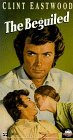
It am reminded of The Beguiled, a 1971 movie directed by Don Siegal and starring a very young Clint Eastwood as a wounded Union soldier who is taken into an isolated school for girls in the deep south. Geraldine Page is the headmistress, a loyal confederate and a woman in serious need of quality time with a therapist. Psychosexual creepiness, and no Dirty Harry anywhere to be found.

dreaded questions, revisited

There are different kinds of taglines. Most recently people seem to be calling the pithy-thoughtful-funny bit they attach to the bottom of outgoing emails taglines. There are millions of them. One I used for a long time:

The subliminal thought for today:

I stopped using it because sometimes people emailed back to say the tagline was cut off, and how did it end? That was too depressing.


Taglines are used in marketing and advertising in an attempt to make you remember Brand A when you go to the grocery store or start car shopping. In the entertainment industry, taglines show up on movie posters. That clever one liner that makes you pause is designed to tell you something about the movie in a way that makes you want to see it. He's the first kid to get in trouble before he was born (from Back to the Future). Every father's daughter is a virgin (from Goodbye, Columbus); Just when you thought it was safe to go back in the water (from Jaws 2).

From what I can tell by my brief foray into the Amazon database, taglines on novels are historically pretty rare, but are becoming more common. Most usually you'll find them not on the front cover (reserved for necessities like title, author, the infamous BLURB, and review quotes) but on the back cover or inside flap with the rest of the marketing copy. Jenny Crusie, who has cornered the market on great covers on the romance side of things, also seems to come up with the best taglines. I suspect she hunted down some marketing genius, locked him or her in the basement, and allows food and water only as payment for good taglines, like this one for Faking It

What has reality ever done for you?

Taglines seem to show up when there's some ambiguity about a title. As is the case with Tied to the Tracks. Leona liked my title enough to fight for it when the ad people hesitated because, in advertising speak, they couldn't imagine how to market it. So I get to keep the title, but now there's the issue of some kind of tagline that will help convince the casual browser that it's worth a go. When the novel went out to Putnam it already had a quotation on the second page: "Happiness is the china shop, love is the bull." As a tagline I think that works quite well, but apparently readers can be a very literal lot, and they will get irritated when they realize, three or four chapters in, that there's no china shop in the novel. I personally think most people are familiar with the idea of a "bull in a china shop" and more over, I'm not one to cater to those with such a literal and narrow bent, but I am only one voice in the wilderness. The ad/marketing people will prevail.

So I continue to ponder. Someplace on the web I found a suggestion about coming up with a good tagline: make a list of all the words that come to mind when you think about the thing being blurbed, and then play with the list. I play with words all day long, and so this doesn't particularly appeal to me, but it may come to such an end. Or, I may get a phone call with the (not completely unexpected) news that they've come up with a better title after all, in which case this will all be moot.

Which brings me to the topic of tomorrow's dreaded question, on the matter of cover art.

September 13, 2005

dreaded questions, parts II and III

2. So, any thoughts about a TAG LINE?

This one is hard, I'm still thinking about what to tell you. So hold on.

3. Do you have a author bio for us to use?

Every bad girl instinct I have surges forth when I get this question. Oh sure, I'll write an author bio. Not necessarily MY author bio, but here goes:

***

The author lives on twenty ocean-side acres on Maui with her family, ten small dogs, and a household/office/garden staff of five. As her last three books stayed on the best seller list for two years each, she's not in a hurry to write the next one and so she spends her time in art classes and taking her daughter shopping.
***
When she's not writing, the author is on the set of Farscape, the critically acclaimed sci-fi television show which she personally resurrected from undeserved cancellation with the billions she made on her last novel.
***
Really, do you need to know anything about the author? Don't those wonderful cover blurbs from Candace Bushnell, Oprah Winfrey, Rebecca Wells, Alice Munro, Elinor Lipman, Jennifer Wiener, Annie Proulx and Ann Rice make it clear that you should be sprinting to the cashier with multiple copies of this novel?
***
While you are spending time reading this totally fictitious blurb, inside the book the characters are talking about you while they have great sex and good times. Ooops, too late. You missed it.
***


Anybody care to write my author bio for me?

anniversary

I started this weblog two years ago today. As of right now there are 761 entries and 2,102 comments. Last month almost 7,000 unique visitors came by 23,000 times in all.

In that time I've written about 300,000 words: Tied to the Tracks is about 110,000 and Queen of Swords, thus far, just short of 200,000. That doesn't feel like a lot to me, but I'm trying to pick up the pace.

Back to work. More later about tag lines.

September 12, 2005

dreaded questions

You know that Tied to the Tracks is coming out next summer with Putnam, or at least, you know that if you've been following along here. I'm really pleased about the whole Putnam thing for lots of reasons, some of which I can't mention here.

I've also mentioned that Leona Nevler -- my new editor, the one who acquired TTTT for Putnam -- took me out to lunch when I was in Manhattan this past July. And that she is a very smart, funny, kind person. Also, she has great taste in novels. Obviously. We haven't had a lot of work to do together yet, just some very pleasant discussions along these lines:

Leona: I was thinking about [character] and I'm wondering if maybe she has too many tension headaches.

Me: Did a search. You're right. I'll fiddle.

Leona has that Chanel-suit, Jackie Kennedy, slender elegance thing going on. Which would normally make me nervous, but she's also funny and kind and easy to talk to. Also, I realize as I type this, she's awash with the Jewish mother vibe of the best kind, which is a lot like the Italian mother vibe. To summarize: Very professional, but approachable. Are we clear on that? No reading between the lines here, I want to make it clear: I have nothing but goodwill and cheer for Leona.

And still: there are a few unavoidable exchanges that are common to every editor-author relationship. Questions editors always end up asking sooner or later, that the author doesn't want to think about:

1. Do you have any ideas for authors who might be willing to read [title of upcoming novel] and comment?

My translation/interpretation: we need cover blurbs. We'd like cover blurbs from Really Big Names, and it would be great if you could jump in here and add some to our list. Any chance you're best friends with/ grew up next to/ saved the life of Candace Bushnell, Oprah Winfrey, Rebecca Wells, Alice Munro, Elinor Lipman, Jennifer Wiener, Annie Proulx, Ann Rice?

The whole cover blurb thing is agony, especially as it's a racket, and everybody knows it's a racket. I have been burned too many times by a cover blurb to trust them. Even a cover blurb from an author I adore is absolutely no guarantee -- and no, I'm not going to name names.

And yet, you must have them. Unless you are John Grisham or J.K. Rowling or someone else of that stature, the cover blurb is important. I admit, I look for them so that I can ignore them. Note: I look for them, and then I ignore them. If they aren't there to start with, I do wonder.

So Leona asked me the cover blurb question in her usual professional, friendly way. And still I clenched at the idea of providing a list of names of people who won't say Rosina Who? People who might say, Sure, send it along. People who won't email me immediately and say, what were you thinking, giving out my name? The gall. The chutzpah. Most important, people who won't say, oh, well. If it were another book like Homestead.

You see, the already significant challenges of coming up with names is compounded by my own odd history. Because there are two of me. The Sara-Donati me who writes big complex historicals with lots of plot and characters, and the Rosina-Lippi me who wrote Homestead and has a half dozen short stories in literary journals. A lot of readers cross this boundary without any problem, but many other authors and critics seem to have a harder time. And on top of that, Tied to the Tracks isn't like the Wilderness novels or like Homestead. In fact, it's pretty hard to put into any kind of box at all. Contemporary, a big love story, a bigger love story, social commentary, serio-comic. I actually don't know how they are going to market it, as romance or general fiction. And thus my problem: who the heck to ask for blurbs? My romance-oriented colleagues, or the litcrit MFA types?

I get a headache thinking about it.

Tomorrow, the next dreaded question: any ideas about a tag line?

contest update

There are now 103 people in the drawing for the audiobooks. We are one-third of the way there.

A couple of those 103 haven't replied to the confirmation email, though. If that's you, take care of it, okay? If you're unsure of your status, don't worry. I have a way to make sure everybody is where they need to be before the actual drawing.

strong images

Rachel and I were just comparing notes on Amis's The Information, and an image from that book jumped into my head. It's always the first thing that comes to mind when I think about that novel. The main character is thinking about the novel Middlemarch (if you've never had the pleasure, the main character, Dorothea, ends up married to a dry old mean-spirited snob called Casaubon). That coupling makes Amis's character think of trying to feed a raw oyster into a parking meter coin slot. I don't have the book nearby or I'd supply the exact quote.

I remember first reading this and laughing out loud in surprise and guilty pleasure. Because it's mean, but it's also true and most of all, it's the most awfully vivid image, almost too much.

So that made me think about those occasions when an author really hits the mark. Something so on-target and perfectly pitched that it rings every bell. It doesn't happen often for me while I'm reading, but when it does I'm appreciative. I get those moments most often from Gore Vidal, but I've had them with other authors as well. Scott Turow once wrote (though I can't remember which novel it was) this about one character's evaluation of another character (in paraphrase; the original was pithier): [name] was always congratulating himself for not being more stupid than he already was.

If you have any nuggets that sounded so right to your ear that you still remember them, please tell me about them in the comments.

September 10, 2005

The blankety-blank's Daughter

It's really hard to come up with a good title for a novel. Really, really hard. Most authors will tell you about sleepless hours spent coming up with titles that marketing departments then scuttle. I tend to get grumpy when I see a piece of art in a museum with a sign next to it that says untitled. I can just imagine what my editor would say if I tried to sell her on Untitled: a Novel. Novel without a Name. Nameless Novel. Nope. Just won't wash.

Also, titles can't be copyrighted, so they do get reused. As so many novels are published every year, more titles will get recycled. It's inevitable.

And of course there are fashions and trends in novel titles, as there are fashions and trends in cover art and narrative voice. One trend that has got me a little irritated is this one: The (insert)'s Daughter. Below is a list I came up with after ten minutes with Amazon's search engine. It was amazingly easy. Grab any old profession or designation, add the genitive case marker ('s) and almost every time you'll strike it lucky. A few of these I already knew about and didn't have to search for.

Your assignment, if you chose to accept it, is this: figure out (without going to Amazon) which two of these titles are made up by me. That is, two of these titles I didn't find in the Amazon database.

If you're wondering about the equivalent construction The (insert)'s Son, you'll have to work a lot harder to find examples. I'm not going to contemplate the reasons behind that. At least not now.

The Hummingbird's Daughter
The Pope's Daughter
The Memory Keeper's Daughter
The Demon's Daughter
The Thief's Daughter
The Rector's Daughter
The Squire's Daughter
The Poet's Daughter
The Professor's Daughter
The Executioner's Daughter
The Beekeeper's Daughter
The Innkkeeper's Daughter
The Bonesetter's Daughter
The Storyteller's Daughter
The Preacher's Daughter
The Transvestite's Daughter
The Woodsman's Daughter
The Duke's Daughter
The Con Man's Daughter
The Snake-Catcher's Daughter
The Immigrant's Daughter
The Wizard's Daughter
The Millionaire's Daughter
The Piano Man's Daughter
The Teacher's Daughter
The Fat Man's Daughter
The Alchemist's Daughter
The Sea-King's Daughter
The Legate's Daughter
The Sperm-Donor's Daughter
The Vampire's Daughter

September 9, 2005

the contest, and research

Just to bring you up to date on the contest, a couple of points:

1. Ten people still are hanging in limbo because they haven't replied to the confirmation email. If that's you, get in touch so we can fix it, okay?

2. Right now there are 83 people signed up, not counting the ten mentioned above. So put out the word, because we have to hit 300 before I'll schedule the drawing. You'll notice the box to the right with a link to the sign-up page. Point people to that.

3. I finally added up what it would cost to buy all four books on unabridged cassette. With shipping, tax, etc, it would come to $492 for me. Also, I get a limited number of these things from Books on Tape. This is not a piddly paperback giveaway we're talking about, just so you know.

Change of subject.

Two mornings a week I work on Pajama Jones. I'm still in the preliminary stages, drawing town maps and writing up character reports and struggling with names -- which is shorthand for the most important thing, getting to know the characters. I get a great deal of pleasure out of all this. I love planning the town. My daughter says I should get SIM City, so I could really go crazy putting it together (the town's name, at the moment, is Greenbriar, Georgia).

When I was very young I remembering going to play at the house of two girls my age who lived around the block on Larchmont Street. They had a playroom in their basement, and the whole thing was taken up with a city they had built out of shoe and candy and jewelry boxes, cans of all sizes, and blocks. I was enchanted, and also, I was infected with the city building bug. I've always done this, but it didn't become legitimate work until I started writing novels.

So I said to my daughter, I said: speak to me more of this SIM City. And she went on to tell me about the possibility of growing my city from the ground up, starting with major geological events to get the land formation features I want. Apparently the software would remind me about the need to locate the sewage treatment complex someplace appropriate, along with other crucial but generally invisible matters. There are discussion boards where people wax philosophical about everything from schools to public parks. The SIM City website makes it sound like a career move:

As you build a city, the regions around you become important as you can set up deals to provide water, power and more. You can even work to build industrial parks and bedroom communities!

I admit, it sounds kind of interesting. It also sounds like the mother of all procrastination techniques. I'd have to upgrade my mac, because SIM City is ravenous when it comes to RAM. I'd have to learn it. I'd be obliged to go foraging for information and background and samples on the internet. Then there are the forums. I'd end up doing so much research that I'd most likely be qualified for a degree in urban planning. So, no. I'm not going to go that route, no matter how interesting it seems to me. I'll use pencils and graph paper and sometimes Photoshop, as is my usual approach.

On other research fronts, these are some of the topics I've been going after for Pajama Jones: Swedish car manufacturers in the U.S., how car factories are planned, historic building laws and procedures, architectural firms and how they work and get paid, famous philanthropists, what kind of education a head buyer for a high-end specialty store would have, designers of bed linens, designers of pajamas, the treatment of phobias, psychiatrists who specialize in phobias, the causes and treatment of bacterial endocarditis, heart transplant support groups, heart transplant procedures.

If you've got some good information to share on any of these topics, please do speak up.

September 8, 2005

bookstore struggles

Generally I don't read a lot of medical thrillers. Just not my cup of tea, with a few exceptions. It's actually rather odd of me, as I've always been interested in medicine and almost went in that direction in school. And then there's my life-long, inexplicable interest in medical clerking. I know, it's nuts.

Tess Gerritsen writes medical thrillers. I've read one or two of them and liked them quite a lot. I like her blog too, as I've mentioned here on occasion. Now she has a really painful, wonderful post about what it's like to be an author on a bad day. The weblog is here, but there isn't a way to link directly to the post, which is dated 8/24.

Stephen King
Here's what happened: While in Hawaii she went to various bookstores to sign stock of her new novel (Vanish), and she got a really awful reception almost everywhere. Unless you are Stephen King (you're not, I assume, but do check the photo to the right to be sure) or somebody else so high profile that your name and face are immediately recognizable, this kind of thing will happen. No doubt it happens to Alice Munro and John Updike too. The list of people it doesn't happen to is short -- I can think of maybe three authors. Of course, that's small comfort when you're crawling away with your tail between your legs, I know. One small thing you can do: Don't tell them you're there. Just sign all the damn stock they've got on the shelf. Returns, my ass.

My own worst experience along these lines has to do with our local Barnes & Noble. When we first moved here I went in two or three times to sign stock, and I got the same kind of treatment Tess did. Even after I introduced myself, it would happen again the next time. Of course, I wasn't just passing through town -- I live here. But I don't shop at B&N, so I didn't get too upset about it; I just stopped going in to sign stock.

Then about two years ago Susan Wiggs, who writes great novels and is also a good and thoughtful person, contacted me to say she was going to be at our B&N to do a panel on romance writing, and would I be there too? Well, no. I hadn't been asked. The B&N store had invited four people who write romance from all over the western side of the state, but not me. I was, I admit, a little affronted. So Susan asked the B&N person about all this, and the next thing I got was an email, which said something like this: "We understand you'd like to participate. We can make room for you." Of course Susan did not put it to them this way. It was their less than charitable interpretation. She sez: did you realize Sara Donati lives in your town? And they say: well, gee, sure, if you insist. Not the most diplomatic way to invite an author to spend an hour at your store.

I responded. Okay, I responded a little testily. The person in charge of organizing got all affronted and insulted and the exchange did not end well. Just as well that I don't shop there. I think they might have put up my picture behind the counter. I imagine they've written on it in black marker: crazy author of insignificant novels with delusions of grandeur. confiscate all writing instruments. call the cops.

However, whenever I have a new novel out, I do call them. I block my caller ID, and I ask them if they have the new novel in stock, and how many copies? I do that a couple times. And then I have my friends do it, too. You could call them, if you like. When the next novel comes out I'll post their phone number. Just in case you're curious, and want to know.

September 7, 2005

best single weblog entry on the Katrina disaster

right here.

My government has done many things in the past few years to make me ashamed and angry. Now I am frightened.

book weblogs in the news

"Book blogs' buzz grows louder" from The Christian Science Monitor. Here's what strikes me as the pivotal bit:

In years past, literary discussions were largely limited to academia and the occasional book club, says Sarvas of The Elegant Variation. "What the blogs have really done is encourage inclusion, encourage people from all walks of life to join the conversation...."

But is anyone listening? Many book bloggers seem to be talking only to themselves, judging by the dearth of postings by outsiders on their sites. And it's hard to tell if bloggers' mash notes translate into sales at Barnes & Noble.

I've said it before and I'll say it again: those of us who are comfortable on the internet tend to forget that we're a fairly small universe. Pick ten names out of your past and see how many of them show up if you run them through google (and I'm not talking about address listings, either). In fact, I'll do it myself, publically. When I have time.

The point I'm trying to make is that few people will ever make a name for themselves -- in the real world -- on the basis of a weblog. Me included.

Edited to add: C Max Magee has some interesting thoughts on this, and comes pretty much to the same conclusion.

September 6, 2005

writerly oddities, continued

continuing from yesterday's post:

I think many other writers find themselves in the same place I am now, in conflict with my subconscious. It plans terrible things for my characters, and I have to struggle to reestablish balance. The characters chime in, too, complicating matters. Are all writers of complicated novels vaguely schizophrenic? Is there some other, better term for this splitting of the mind into factions that bicker about imaginary people? Would I have been burned at the stake in the fourteen century? No doubt.

My daughter starts her junior year of high school tomorrow. That seems almost impossible to me, but it's true. For all of her life she's been dealing with a mother who is a little fractured of mind. Once when a clerk in a store asked me the same question three times before I heard her, my daughter, then age four, interceded. Mama's got a sentence in her head and it's got to come out, she explained. The clerk was more alarmed than charmed. I can't remember how I smoothed that one over.

At age three she was so familiar with my creative process and my fictional characters that she came to the conclusion that she had been created in the same process. She asked me, Mama, did you and daddy color me? She knew that something had gone into the process beyond words on the page -- she was a physical being, and those characters I was struggling with never materialized.

Now she's a very good writer, my daughter. When she was a little younger she spent time making up whole fictional families. She gave them names and occupations and phobias and conflicts. Maybe she still does this, I'm not sure.

Is this a matter of conditioning -- has long exposure to my odd writing mind rubbed off on her -- or is it something she inherited, as she inherited her father's long, thin frame and my hair? Wil she outgrow it, or will it take over her life so that when she has young children they have to make excuses for her to total strangers? I don't know what to wish for, and so I hold my breath and watch.

September 5, 2005

word counts

In the past I've made a habit of checking my word count when I'm done writing for the day. When things are going well, a word count that jumps up day by day is encouraging. Success feeds on itself.

When things are not going well, I hate the damn word count feature. But it's still important, and so I keep track. Except for the last ten days or so, when I simply forgot. Never checked, never thought of checking. Today I realized that, and when I went to look, it turned out that I was averaging 1,800 words a day over the period I missed. Which is good, actually.

What an odd thing the subconscious is. A stubborn, self absorbed, infantile mirror image hiding in the shadows, poking and prodding and whispering.

Just now things are not going well for Hannah. A bump in the road, I'd have to say. I actually didn't see it coming, though my subconscious did, I've just realized. But she's going to be okay, and things will turn around soon. I'll see to it, by hook or crook.

September 4, 2005

checking in

I don't have the heart to write much, given what's going on. I will say that Robyn's link to Anne Rice's essay (in the comments to yesterday's post) zeroed in on those elements of what's happening in New Orleans which disturb me most.

On a really insignificant matter: if you signed up for the audiobook drawing, you have to be sure to reply to the email you'll get asking you to verify your information. Please check your junk mail filters to make sure that email doesn't get stuck. If you don't take that step, you won't be in the drawing. Right now there are almost thirty people who haven't yet responded to the confirmation email, and are thus stuck in drawing limbo.

September 3, 2005

New Orleans novels, and other bits

John Scalzi, on what it means to be poor.

Jesus' General's Republican Jesus on the same topic.

The Constant Gardner -- one of the best movies of the last five years.

And this excellent question:
This whole tragedy has made me want to reread Penelope/Penn Williamson's crime novels, "Mortal Sin" and "wages of sin" which are set in New Orleans. I am sure there are lots more novels that pay homage to the city. Can anyone suggest any good ones to read?

Posted by: Jacqui at September 2, 2005 11:13 PM

A quick list of the novels set in New Orleans and the greater Gulf area devastated by Katrina (the ones that come to mind first, in no particular order):


If you have a novel to add to this list, please comment and I'll keep a running tally.

September 2, 2005

the big audiobook contest

drawing closed, contest done. Kate Rose is our winner.

this one I can't leave alone

I try not to talk about politics here, but my husband sent me a link and until I get something off my chest I won't be able to concentrate on anything.

Speaker of the House Dennis Hastert on the disaster in New Orleans, as reported in the Washington Post:

It makes no sense to spend billions of dollars to rebuild a city that's seven feet under sea level, House Speaker Dennis Hastert said of federal assistance for hurricane-devastated New Orleans. Democratic lawmakers from Louisiana were quick to disagree Thursday and Hastert sought to clarify the comment during the day.

"It looks like a lot of that place could be bulldozed," the Illinois Republican said in an interview about New Orleans Wednesday with the Daily Herald of Arlington Heights, Ill.

Aside from the monumental lack of sensitivity displayed by this leader of the Republican party, a few things jump out at me.

1. There are still people trapped in attics who need rescuing. Do we bulldoze them, too?


2. The people without enough money to flee the city are living in hovels in sport stadiums without clean water or sufficient food. Maybe that would be a more appropriate topic for action.


3. So it would be expensive to rebuild New Orleans. How much money exactly have we spent in Iraq? How much on the rebuilding of Bagdad? Think how much money we could have saved and how many lives, too, if we had just sent over a fleet of bulldozers to start with.


Some things are worth time and effort and money. I would say that the Gulf Coast is one of those things.

September 1, 2005

my apologies, and a resounding slap for MT 3.2

Lanna Lee emailed to say she had commented on a post from a few days ago but her comment hadn't showed up. So I toddled off to my Movable Type admin page and made a discovery. MT has been holding like, thirty comments hostage. I have no idea why, as it's never done this before. Obviously something to do with the upgrade. I'll see if I can fix it, but in the meantime: email me if your comments get stuck in the ether, okay? If Lanna Lee hadn't spoken up, who knows how long this nefarious MT plot would have gone on?

However, I stand by my offer of the audiobook giveaway. If I get enough interest I'll put my mind to the best way to handle it. Do speak up if you have a suggestion.

You don't write, you don't call

Clearly, y'all need some waking up. Or bribery. Or a combination of the two.

Anybody interested

in a set of

all four of the Wilderness books

in audiobook format?


Unabridged, mind you. On cassette. If there's enough interest, I'll think up some kind of simple contest, and pull a name out of a hat.

Speak now, or forever lose this chance.

sentence conjunctions and style

I'm reading a pretty darn good book, which I which review at some point. Right now I want to bring up something I've been thinking about for a while that I ran into in this unnamed novel: the use of "for" as a conjunction, as in this sentence:

Gloria resigned herself to making do, for that was the fate of the Delaney sisters.

Stylistically, this is quite old. It also feels somewhat stilted to me, maybe because it's exclusively a literary device. I don't think I've ever heard anybody use for as a conjunction in casual speech. So I was thinking about the alternates, and how each of them brings with it a very different style and sense.

Gloria resigned herself to making do, because that was the fate of the Delaney sisters.
Gloria resigned herself to making do; that was the fate of the Delaney sisters.
Gloria resigned herself to making do. That was the fate of the Delaney sisters.

Punctuation is a matter -- to a great degree -- of fashion. Fifteen years ago I sat in on a creative writing seminar at the University of Michigan taught by Ethan Canin, and I remembering him talking about his love of semi-colons. His philosophy was (and I quote): as many as you can fit in.

If you look at the novels of the literati in that time period, you'll see that he wasn't alone. John Irving, I remember, was so fond of semi-colons that he brought them into the forefront of the narrative. In The World According to Garp, the main character reads something written by a young woman and praises her: "Garp admired how the girl liked to use the good old semicolon." (I actually did remember this sentence, but I went to look it up to be sure.)

I'm talking only about overall trends, you understand. There are always counterexamples. You can find authors from any period who use semicolons a great deal, and authors who avoid them at all costs.

But back to the substitutes for for.

Whatever an author choses, it will suit his or her sense of the style and rhythm needs of the sentence, the passage, and the book as a whole. My personal sense is that for as a conjunction is stylistically suspect in stories set in the modern day. I experience it as a jolt out of the narrative flow, which isn't a good thing.

However, I will admit that once in a while, I have the urge to use for as a conjunction in my own writing. This is an urge I squash like a bug underfoot.

Of course now somebody will email or comment to quote a passage in one of my novels where the conjunction for stands proudly pointing an accusatory finger at me. In which case I will say only that I didn't squash hard enough and the little bugger survived against all odds.

Right now I'm thinking of trying to compile a short list of literary devices like this one. Usages that are no longer active in the spoken language but have survived in the written, hiding out between closed covers, planting themselves insidiously into the minds of readers in the hopes of making an escape back into the light of day.

I'll keep you posted.