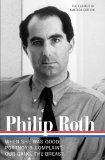
 For some reason this old quote about Portnoy's Complaint keeps popping into my head: Philip Roth is a great writer, but I wouldn't want to shake his hand.
I just can't remember who said it, except I'm fairly sure it was a woman.
If you haven't read the novel (published in 1969) you wouldn't realize why that quote is funny. You can read a pretty good overview at Wikipedia, but in brief: the whole story is structured like this: Portnoy is talking to his psychiatrist, recounting episodes from his life. His problem is primarily about sexual longing of an extreme (and to use his word) perverse nature. Masturbation is a major theme.
So you see why somebody might not want to shake Roth's hand, depending on to what degree the novel was autobiographical. It's supposed to be fiction, of course, but this is one of those cloudy areas where it's hard to separate the author from the work.
There are lots of stories out there about writers who were (or are) terrible people. Mean, small minded, jealous, vindictive. Reading the work of such people, you would not necessarily get any sense of their personal failings. One example I can provide, because the person in question is dead: Robert Frost, he of the snowy woods. He was pathologically spiteful and envious of any writerly success that wasn't his own. The story goes (and right at this moment I can't find the citation, so this is heresay until I do) that once when another poet was giving a reading, Frost started a fire in the back of the auditorium to bring things to a quick end.
Now, I can't say I would have wanted to spend any time with Frost, but this kind of story makes me think about him more, and look at his poetry in a different light. Was he deeply unhappy, scarred by childhood trauma, or simply a bastard? Or maybe all three. And look, he created some beautiful poetry anyway.
There are other authors whose work I really adore, but whose personal politics are anathema to me. Just as I know I have readers who are religiously and politically conservative, and who are unsettled by the occasional post in which my liberal view of the world is unmasked. Do they keep reading my books? I hope so, but maybe not. Sometimes a reader just can't get past something they know about the writer's real life.
So what's the upshot of all this? I suppose I'm just reminding myself that curiosity is a two edged sword. If a new author (or screenwriter, or actor, or musician) catches my attention I may find myself wondering about him or her. The real question though is, do I want to take the chance of being disillusioned, or should I remain content with whatever my own imagination comes up with?
This same question applies to reviewers. If you get a review written by another author, one you don't know, you're going to be curious about that person and his or her work. If they praise your novel to the sky or stomp it into the mud, either way, you're curious.
This past summer there was a really awful review of Tied to the Tracks in the main newspaper of a large city. The kind of extreme review that is so over the top that you almost have to laugh at it. Words like puerile and caricature were prominent. And here's the thing: I didn't know anything about the writer of that review except that s/he was an author. And that s/he really, really hated Tied to the Tracks, with a near breathless passion.
The question before me was, did I want to know more about the reviewer? If it turned out that s/he wrote fantastic, universally loved novels, then the review would be even more devastating. If, on the other hand, the reviewer's own publication history was not so stellar, that might give me room to rationalize away the sting. Or at least, tell myself a story about how the reviewer came to write such an extremely nasty review. Eventually I gave into curiosity and I did some searching. In this case I found that balm I was hoping for. Let me just say this: an author who names a primary character Venus Diamond has a lot of nerve using a word like puerile in a review.
All of this applies equally to film makers and actors, of course. It's something I can't quite sort out for myself and maybe I'll never come to a conclusion on how I want to handle such conflicts. Tom Crusie has made some excellent movies (and a lot of awful ones); do I pass up one that is well done and interesting because I cannot abide the man's prostelytizing and public persona? Do I hesitate buying that movie ticket because I just can't make myself put money in his pocket?
I wish I had an answer.
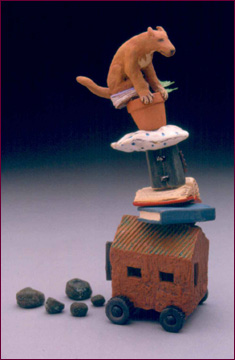
 Winter solstice, which was Thursday. Light! Light! More light! This >>>>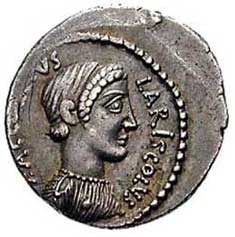

 There was a movie on Chicago's channel nine every afternoon. The four o'clock show, it was called. I can still hum the music. The movies were edited all to hell -- even I could see that, as young as I was, but I watched them anyway. I saw lots of old black and white movies, many of which I remember really well. Some I remember well enough to have been able to track down. Examples: