quickly, on the subject of email
I will make the chapter available to anybody who is willing to commit (as discussed previously, in detail) to watching four episodes, whether in broadcast (sci-fi channel), rental or borrowing.
" />
take me to the front page of the tttt weblog | back to the current weblog
« September 2004 | Main | November 2004 »
I will make the chapter available to anybody who is willing to commit (as discussed previously, in detail) to watching four episodes, whether in broadcast (sci-fi channel), rental or borrowing.
1. If you consider yourself a beginner at the writing of fiction, a classroom is usually the best place to start. Most community colleges offer introductions to creative writing, and they are usually not very expensive. The quality of the instruction will vary widely, though, so a couple of things to remember: (a) an introductory workshop is just that; you aren't going to leave it with a perfect story or novel under your belt; (b) a good instructor will emphasize the importance of giving and accepting constructive criticism; (c) the best thing to come out of such workshops is often making connections to others in your community who are in the same position, and looking for a network of people to work with.
2. If you don't consider yourself a beginner, but know of an excellent local teacher, take the course anyway. It never hurts to review basics, and a good teacher will make a difference in the way you approach your work.
3. There are a lot of short-term workshops and seminars out there, many of them in beautiful locations. Should you go spend two weeks in Hawaii or Montana or Ireland at a seminar? This is a loaded question, and I'm going to get some people angry at me, but here's my honest opinion: you go someplace beautiful for vacation; you can write anywhere. Why try to combine the two? One (or both) goals are likely to fall short of your expectations.
4. When it comes to picking a workshop or seminar, the problem is that you may recognize the names of the instructors, but you won't have any idea about those people as teachers. Good writers are often pretty lousy at teaching. There are some excellent writing teachers who have never had any real success with their own work. So how do you pick a workshop, if you can't depend on a big name? If you want to spend your money and time wisely, you'll have to do a lot of research. See where else the person has taught, and find people who can give you information on their experiences in that person's class or seminar. Ask if there are any syllabi or course materials or reading lists available to prospective students. The internet is a good place to look for information.
5. At their worst, workshops are seething cauldrons of insecure bullies set on beating each other bloody. Many are so competitive and have such an entrenched caste system that you'll feel as though you've landed in some alternate universe version of The Apprentice. Teachers are isolated from the students, and the dining room becomes strangely reminiscent of high school dramas best forgotten. If you're interested in genre fiction, you won't find a lot of support at these kinds of conferences. However. There are some much easier going, student oriented conferences and workshops -- and again, the only way to find them is to do the research and ask questions.
6. I personally get much more out of a retreat than a conference. A quiet place to work, where nobody is going to knock on the door and I don't have to think about cooking (for myself or anybody else), cleaning, errands -- that appeals to me a great deal, in part because I had a good experience at such a place. When I won the PEN/Hemingway award for Homestead, part of the deal was a month at the Ucross Foundation
in Wyoming. This was about five years ago now. I was nervous about it, but I loaded up the car and off I went. Ucross is a great place for a retreat. It's on the high plains of Wyoming, very isolated. They give you a nice room and a workspace you have entirely to yourself, in my case a large room with a couch, a couple of comfortable chairs, two desks, bookshelves, and windows on three sides. Meals were served in a nearby building -- you helped yourself to breakfast; lunch was left outside your studio door; and a chef prepared a dinner that all the residents ate together. Lots of food, excellent quality, and most of all, you didn't have to worry about shopping or cooking. I got so much written in that month, it was astounding.
Unfortunately, Ucross is one of the most competitive of all the writers' and artists' retreats, and these days I'm not likely to get in, as they are not so very inclined toward genre writers. And then there's the matter of the puppy boys, who wouldn't be welcome, and really, I couldn't leave them for a month. Husband, daughter: sure. I can talk to them on the telephone and by email, but puppy boys just don't understand when I'm gone. Maybe someday I'll find the perfect retreat for all of us.
In addition to killing a couple of morning hours, jogging so regularly lends me a bit of respectability otherwise sorely lacking in my life. When someone learns of my early morning regimen, I like to think that they say, “Wow, Kevin’s really got his act together!” Of course they’d be mistaken, but sometimes I even fall for it myself. At the end of a day spent watching too much television, surfing the Internet, or otherwise procrastinating when I should be working, writing, or doing something of some value to myself and others, I can tell myself “At least you went for a good long run. Don’t be so hard on yourself.”I don't jog or run or even, if I can help it, walk fast. But I do lots of other things that serve the same purpose as jogging in Kevin's life. And why? Why do we do this? Because we all feel like we're faking it. Five novels in print, three under contract, lots of other stuff published, and I still have panic attacks thinking, but what did I really do today? I can't say for sure but I'll bet the most published people go through this. Stephen King, Joyce Carol Oates. When somebody asks them what they did today, what do they say? Maybe: I did some writing, and then I did three television interviews and spoke to the annual meeting of the authors' guild. I can't imagine either of them saying: I rewrote the same paragraph six times and then, miserable and alone, I turned on the television and talked back to Mr. Rogers. Except he went away and then I had to make due with Barney Fife -- but in fact, I bet they do have days like that. It's just the nature of the beast.I employ the same strategy when I tell someone I’m writing a novel. It seems to have the same effect. When someone learns that you’re writing a novel, it’s not so much important that you actually finish it or do any real writing. The simple fact that you have this mammoth project looming large in your life is impressive enough and often comes off as rather admirable. So after a weekend of spending far too much money on drinks and ultimately making an utter fool of myself, when asked about what I did, I can honestly say, “I got together with friends and went running…oh, and then there’s the novel….” A winning trinity: the impression of friends, health, and the solitary labor of the writer.
I have been writing reasonably well the last few days, and hope to keep doing that.
On the subject of the first chapter of Queen of Swords for all of you bright, forward thinking, open minded people who watched Farscape: The Peacekeeper Wars or who promised to watch four episodes, I'm hoping to get things organized enough to send you what you need by the end of today, or at least tomorrow. The offer still stands for those who catch all four episodes (a few emails I got don't seem to have done this, as they emailed Sunday night rather than Monday night) this coming weekend when they are re-aired.
I hope y'all watched it, because let me just say this much: it was incredible. And that's all I'm going to say just now because there are people who stop by here who are worried about (what they call) spoilers and I call sweeties.
Tomorrow I'm going to write something about... writing, for a change. Tune in then.
Edited to add (thanks, RW)
No, no! Don't move on! ;) First you have to tell them when they can catch The Peacekeeper Wars in re-runs if they were so foolish as to miss it (check here). And then the US DVD should be out in early 2005!
I hope y'all watched it, because let me just say this much: it was incredible. And that's all I'm going to say just now because there are people who stop by here who are worried about (what they call) spoilers and I call sweeties.
Tomorrow I'm going to write something about... writing, for a change. Tune in then.
"without a doubt the best science fiction feature film to be released this year… with more twists and turns than any single "Indiana Jones" adventure… the miniseries is so satisfying that … it will leave all viewers … with a sense that they have witnessed something truly wondrous"-Mark A. Rivera genreonline.net
-Maureen Ryan Chicago Tribune
-Bill Frost The Salt Lake City Weekly
-Kate O'Hare zap2it.com
-Colorado Springs Gazette
-Michael R. Farkash Hollywood Reporter
-Greg Feltes Northern Star
-David Bianculli NY Daily News
-- Newsday
-- TV Guide
-- Houston Chronicle
--- USA Today
-- Detroit Free Press
-- SFX magazine
Hardcover books don't usually stay in print for very long. All four books in the series are available, the first three only in softcover, and the fourth only in hardcover. Sometime next summer, Fire Along the Sky will come out in softcover as well. So really, if you want a hardcover copy, the only solution is to go the used book route -- and I'm afraid it won't be easy to find a reasonably priced hard cover reading copy. The lowest price I've found on the web is $29.99 from an Amazon used-book associate.
I have no idea what it would take to make Bantam go back to do another hard cover printing, but I can ask about it. My word, of course, wouldn't be enough. (Imagine that conversation. Hey, Irv. I think you should run oh say, a half million hard cover copies of ITW -- see to it, why doncha?) It's always good for them to hear from readers directly, so if you want to write, the publisher's address:
Bantam/DellPS Wrote about fifteen pages yesterday, feeling better.
Random House
1745 Broadway
New York, NY 10019
(212) 782-9000
Promise me (by email) that you'll watch four full episodes of Farscape, either in broadcast, if that's available to you, or by renting the videos or dvds. The promise will be enough, for the time being, to give you access to the chapter. But I will be expecting another email with the titles of the four episodes you've watched, and one line of dialogue of your choice from any of the four. Say, within a month's time. Could you cheat your way into reading the chapter without watching the episodes? Now, why would you want to do that? Really, that would be like turning your back on a hot fudge sundae. Or, to use one of my father's favorite expressions: like cutting off your nose in spite of your face. Really, he said it like that. English wasn't his first language.
Episodes I recommend for the yet to be initiated:
For those of you in the States, if you've got access to Sci-Fi, watch the miniseries; if you don't get sci-fi for whatever reason, this deal applies to you, too.
Edited to add these snippets from reviews of the mini (thanks, RydraWong):
"Has any science-fiction show ever looked this good? ...some of the most imaginative visuals ever captured on the small screen ... Black and Browder share a prickly chemistry that is a pleasure to watch. Their dialogue crackles ... a satisfying coda to one of TV's most thrilling, original series. " -- Boston Herald
""Farscape" is back in top form, reminding us why it was the finest science-fiction show on television... terrific ... big bang of a two-parter ... this grand adventure fires up all of the classic "Farscape" elements that made it the thinking fan's science-fiction show ... sly wit and silly slapstick... breathtaking effects and the tense showdowns ... an old-fashioned love story and a war epic. You get poignant moments and goofy moments. You don't need to be fully up to speed on the "Farscape" universe in order to enjoy this giddy, galactic joy ride ..." -- Cleveland Plain Dealer
Tomorrow. Tomorrow Farscape: The Peacekeeper Wars will be here, and you will watch it, right? Right? I've begged and reasoned, and now it's up to you. In the meantime, here are some questions that have come my way recently:
Now that you have gotten me, and no doubt others, addicted to "Farscape" - when do we get our reward??? (Deborah)I'll quote RydraWong's response here, as her answer to the second question is as clear and concise as possible:Sara, If I have NOT seen the other I guess 4 seasons.....should I see The Peacekeeper Wars as you have been urging? Would I be hopelessly confused? Cynthia in Florida
Just wanted to say that judging by comments from the writers and producers, they've designed the miniseries to be accessible as possible to new viewers - there's a plot re-cap early on and so on. So you shouldn't be too lost :). And even if you are, just hang on for the ride and let it wash over you - there'll be plenty to enjoy along the way, and you can catch up later. I got hooked on Farscape by accidentally watching a season-end cliffhanger; I had no idea what was going on but was mesmerized anyway! Posted by: RydraWong on Oct 16 at 2004 2:48 AM #My experience is a lot like RW. I saw part of one episode from season four and had to see the rest of it, immediately. Confused? Yes. But more intrigued than confused. So give it a go.
As to the question of rewards, why yes. I haven't forgot my promise, and I will indeed make the first chapter of Queen of Swords available to anybody who emails me on Monday (after the conclusion of the first airing of the miniseries) with the following: (1) the words "I watched Farscape" in the subject line (2) one short line of dialogue (your choice) in the body of the message.
Farscape:
The Peacekeeper Wars
hell yeah
And on other matters: I'm having one of my occasional crises of writerly faith. Symptoms: jumpiness, general jitters, self doubt, the (thus far resistable) urge to throw the stuff I've got into the trash and go apply for a job at the DMV. Also, I have this very strong idea that the storage room and my studio really must be reorganized, pronto. I will get through this rough patch, eventually, but think good thoughts, eh? They'd be much appreciated.October 17 & 18
9 pm (8 pm central)
(1) I sorted through a basket of laundry that has been sitting on the ping pong table for two months. All clean stuff. Napkins, mostly, that need to be ironed.
(2) Oddly enough, I could only find ten of my pink damask napkins. Where did the other two go to? I'll need them for Thanksgiving, which isn't very far off.
(3) Oh look, here's the antique handtowel (handwoven in 1802!) which happens to have my daughter's initials on it (in turkey red).
(4) So this is where I put all the good linen.
(5) Except the two missing napkins.
(6) I've been meaning to clean out the drawer with the placemats for months. Maybe the napkins are in there?
(7) Phone ringing. Daughter has forgot to take a check to school for the PSAT fee. Has to be in by noon, or she can't take the test. Can't let that happen.
(8) On a day like this it would be a sin not to drive the longer way along the bay.
(9) The puppy boys love the park on the bay, and I haven't had them out in a while.
(10) Where is the leash? Not that leash, the other one.
(11) Where is my checkbook? Not that one, the other one.
(12) The secretary who is taking care of check registration is out to lunch. That's okay, never mind, I'll sit here and wait. Oh, too bad, I've left my laptop at home or I could work while I wait. Really, it makes no sense to go home and come back.
(13) The puppy boys really did need a run.
(14) Passing the grocery store, it occurs to me I have nothing but leftovers for dinner. Better stop.
(15) There. I've got stuff to cook dinner for the next five days.
(16) Haven't checked the post office box in a few days.
(17) Who is Marilyn Santana, and why is her mail coming to my box? Better discuss with post office ladies.
(18) Really, it's important to talk to other people about their political views, especially at this juncture.
(19) Oh no. I never thanked the reader who sent me the recipe for coca cola cake. Better do that as soon as I get home.
(20) But first I need gas.
(21) Car really does need washing. I could zip over to the carwash...
(22) Nobody at home to help unload the groceries. Figures.
(23) Puppy boys need to be fed. Puppy boys require their hourly dose of adoration.
(24) Better put the linen away again. I wonder if the two missing napkins are in the girl child's room?
(25) Dare I cross that boundry?
(26) oh. my. god.
(27) back out, slowly.
(28) spend a half hour composing a calm, rational, but unflinching email to girl child on what will happen if her room is not (a) organized and (b) clean within twenty four hours. This behavior has repercussions. PS do you have any of my damask napkins in that... room of yours?
(29) Look at all this email. Does the minister of Nigeria ever really talk anybody into sending him money? It might be interesting to write an article about people who develop obsessive attachments to foreign dignitaries they've never met.
(30) The laptop has jumped out of the pile of stuff on my desk to stare at me. Okay. Okay. There's an hour until I have to start cooking, but maybe i can get something done.
Today has gone somewhat better. Except, I still have not found those napkins...
I always read the "extras" especially when I am reading a Stephen King book (as it feels like I am having a conversation with him.)I just happen to be listening to King's seventh (and final) volume in his Dark Tower series, and so this made me think about a couple different things. In my initial list of Things that End, I forgot to include the last volume of a series. Something King knows a lot about, and I have yet to work through. I'm going to save that topic for the moment until I'm finished with his volume seven, but some initial thoughts:
It's true that King is really good at talking directly to his readers. Up until this point he has done that primarily by way of introductions to the novels and essays. I haven't read all his non fiction, but what I have read has struck me for its tone of sincerity. In the Dark Tower VI and VII he takes this up a notch or two by writing himself into the story.
This is, of course, risky. Some readers are going to dislike it no matter how well it's done; others, I am afraid to say, will take that material as gospel truth and nothing will convince them that it's part of the fiction.
Maybe because it isn't, not completely. Part of what King does is watch himself processing the story, and those sections ring true to me. He struggles with the story and with the characters, is unhappy not with what he has produced but with what has happened at his hands, so to speak. A much loved character dies; he anticipates unhappy readers -- is unhappy himself -- but his fictional self is convinced it is out of his hands.
Whatever other strengths and weaknesses this novel might have on its own or as the endings of a long series, it is interesting for this leap of faith he has taken. Some might call it egocentric, which it is, necessarily -- but it is also immensely hard to do, and requires a lot of self examination. King's characters are furious with him, and their observations about his character and person are not kind. Roland, the main character, doesn't like writers at all, and for reasons that made me laugh out loud for their truthfulness. What King has done here, seems to me, is to take the Self as Other into new territories. King as Postmodernist is enough to make your head spin.
I'm going to say one more thing about this novel: not every self indulgence works. King lets himself explore a few short topics which (if I can't keep myself from thinking about them) will make me slightly nauseated. These are so mundanely ... disgusting (and I don't use that word lightly) that I still can't believe he went there, or that his editor let him. And to keep you from paging through this huge novel in some bookstore to find what I'm talking about: the nature of nasal discharge, and pimples. There, I've got that out of the way, so later when I review the book I can leave that be. As King should have done, in my opinion.
Usually dedications are pretty boring. For my wife Babs, who has put up with me all these years. For Mike. For Anil. Dedicated to the memory of my father. I like dedicating books to people close to me, and usually I'm just as boring as everybody else in the way I do it.
There's more latitude in what you can do when you write acknowledgments or notes. The standard, short form of this looks something like this:
I'd like to thank (insert one or more of the following: significant other, children, parents, teachers, editor) for their support; also, I am obligated to thank (insert names of persons who contributed factual knowledge or feedback) for their assistance, but of course any errors are my own; thanks also to (insert names of other writers who might have been helpful) for reading as I wrote and giving me feedback.To this laundry list you might add historical background on the story, the characters, or the setting; short anecdotes about how you came to write the darn novel in the first place; hints for people who want to pursue the subject matter further; some indication of the next novel you're working on, if it's related to the current one; explanations about language or naming issues. I've done all these things for one novel or another. Sometimes I've done all of them. I figure, if a given reader isn't interested, they'll skip it; if they want to know more about the early history of smallpox vaccines, they will plow ahead.
Then there are author biographies. These are almost always wrong in some way. The European editions of most of my books still declare me to be a professor, although I resigned my faculty position four years ago. I have tried in vain to get them to fix this. Some authors get carried away with their bios. One very successful author who shall remain nameless once managed to include photos of her family and her daughter's wedding reception, along with observations on how nicely her collection of antique linen looked on the tables. It felt more like an annual Christmas newsletter than an author's note, but hey. Obviously her editor thought it was a good idea, and who am I to argue. Maybe my readers would be interested in my father's recipe for braciole? I thought not.
Sometimes authors have fun with their bios and come to regret it, as Neal Stephenson did with Snow Crash. That bio was very funny, but apparently it has haunted him (and not in a good way) ever since. From his website:
Often there comes a certain giddiness when one has finished a book and learned that it is to be published. This is especially pronounced among young writers. Some time later, the publisher requests an author bio, acknowledgments, dedications, and other ancillary material. In my early books, I tended to use these as an opportunity to goof around and blow off steam. This was particularly true in author bios, which for some reason I find very difficult to take seriously. For example, at one point in my career I had seen a spate of author biographies that I found especially pompous, and so wrote a mock-pompous one pronouncing me a "perfect husband and father" or some such nonsense.It's true that whenever my editor contacts me to say: new book going to press, if you want to change your bio, do it now I hesitate for about five minutes. For those five minutes I think of witty things I could maybe put in my bio. It takes about five minutes for this urge to pass, and then I email back and say: bio is okay as it stands.Unfortunately some people took it at face value.
So, what do you all think? Do you like long acknowlegements, notes, and bios? Or do you ignore them?
Other people dislike really long paragraphs full of description and internal monologue. This kind of thing doesn't bother me as much, but I do sometimes have the urge to speed read through such a paragraph if the author hasn't really won me over by the time I hit one.
Now, chapters are quite a different animal.
Once upon a time I had a collection of short rules-of-thumb about writing fiction. It's long gone, lost in one move or another, or in some long ago computer migration. I remember a few of them, although I don't remember who said them. Here's one that has always stuck in my mind: Strongest word at the end of the sentence. Strongest sentence at the end of the paragraph. Strong paragraph at the end of the chapter. Sounds good, but it's like all generalizations: true, except when it isn't. The first problem is defining and identifying strong, something I'm not going to try to do here.
You could look at a wide range of authors and try to get a feel for how chapters work, and you would find similarities. A natural break in the rhythm of the story is the most common place to end one chapter and start another. Some authors do the exact opposite, and break a chapter at the high point in the action. This is a matter of personal taste, I think. The right rule of thumb here might be: you can do anything, if you do it well enough to take the reader along for the ride. Ann Patchett's The Magician's Assistant takes the huge step of not using chapter breaks at all. The reason I know this works (for me, at least) is that I didn't even notice. I was so caught up in the story that I had read the novel twice before somebody pointed it out to me: no chapter breaks. Can everybody pull this off? I would guess the answer is, no. I don't think I could.
The hardest part might not be deciding where to break the chapter, but what the last note of the movement should be. There's a particular kind of ringing tone that I reach for at the end of a chapter, whether it's dialogue or narration. An awkwardly ended paragraph can work just like that heavy foot on the brake, and jar you out of the story. I'm going to go looking for sentences that end chapters well, and I'll try to get back here with some samples tomorrow.
I'm talking about Farscape, of course and a great article in the Chicago Tribune (the paper I grew up reading) here. You have to register. It's worth it. Like so many good links, this one is from Robyn. Here's a quote from the article, part of an interview with the radiant Claudia Black, who plays the ueber-radiant Aeryn Sun:
I also hope she's empowering to watch. I understand that sex on TV does sell. But they were really willing to let me protect her integrity. It was all right if she was androgynous, we were allowed to move beyond stereotypes.You see, storytelling really does transcend genre and medium boundaries. These are exactly the same issues that go into writing a strong female character, and what I hope to accomplish with the women who populate my work. It's a treat to run into actors and directors and screenwriters who articulate these issues so very well.They say that sex is in the mind, and that's how Aeryn and Crichton are together, it's the stuff that's left unsaid and the stuff before the kiss, the gray area, the subtext. If you're obvious, you're taking away from the audience's opportunity to fill in the blanks and identify with the characters on their own terms.
And of course, lest you forget: The four hour miniseries
Farscape:
The Peacekeeper Wars
is just around the corner. On
Remember, I'm willing to reward people who sit down to watch it. Just haven't figured out how, yet.October 17 & 18
9 pm (8 pm central)
"I did tell you, paragraphs are tricky things." Mary ruffled through the ten pound book in her lap until she found what she wanted. "Here, Dr. Grammar tells you exactly how to do it."The troublesome nature of the paragraph is buried in this OED definition:"But he's so mean," Gertrude wailed. "He's always scolding. He doesn't like ellipses."
2. a. A distinct passage or section of a discourse, chapter, or book, dealing with a particular point of the subject, the words of a distinct speaker, etc., whether consisting of one sentence or of a number of sentences that are more closely connected with each other than with what stands before and after.The problem is (in part) that there's a stylistic element that overrides the idea of closely connected. Some authors like to take the strongest sentence at the end of the paragraph and... set it off by making it a stand alone. Other authors seem to throw random paragraph breaks in that don't follow from anything at all, either in terms of subject matter or rhythm. Some seem to be afraid of crowding and never put more than three sentences in a single paragraph. My rule of thumb, sometimes broken, is this: put the strongest sentence at the end of the paragraph. That will give it definition, if it's definition you're after.
One good way to approach this is to think of reading outloud. Where natural breaks would come in telling the story, most likely you need a paragraph break. Another hint: print out the page, and hold it up. If you see a rhythm -- alternating short paragraphs and long ones, most probably things are flowing well. If you don't, go back and look at the structure of the passages in question.
If you think paragraphs are hard, wait for chapters. I'll try that tomorrow.
"The suppression of minority votes has continued because it is perceived as a winning tactic, and because it is rarely punished."The New York Times
My sense is that if you develop an ear for a good rhythmic sentence, you're on your way. One of things I notice about people who are first getting started with creative writing is the tendency to try to stuff too much into a sentence. I once had (but can't find now) a one-page story by a student where every single sentence seemed to have an unnecessary and distracting tail -- mostly in the form of a prepositional phrase -- that could be (pardon the imagery) docked. When a sentence doesn't work for me one of the first things I look for is excess baggage. Sometimes it's fairly innocuous: He nodded his head. A bit longer: Marie was always forgetting to write down telephone numbers when she took messages for herself or other people.
I'll be looking for more examples of this, and tomorrow I'll move on to the subject of ending paragraphs.
The pieces folder is there for when I've got a paragraph that doesn't fit, but I don't want to toss because I might find use for it somewhere else in the story. By the time I'm done with a novel the pieces folder looks pretty wild. I always check through it as one of the last steps to make sure I'm not overlooking something useful I could have found a home for.
Here's an example. I wrote this short scene for Tied to the Tracks, because it came to me when I was thinking about one of the secondary characters, the camera man for the documentary film company. He's a fairly complex character, a serial monogamist, a kind and funny guy who at fifty still can't find the energy to get married. I was thinking about him talking to his mother on the phone and this scene poured out.
I may never find a place for this in the novel, which would be sad, but things can't be forced. In that case it will sit in the pieces file and maybe someday I'll remember it while I'm working on something else and it will fit there. The point of this is to say: don't be too hasty with the delete key. Let things sit around, age a while. You might be surprised by what happens, down the line.Copyright: Mine.Excerpt: Tied to the TracksRivera had been saying for years that they could make a whole film around Millie Russo's phone calls to her only son. Tony refused to discuss the possibility, but he always put his mother on speakerphone. Angie had yet to figure out if his purpose was to spread the misery around, or entertain them.
"Tony," Millie said now from her kitchen in East Orange. "I'm calling to ask, you ever think about real estate?"
"Hi ma," Tony said. "How are you?"
"You know how it goes. So, you ever give real estate a thought?"
"Real estate? What for?"
"Real estate. Why not."
"Ma, would you just spit it out?"
"Listen to Mr. Impatient. You don't got ten minutes for your mother?"
"Sorry ma. Go ahead."
Millie sniffed. "You remember Jerry Tedesca, the tubby boy with the overbite was in high school with you? His uncle Mario died. His heart, and him only seventy-nine. "
"And Jerry was at the wake."
"That's what I'm telling you. You know what Jerry drives? A Mercedes, the biggest one they make. Still got that new car smell, leather seats as soft as butter. He drove me and your Aunt Dot home."
"And Jerry Tedesca is in real estate."
"That's what I'm telling you. Real estate. He made close to a million dollars last year."
"Real estate, ma."
There was a moment's silence. "What, you can't sell a house?"
Angie let out a squeak, and Rivera poked her.
"Ma."
"I'm just saying. How hard can it be to get a real estate license? Your second cousin Loretta got one and God knows she's got nothing much going for her in the brain department."
"Ma, I've got a job."
"You could drive around all day in a nice car, looking at houses. You want, you can fill the trunk up with cameras, take pictures on your lunch hour."
"I'm fifty years old, ma. I've got a job I like and I'm good at."
"It's never too late to improve yourself. You could go back to school. Move in here with me to save some money, go and study business. Angie, you tell him." Millie shouted so that the speakerphone vibrated. "A backup plan is a good thing."
"A backup plan is a good thing," Angie echoed obediently, and Jerry shot her a dirty look.
"Why do I bother?" Millie asked with a sigh. "He never listens. You never listen, Tony."
"We'll talk to him about it, Mrs. Russo," Rivera volunteered.
"I know you will. Such good girls, and single. Tony—"
"Ma."
"I'm just saying."
On a different matter: Marjorie has indicated that she'd be interested in talking about endings, which is something I can do in a general way. I'll start with that tomorrow.
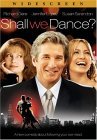
w a sneak preview of Shall We Dance? last night. This is the remake of the Japanese hit, this time with Richard Gere and Susan Sarandon and yes, Jennifer Lopez. I liked it. The central theme -- passion can be found in many things other than sex, and it's worth the search -- is an unusual one in film these days, and all the more sweet for that reason. I'm not saying the movie is flawless -- it stumbles quite badly toward the end -- but it is hopeful and kind and funny, and there was a song I couldn't get out of my head. So I looked it up, and I find that it's called The Book of Love (not the one you're thinking of, though). It was written by Stephin Merritt of The Magnetic Fields (I freely admit I'm not versed in current music trends, so this probably means more to you than me.) I'm reproducing the lyrics here:
The book of love is long and boringThese lyrics match the tone of the movie perfectly. How often does that happen? I have no idea, but I like this because it's odd and funny and truthful and sweet. And it helped pull me out of my slump, and really, what more could I possibly ask for?
No-one can lift the damn thing
It's full of charts and facts and figures
And instructions for dancing
But I, I love it when you read it to me
And you, you can read me anything
The book of love has music in it,
In fact that's where music comes from
Some of it is just transcendental
Some of it is just really dumb
But I, I love it when you sing to me
And you, you can sing me anything
The book of love is long and boring
And written very long ago
It's full of flowers and heart-shaped boxes
And things we're all too young too know
But I, I love it when you give me things
And you, you ought to give me wedding rings
I, I love it when you give me things
And you, you ought to give me wedding rings
PS: also, Stanley Tucci is here playing against type, and he's almost worth the price of admission by himself.
Have you changed settings on your comment function? For a couple of days now, when I click on a "your two cents" link, all I see is a title line, and nothing happens when I click on it. (Using Netscape on a Windows system) E.g., All I can view on this thread is the following:So my question is: anybody else having this problem? If you click on the your two cents button, does everything look to be there, and in working order? If not, could you please email to tell me what browser you're using. I'll try to get this fixed asap.Comments: bookgroups
I've spent most of today at a really badly organized fund raiser. My patience (and I've never had a huge amount of it) was sorely tried to the point where I had to just leave, before I said something inappropriate (but true) to the parties in charge. This caps off a week of meetings and evening obligations, some of them very worthwhile, others very not. But I have got some writing done, and while I have no idea if the stuff I've written actually works, it's on the page and that's a step in the right direction.
Question: are there any craft issues people would like to see discussed here? Because my brain is fried, and suggestions would help.
UPDATE: Richard of MovableBlog fixed the problem with the comments. If you use Movable Type and need an occasional technological rescue operation, give Richard a holler. He's a busy person, but he always manages to fix things for me in a short amount of time, and his rates are very reasonable.