" /> storytelling: November 2003 Archives

take me to the front page of the tttt weblog | back to the current weblog

« October 2003 | Main | December 2003 »

November 30, 2003

something very different

I do a lot of mixed-media textile work. Spent some time today finishing a piece called Strange Fruit. Here's a closeup of one part of it (click on the image to get a larger version). Handmade silk paper, hand-dyed fabrics, heat treated cellophane and chiffon, hand and machine embroidery, beading.

Not that you need to look at it, understand. I'm just posting this to amuse myself.

The Policy - Bentley Little *+

There's a fine line in the horror genre, one that separates a good story from a not-quite-right story. This novel crosses that line.

The thing is, Little has one of those imaginations that know no bounds. This makes for some great stories, but they are not for the faint of heart. This one definitely is not for anyone with a soft spot for children.

And still, it's well done. The premise is completely believable (at first): one of those nightmare scenarios that people actually have with insurance companies now and then. But this quickly escalates beyond all common experience, to the point where the main character and his closest friends have had their lives destroyed in the most horrific ways (and I mean, horrific). The story moves then, quite quickly and without a backward glance, into the realm of the supernatural.

I have no problem with stories of the supernatural or magical realism (and what is the difference? there we get into sticky territory). But it takes a steady hand to control the narrative once you introduce this kind of thing, and Little lets it get away from him. The last chapter or two I found very hard to follow, and so many questions were left unanswered that in the end I was both confused and dissatisfied. And feeling more than a little gritty.

November 29, 2003

what Lily sees

a few short paragraphs from Thunder at Twilight (Lily is in Montreal staying with her brother Luke):

All around them the countryside rose and fell like the wings of a great bird, snowy fields crisscrossed by lanes beaten down smooth. But the colors were the thing. White snow, blue sky, Daniel would tease her when she talked of such things. What more is there to see?

This. She wished her brother were here so she could make him understand all that white could be. Trees tangled together against the horizon, a web thrown up to hold up the sky and still its color seeped away and into the landscape itself: blue in layers upon layers, melding into shadows purple and copper that faded to rosy golds. The winter sun, too heavy for the sky, moving down and down like a sleepy child, radiating colors that defied pigment and palette and brush, putting every artist who had ever lived to shame.

This, she would tell Daniel. See this.

November 28, 2003

Tied to the Tracks

I have found just the right quotation for the beginning of the contemporary I'm working on:

Happiness is the china shop; love is the bull.
--H.L. Mencken

November 26, 2003

28 Days Later ***+

I like a good apocolypse now and then, on film at least. King's The Stand is probably my favorite of his novels (and I'm not alone in that; apparently most people who read his work agree on this). An end of the world story is almost as good as those round-the-dinner-table discussions of what you'd do if you won an obscene amount of money in the lottery (I love those discussions, though I rarely buy lottery tickets). In fact, a huge lottery win feels as unreal to me as most of the apocolypse stories I've come across.

This is a very effective movie. Atmospheric, gritty, engrossing, and just plain scary for a good amount of the time. Animal activists, in trying to free chimps that have been test subjects in a laboratory, unleash a fast moving virus that (in ten seconds flat) turns the victim into an enraged zombie. Okay, so it sounds out there. Of course it does, that's the genre we're talking about. Love the genre for what it is, or just don't bother with the movie, okay?

So this particular nasty virus does its thing in England, and the countryside is crawling with the "infected". The few healthy people try to band together, except of course that they aren't all good guys, and therein lies the problem.

An interesting thing about the dvd release is that they included three alternate endings, for those who don't like the not-quite-so-awful ending in the theatrical release. Which is perfect for our household, where I prefer happy endings and my husband is more in the man-o'-pain camp (as mentioned in an earlier review; it was our friend Bruce who coined this term for the ow-that-hurts-don't-stop club which he founded).

All in all, I have to say that this movie is about as good as the genre gets. Particularly good performances by Christopher Eccleston as the Major who seems sane, at least at first, and by Brendan Gleeson, who is there to remind us what we are supposed to be.

from Jessamyn's website

Jessamyn is the mind behind librarian.net, which is worth visiting. I snurched this banner from her.

I make it a rule not to discuss politics here, but in this particular matter -- where politicians are frelling with my reading habits -- I have made an exception. Won't happen often.

November 25, 2003

trivia contest

It looks like there will be enough interest in a trivia quiz to go ahead and plan that. I was thinking that February would be about the right time. So this is the way it will work: The quiz will be posted on the web, and will be left there for a day or so. Anyone who agrees to a few ground rules may participate:

1. In the event of multiple perfect scores, a drawing will be held to determine the winner.

2. The winner may chose between an Advance Readers Copy or a signed first edition of Thunder at Twilight (final title still pending). However, if the winner choses the ARC, he or she must agree to the following:

a. no publication or discussion of the content or plot before the official publication date (that is, no spoilers)

b. the ARC will not be lent out or given to anyone else, nor will it be sold before the official publication date

3. All decisions of management (me) are final.

Here's the fun part: you can help put the quiz together.

If you like, submit up to three possible questions, along with answers. None or all of the questions might make it into the quiz, which may give you a real advantage. Guidelines:

1. Questions must be multiple choice, true/false or very short answer.

2. Questions that are too easy (Who is Elizabeth married to?) won't make it into the contest; qestions that are too hard (Who speaks first on page 231 of the Australian softcover edition of Dawn on a Distant Shore?) won't make it into the contest either.

3. Questions requiring complex essay answers may cause me to think a bit, but they won't make it into the contest. This is supposed to be fun, after all. What was the name of the hostelkeeper who tried to refuse Hannah a room in Albany? would work. Why is the hostelkeeper such a jerk? will not.

4. You may submit up to three questions, but they must all be submitted in the same email message.

5. Questions must be received at triviaATsaralaughsDOTcom by January 31, 2004 to be considered for inclusion. (this is a way of including an email address that won't be readable by spam-bots that come looking for prey. You replace the AT and the DOT with the usual symbols.)

6. By submitting questions, you are agreeing to let them be used here for the contest and elsewhere on the saralaughs website.

7. You don't have to participate if you submit questions, and you don't have to submit questions to take part in the contest.

8. You won't get any feedback on your questions, and won't know if they have been chosen to be in the contest until (unless) you take it yourself.

There you go.

November 24, 2003

Steve Almond, my hero

Steve Almond (who already has a place on the blogroll to the right) has written a wonderful opinion piece in the most recent issue of Poets & Writers, about books reviews and the reviewing process. It's called "On Reviews: A First-Timer Reveals How It Feels." Anybody who has ever had a review in a major publication will appreciate it, and anybody who hopes to one day be published should read it.

But the people who should really, really read it are the critics.

November 23, 2003

Mansfield Park - screenplay by Patricia Rozema *****

First let it be said that in my opinion, you can't compare novels to films. Never gets you anywhere productive.

Now, to this movie, which caused a great stir in Austen circles. If you read the review of Weldon's Letters to Alice, you'll know that Mansfield Park does not feature (in my opinion) one of JA's best female protaganists. Fanny Price is a sad thing, really, insipid and (not to put too fine a point on it) a bit masochistic.

So here comes Patricia Rozema, who decides to write a screenplay of this novel.  In the Times Literary Supplement (December 31, 1999) Claudia L. Johnson reviewed this movie and wrote:

Rozema's Mansfield Park is a stunning revisionist reading of Austen’s darkest novel.  Adaptations cannot replicate the novel on which they are based, and Rozema’s movie, more of an intervention than an adaptation, departs radically and frequently.
I love this, because it's so true. This movie is an intervention -- Rozema has taken Fanny and interjected into her a healthy dose of her creator. By using Jane's own juvenalia and what letters still exist to give us a brighter, clearer Fanny, Rozema delivers something close to a miracle.

Obviously, purists don't like this kind of thing. The Word must not be tampered with. But oh, what a tribute this movie is to Jane herself, and to her characters.

This is a witty, clever, thoughtful, touching piece of work. It's one of my favorite movies.

Letters to Alice - Fay Weldon ****

When I teach creative writing I usually start by having students read the first chapter of this quasi-novel. That chapter is called "The City of Invention" and on its own it's enough reason to read this book. Weldon takes us on a tour of novels (but also of plays and other genres) in a way that has to delight anybody who loves storytelling will find enchanting (I normally avoid that word --too twee for me -- but it's the only real choice here).

The premise is that the narrator (also called Fay) a published novelist (as is FW) and living in Australia (as I belive FW did for a long time) is writing home to her niece in England. Alice has got to read Jane Austen in preparation for her exams and she's not happy. So her aunt writes her a series of letters which turn out to be about life and love and reading and most particularly about Jane Austen's own life and loves.

Fay Weldon did the screenplay for the first BBC adaptation of Pride and Prejudice, and she knows her stuff. She is a serious student of Austen, and that shows here. I don't agree with her at every turn (there is a fair amount of literary snobbery tucked in odd corners) but I do appreciate very much her thoughts on Jane Austen's life and mind.

Most particularly I found her discussion of Mansfield Park interesting. If you've never read any Austen, don't start with Mansfield Park. That's as close as I'm going to come to a criticism of it, because I don't want to use this space to critique it, or anything else of Jane's. Just don't want to do it, sorry.

But. Fanny Price, the protagonist of that novel, is a mystery to me. She lacks all the edge of Jane's stronger females. Jane's own mother called Fanny Price "insipid" -- that must have hurt, I imagine. It wasn't until I read Fay Weldon's discussion on the circumstances around which MP was written that I began to understand Fanny. This doesn't elevate poor Fanny; she still comes across as fairly insipid and masochistic, but it does make the novel more interesting to me personally. Fay Weldon's take on Fanny is... well, I should let you read it. But will you? Really? Let me just say, then, that Jane had just lost her own father and was facing a crisis on that front that -- at least in part -- goes a long way to making Fanny more understandable. But still insipid.

November 22, 2003

Anne's question re pennames

Anne wanted to know where my penname came from. Well first, it had to be Italian. My father isn't living, but I don't doubt he would travel a long way to make his discontent known if I had called myself Wanda Sobrinski. Second, (and I'm not making this up) the publisher wants something in the middle of the alphabet. Jane Abraham and Jane Zimmer (if they existed) would have their books shelved at the very top and very bottom, which isn't good for sales. The publisher wants something in the L range. D isn't ideal, but it's better than A. Third, it had to be something easy to write. I have (on occasion) autographed two hundred books at a time. Fourth, it had to be pleasing to me. And fifth: that part is a secret.

Sacred Hunger - Barry Unsworth *****

This is one of those historical novels that puts hooks into you. Sometimes you want to put it down because the subject matter can be so painful, but you can't. The story makes demands of the reader, and you follow along.

The story revolves around a slaver called "Liverpool Merchant" setting out for Africa and from there to the sugar islands. Mathew Paris, a doctor recently released from prison in Norwich, is (at least for the first part of the novel) the main character. The novel throws a great shadow, touching on men's clubs and sugar plantations to a haven set up by escaped slaves and sailors on the Florida coast. It is that Utopia that stays with me most vividly.

Unsworth is a master storyteller; he juggles dozens of characters and a complex plot effortlessly; he has a deft touch with historical detail and beyond those blessings, he really can write a beautiful sentence.

former lives, puppy boys, and Lily

in another life, I was a university professor. I wrote books about language and discrimination issues, and my work was well received. For the most part that is all behind me now, but every once in a while my past catches up with me. I spent Thursday and Friday writing an expert opinion for a Title VII language-focused discrimination case, which felt very odd but interesting. I did it because I felt like I couldn't not do it.

Just before I started this project on Thursday, I sent off two things I had promised my agent: the first three chapters of the contemporary novel (tentatively entitled Tied to the Tracks) and a children's book I have been writing, off and on, for the last year. A short thing, really, but it was fun to do. Don't know if it will ever sell, of course. It's called Puppy Boys.

So now I have to get back to work. While I was hammering away at linguistics, the odd thought did pop into my head. Or maybe I should say the odd character: Lily showed up to tell me something obvious I had been overlooking. It was actually a great surprise and relief and quite amusing, too.

Lily is a young woman at this pointl. She is a great deal like her mother, but she doesn't know that yet. In matters of the heart, her life is looking very different so far than her mother's ever did.

November 21, 2003

story prompt: but the pot roast was on sale.

Chicago Sun-Times, 9-4-03

At press time, Chicago police detective Janice G. was scheduled for a dismissal hearing based on a 2001 incident in which, allegedly, she nonchalantly continued to shop in a Dominick's store even after a customer told her that the bank branch inside the store was being held up. According to a witness, she told the fellow customer to call 911 but then she resumed shopping and in fact was waiting in a checkout line when uniformed officers arrived at the store.

(from Weird News)

November 20, 2003

characterization, part two

Here's Cindy's email question again:
My (compound) question is this:  What else can I do to ensure that my characters are not too far off the mark, and how much should I worry about it?  As far as possible I've based my characters on historical fact, but it looks as though a fair amount of extrapolation will be necessary.  It seems to me, at this point in my literary development, at least, that one of the worst things that could happen would be for my work to be dismissed as inaccurate.

I take this question to be about more than one issue. It has to do with the nuts and bolts of storytelling (setting up, undertanding and following a character around) -- when that character is from a very different time and place.

The first part of the question is relevant to any kind of storytelling. There are a lot of ways to try to get closer to a character, exercises that range from the odd (go out and decide what clothes they'd like or not like, what they would order for breakfast at a particular restaurant) to the scholarly: not to ask 'what happens now?' but to ask 'why does this happen now' (which some theorists will tell you is the 'better' question, and maybe it is. What do I know.)

Here's the thing. You need to know the character very well. You need to know what she wants, and what is stopping her from getting what she wants. It's by means of that conflict that the character becomes real to the readers. That's true of anybody, whether they lived in the year 200 BC or in the year 2040.

Now, if your character does happen to be living in the year 200 BC or the year 1830, your job is that much more difficult because while human motivations are basically the same, the way people go about getting what they want depends a lot on the society they live in. I find it hard to write characters who really, truly are governed and even terrorized by strict religious beliefs because it's almost impossible for me to get my mind to that place. It's easier for me to get close to a character who is schizophrenic than one who really, truly believes in the literal word of the bible. So I avoid such characters -- lazy of me? Maybe. That's one of the benefits of writing fiction, you get to make up your own world.

But say you've got some characters (as Cindy does) who lived a long time ago, and you want to do them justice, or come as close to doing them justice as you can. My suggestion here is pretty much always the same. Find diaries and letters of the time, and read them. They will give you more information, real information, than any history could ever hope to impart. Sometimes those kinds of documents are hard to get hold of, that's true. It might take some digging. But it is always worth it. When I was writing a study of language change in 16th century Nuremberg (long story, and a long time ago) I read volumes of diaries and letters written by nuns, women whose husbands were away on business trips, boys at university, etc etc, and it was those letters that let me hear their voices, for the first time.

So you do your homework, and you work hard on understanding the character, and you stay true to them. That's all you can do. That is fertile ground out of which you may well be able to coax a good story.

One more thing: if you let your fear of potential criticism stop you, you'll never finish anything. Not everybody will appreciate what you write, and some people will dislike it intensely. There's no avoiding that. Will you let those people keep you from telling stories that interest you? I hope not.

Somewhere out there is the (anonymous) reviewer for Publishers Weekly (probably a graduate student being paid $25 a review, and resentful as hell) who wrote that my novels are populated by "color by number cartoon characters." And there's another one (maybe the same one?) who compared Elizabeth and Nathaniel Bonner to Wally and June Cleaver. But I'm still writing, and I'll keep writing. And you should too. If you stopped, you'd be giving that kind of critic what he or she wants: People like that don't care about the story, they only care about who gets their writing in print. Especially because it most probably isn't them.

back to (what counts as) normal

Email up, internet up. Now I'm going to go crash. Tomorrow I'll see how many fires I can put out.

November 19, 2003

read across america

I was asked to write a letter to a class of first graders in Michigan in celebration of Read Across America. The letter went off yesterday, and I thought I'd put up the text here for anybody who might want to use it for the same purpose. Please let me know if you pass it on.

Dear Mrs. Killinger and First Graders,

When I was in first grade (at Saint Benedict's in Chicago), I wanted to be

Dr. Seuss when I grew up, and here's the reason why: he wrote such good stories. They made me laugh and they made me think. My favorite was (and still is) Green Eggs and Ham.

A few years ago at the farmers' market we came across a farmer selling green eggs. You think I'm joking, but it's true. Araucana hens lay eggs that are green or blue or sometimes blue-green. Or green-blue. And they are delicious. Do you think maybe Dr. Seuss had a few Araucana hens in his backyard? Once in a while we have green eggs and ham, and I think of him.

So there you are, celebrating the Read Across America program, and I'm supposed to tell you how reading has been important in my life. I've already told you about green eggs, but there are other important things, too.

First of all, reading has been a big help in tricky situations. When I drove from Ann Arbor, Michigan (where I used to live) to Bellingham, Washington (where I live now), the road signs kept me from ending up in Toledo or (imagine!) Walla Walla. When I shop for food I can read the list of ingredients to be sure what I'm buying is a real honest-to-gosh banana, and not a clever imposter banana (or a giant gree bean) hiding under a very convincing peel. In the middle of the night if I wake up and realize that I have forgotten the capital of Chile in South America or the name of the first American woman in space, I can get out of bed and go look at an atlas or a dictionary or a history book. (Unless of course the book I need is already in my bed. There are a lot of them. Some people like pillows, I like books.)

But most of all, reading has always been important to me because I like stories, and one way way that stories get told (though not the only way) is by writing them down for other people to read. I write stories about people who lived a long time ago. The book I'm writing now is about families who got caught up in the War of 1812. (I bet you haven't heard of that war yet. Unfortunately there are far too many wars to know about.)

To be a good storyteller, you have to learn to really appreciate the stories other people have to tell. So I spend a lot of time reading. I read stories and histories. You might wonder if there's really a difference -- I think the answer is no, but your teacher might have a different opinion. I read diaries and atlases and old newspapers. And then I write.

Reading is part of what I do for a living. I am a very fortunate person, and so are you, every time you pick up a book.

Best of luck to each and every one of you. You'll go far.

Sincerely yours,

Sara Donati

PS In case you were getting ready to write and tell me the answers, I looked them up yet again: the capital of Chile is called Santiago - and northern Chile, believe it or not, is where Araucana chickens were first discovered. In 1983 Sally Kristen Ride was the first American woman to walk in space, but as far as I know she has no chickens, has never been to Chile, and has never even tasted green eggs and ham.

whispering: it looks like it may all work out after all

Apparently all our internet services will be back on line tomorrow. We have been Promised this in no uncertain terms. I have names, and I took numbers. Lots of them. Until the ISP has delivered, I won't be able to email out, and in general everything is a bit wonky -- but there is hope. So if you're waiting for a response from me on something or another, please be aware of the fact that I'll be a bit catching up.

November 18, 2003

pushing my luck, but I can't help it: FARSCAPE NEWS

The Save Farscape campaign.... HAS DONE IT. I can hardly believe it, but the word is now official. They will start filming in December on a miniseries. Let's hope that's just the beginning of an empire.

one more thing: Japan

Quick before the internet disappears on me: JAPAN on the map! Now that surprised me, but I'm very pleased. And all of you who went over there today? What kind people you are. A bright spot in an otherwise difficult day.

ISP shenanigans: all to go quiet on the western front

We are having problems with our internet service provider (QWest!!!), and it may all disappear any moment. Dog knows how long before it's up again -- and that means everything, web and email. If you don't hear from me for a while you'll know why.

you! yeah, you!

Have you put yourself on the map yet? The link is right there, see? it gives me a childish joy to see lots of pins in that map. Do me the favor, okay?

characters (part one)

It's very nice to hear from people who have read books I've mentioned here. Cathy wrote to say how much she enjoyed Diana Norman's A Catch of Consequence. She's also having trouble getting hold of The Vizard Mask (which hasn't been published in this country). I got my copy so many years ago I don't even remember where, to be truthful. It might even be one of the books that my parents-in-law (who live in England) sent me. It's really discouraging when there's a great book out there to read and you can't get hold of it for less than $50. Cathy wants to know if Vizard Mask is worth that much; my answer would have to be -- it would be to me, but I can't predict if it will be to her.

Cathy also asked:

I was wondering how the new book was coming, and if you could maybe at some point post another excerpt as well as maybe who the main characters will be.  I love Nathaniel Bonner and his "Boots", but any character you write is great and amazingly interesting. 
  I can tell you that old characters you haven't seen for a while come back to hunker down in the new novel (the title of which is still being debated, by the way). Jennet comes from Scotland, and Luke (Nathaniel's son by his early alliance with Giselle Somerville) has got a large role to play. There's also Simon Ballentyne. You may remember his father, who took Hannah up on his horse on the journey to Carryckcastle in Dawn on a Distant Shore.  Nicholas Wilde, who was so involved in apple husbandry (and who married Dolly Smythe at the end of Lake in the Clouds) is also very much in evidence. Of course various army battalions come tramping through, and you'll spend some time getting to know them on Nut Island. Oh yes, and Kit Wyndham, who is a major in the King's Rangers. He's around a bit in this novel, and a lot in the next one.

Hope that's enough to keep you happy for the moment.

I also had an interesting question from Cindy by email:

My (compound) question is this:  What else can I do to ensure that my characters are not too far off the mark, and how much should I worry about it?  As far as possible I've based my characters on historical fact, but it looks as though a fair amount of extrapolation will be necessary.  It seems to me, at this point in my literary development, at least, that one of the worst things that could happen would be for my work to be dismissed as inaccurate.

That's an excellent question, but one that needs a longer answer. I'll start to put one together and post it here.


November 17, 2003

what I wrote today

Pulling teeth today, and without anesthetic. But some progress. In a fit of unease about a character's name (which is a sign that means I'm not really sure that I've got the guy down right anyway), I started working on alternates. Right now I'm thinking that John Cameron might be right, but then again, maybe it still needs some tweaking. The other names are much more solid in my mind, most particularly Jo (Josephine) Mangiamele, Rivera Rosenbloom, Eula Bragg, Harriet Darling, Jerry Russo, Patty-Cake Pace, George Bray, Amanda Rose.

Yup, those all work. Back to contemplating John.

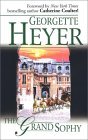
The Grand Sophy - Georgette Heyer ***+

Many fine writers of romance list The Grand Sophy as one of their favorite novels, and as it was recently re-issued, I finally picked it up. It's also my first venture into the world of Georgette Heyer. I have been meaning to read her books for years, I have no idea what kept me so long.

This is, without a doubt, one of the most amusing love stories I've read in a long time. The characters are priceless, the plotting without flaw. It's a first class romance, which means simply this: you know right away that in spite of all obstacles, Sophy will end up with Charles. What you don't know is, how that will come about. Much in the same way you know Elizabeth Bennett will end up with Fitzwilliam Darcy: the fun is in getting there, and Heyer takes you on a wild ride.

I think Sophy must rank up there with Elizabeth Bennett in terms of sheer memorable characterization. She is the kind of woman who refuses to stay on the page, who climbs out and follows you around long after you've put the book down. And who could mind? We could all use a Sophy to liven up our days and make order out of chaos.

So then why have I given this novel three and a half stars? I meant to give it four, and then I couldn't, quite. It's unfair to compare it to Pride and Prejudice, certainly; I know of few novels that could bear such a comparison (mine included). But even grading on a curve (so to speak) there's a problem I just can't get over: Heyer's love affair with the exclamation point. I hate 'em. Always have. In fact I wrote a small poem about my distaste for exclamation marks.

It's true that these books were written fifty years ago and literary styles change, but I had the hardest time getting past this punctuation issue. In fact, I counted twenty five of the little buggers on one page. It's really too bad, because otherwise the dialogue is clever and revealing. I think if they re-issued it (yet again) but deleted 99.9% of the exclamation points, I would have loved this without reservation.

November 16, 2003

DaVinci Code - Dan Brown *

I gave in and read this, although I was wary; too much fuss. It turns out this is one of those hugely successful books I can't explain to myself. But then I suppose tornados are exciting too. A tornado may be formidable and awe-inspiring, but mostly they are brash, messy affairs.

This novel certainly gets your attention, but then it's mostly sound and fury. Lots of interesting bits of history flying around, gone before you can get a good look at them, and then disappearing into the general chaos. The premise is intriguing, but it plays out in a most disappointing way at the end. Wise old woman scolds men for running after the wrong things, and the reader is left feeling scolded too. Good trick if you can pull it off: set the reader up for something big and them make them feel guilty for wanting it. Except not every reader will fall for it.

Finally, in this novel at least, Brown is (and I've thought about this for a while before decided on this word) stylistically clumsy. There's no rhythm in the prose, and every other sentence is built on the same diagram, ala: Putting her pen down, the reviewer contemplated what to say next. Scanning the dictionary, she found no better way to put it. Contemplating why this novel frustrated her, she finally went to bed.

November 15, 2003

Nuns with Guns

My friend Suzanne and I wrote a screenplay together. It hasn't sold, and I don't think it will, but that's okay, because we're thinking of turning it into a novel. Maybe the novel will be a huge hit and somebody will want to buy the movie rights, and voila. We will be able to hand it over.

Suzanne and I both are half Italian on our father's side, and we're both eastcoast-style Italian girls adrift in the Pacific Northwest. She's a poet, and she also writes creative non-fiction (I would put up a review of her Body Toxic, but it would be all gushy and I couldn't find a single objective negative thing to say, so I won't). But what we've really got in common is this crazy Italian family background. We can talk for hours about her Uncle Vito and my Uncle Fred, about recipes for braciole and family mythologies. Her parents are still alive, and I love to hear about the phone calls with her father. My father died in 1985, and I still miss talking to him on the phone. Here's an example of the way it went:

Me: How's your budget looking this month?
Arturo: Good. Good. I got money put aside for the doctor and the electric's paid and I also put fifty dollahs away for Mr. Lanius.
Me: Mr. Lanius? Who's that?
Arturo (yelling, in case my hearing is going): Mr. Lanius! Mr. Lanius! You know!
Me: is that somebody who did some work around the house, or what?
Arturo (hiking up the volume yet again): What, are you nuts? Mr. Lanius! Odds and ends!
Me: Oh. Miscellaneous. I gotcha.

You think I invented it, but it's true. At any rate, Suzanne and I decided to write this screenplay which has two possible titles: Nuns with Guns (my favorite) or Miracle at Malconvento. We worked really hard on it, and I still think it would make a great movie. Maybe it will one day. The idea for the plot came to me when I was in Italy in 1994, and I was thinking about what my father would have done with himself if he had actually moved back to Italy when he retired, as he was always threatening to do. My father was... an inventive individual. So I had this idea having to do with a scam and tourists and nuns and Nazis, and Suzanne had the perfect complementary set of ideas about an abandoned convent and food history (yes, food history) and priests, and so we wrote it. We read bits of it outloud to the Gang of Three (her people -- including husband Bruce, the Man of Pain, my people, and the Thor-n-Penny crowd; this are my best and closest friends). They laughed when they were supposed to, but then I repeat: these are husbands and close friends.

This is the opening voice-over:

DOMINIC (V.O.)
In 1922 my grandfather Luigi Alfonso Ventimiglia left Italy and came to Chicago. He didn't leave out of grief when he lost his wife. He didn't leave to make a fortune. He left because of his son. Now, Pop was really still a boy in 1922…

The bus comes to a halt and the doors fold open. Luigi Alfonso and Arturo pick up their suitcases, and Luigi climbs up the stairs first.

AGOSTINA BEVESANGUE - late fifty-ish, tiny, thin as wire and dressed all in black like a nun — comes to the door of the bakery (the sign, peeling and faded, says Panetteria Bevesangue). She is carrying a large tray of rolls.

DOMINIC (V.O. cont'd)
...but he had pretty much already outstayed his welcome.
So there's another thing on my to-do list, and another novel to write.

down time

gianduja

Down time is one of the important things that nobody talks about when it comes to writing. Currently, I'm researching the concept in depth, along with other important things that contribute to a productive writing week. My list so far:

1. good books to read
2. small dogs for cuddling
3. gianduja (hazelnut paste/milk chocolate) -- sometimes in the shape of small, insectivorous mammals -- from Chocolate Necessities, home of Kevin, our local artisan chocolatier.
4. truffles, also from Kevin
5. friends visiting
6. visiting friends
7. an absolute lack of guilt.

As I have a big double deadline at the end of December (which, by the way, I have no fear of missing), I think this particular research project is a timely and appropriate one. So there.

November 14, 2003

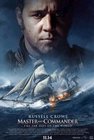
Master and Commander - screenplay by Peter Weir

A good thing. A very good thing. A tight, well told story, wonderful historical detail, great performances, visually engaging. And nary a male-female exchange: no love story, and you don't miss it. Not for a moment. First and foremost, this is a story about friendship; duty and honor and war are all there, but they serve as backup. Colorful, well done backup, but backup.

This is the first time I've got the sense of how tight quarters were on ships of this period. I did so much research on this very topic for Dawn on a Distant Shore, but I wish I had had these visuals to work with. Good stuff.

I should point out that the audience was probably 3:1 male:female, in spite of Russell Crowe (who was looking realistic for his role, and thus not too much the romantic hero).


Mr. Baur & Homer Simpson

Read the tomato-tobacco story at Low Earth Orbit, by Leo. His politics and mine are worlds apart, but I'm still laughing.

"Actually, it has no peaceful purposes."

snort. giggle.

November 13, 2003

story prompt: balloon man

This one speaks for itself, and it's a sad story:
The New York Times 3 July 1982
LONG BEACH, Calif, July 2 (AP)

A truck driver with 45 weather balloons rigged to a lawn chair took a 45-minute ride aloft to 16,000 feet today before he got cold, shot some balloons out and crashed into a power line, the police said. ... Mr. Walters went to a friend's house in San Pedro Thursday night, inflated 45 six-foot weather balloons and attached them to an aluminum lawn chair tethered to the ground. This morning, with half a dozen friends holding the tethers, he donned a parachute, strapped himself into the chair and had his friends let him up slowly. Minutes later, he was calling for help over his citizens band radio. Mr. Walters then lost his pistol overboard, and the chair drifted downward, controlled only by the gallon jugs of water attached to the sides as ballast. The ropes became entangled in a power line, briefly blacking out a small area in Long Beach. The chair dangled five feet above the ground, and Mr. Walters was able to get down safely....

The Los Angeles Times
24 November 1993 (by Myrna Oliver, Times Staff Writer).

Larry Walters, who achieved dubious fame in 1982 when he piloted a lawn chair attached to helium balloons 16,000 feet above Long Beach, has committed suicide at the age of 44. Walters died Oct. 6 after hiking to a remote spot in Angeles National Forest and shooting himself in the heart, his mother, Hazel Dunham, revealed Monday. She said relatives knew of no motive for the suicide. ...Walters said he never made much money from his innovative flight and was glad to keep his simple lifestyle. An Army veteran who served in Vietnam, Walters never married and had no children.

November 12, 2003

That Old Ace in the Hole -- Annie Proulx ***

Proulx does her usual magic here, poking and twisting at her characters until they spill the beans, wringing the language dry. Amazing, really. She is one of the few truly unique stylists of the present day.

This novel, however, lacks overall narrative cohesiveness. I found my mind wandering away at times, something that has never happened to me before with any of her writing.

This might be a good time to mention a rather infamous essay published in The Atlantic Monthly in 2001. It's called "A Reader's Manifesto", a rant against the pretensions of the literary elite that later was expanded and published as a tract (Melville House Publishing; 1st edition (September 2002) ISBN: 0971865906).

For the most part I have no problem with the occasional kick to the shins of the literary elite. In fact, the author (B.R. Myers -- who has published no novels of his own, be it duly noted) makes some valid points, but he also tips his hand in two ways: first, he adores Joyce and Proust, the masters sine qua non of literary pretention. Then Myers goes after particular writers for their word choices not only in their novels, but in their acknowledgements. In this, he gives himself away as an authoritarian language-maven of the first order: a fussy, foot-note quoting dictionary wielder.

I've met Annie Proulx, and I'll say this clearly: the woman is as tough as they come, and she does not need me to defend her. But look at this quote:

Luckily for Proulx, many readers today expect literary language to be so remote from normal speech as to be routinely incomprehensible. "Strangled ways," they murmur to themselves in baffled admiration. "Now who but a Writer would think of that!"

Next thing Myers will be scolding Elmore Leonard for writing dialogue that is not in complete sentences. The readers might get ideas. They might start playing with language, and where, I ask you, would such madness end?

three rules

W. Somerset Maugham said:
There are three rules for writing the novel. Unfortunately, no one knows what they are.

There's always a period early in the evolution of a new novel where I'm absolutely sure that I'm done and finished and will never write again and I'm about jumping out of my skin with agitation. But somebody else (can't remember who) said: if there's a story in you, it has to come out. I've been through this so often now that I know that's true. It just doesn't feel true right now.

The best part of writing is stopping. Or it would be, if I could.

November 11, 2003

Carnivale - HBO ****+

Lodz - Carnivale

Carnivale is a new series, a short one: just twelve episodes. Critical reviews aren't great. Too odd, too quirky, too slow, too demanding. The audience wants some answers, they say. The audience is confused.

Maybe we are, and maybe we aren't. Confused might be just the ticket in a case like this. I sit down to watch Carnivale on Sunday nights and it's true, I don't understand every odd David Lynch-ish turn, but I'm sure interested. Just when I think it's going to turn into a remake of the pretentious Twin Peaks, there's a quick shuffle and voila: I'm surprised, or touched, or just plain scared. I'm normally not big on religious symbolism or mystical goings-on, but I find myself wondering about these grimy, other-talented characters who are slogging their way through the depression, grappling with good and evil and things they don't understand but have to pay for anyway.

If your normal bill of fare is loving Raymond and you get fidigty waiting while Regis draws out the answers on Who Wants to Be A Millionaire, you're not going to like Carnivale. You probably won't like a lot of the other stuff on HBO either. But if you're willing to put yourself into the storyteller's hands and let somebody else make the decisions, you will be rewarded. If you sit back, relax, and let it happen.

impatience

The thing I like about HBO (beyond the basic issues of quality storytelling) is the lack of control it brings to the audience. When I was a kid, The Wizard of Oz came on television once a year; you caught it, or you waited another year. No revival showings at lovingly restored theaters, no video; you were at the mercy of the networks. There was a certain charm to that, a real excitement that went along with a once-a-year event.

HBO puts together movies or series and then shows them on their own schedule, at their own whim, without much reference to the big network scheduling system. They might show three episodes of something and then not show the next three until January, and if that's the case, you wait. We wait long long months between seasons of The Sopranos, for example. A marketing ploy, you sniff, and sure. But it's one that works.

In a way, this approach is re-educating the audience. The networks taught us to expect short story arcs, problems presented and solved in a half hour or hour; between eight and nine cancer is faced and fought, an attraction matures into committment, criminals are found out and brought to justice. We are impatient. We want not only clear, tight, seamless endings, but we want them fast.

But not on HBO. HBO snickers at such whinings. You'll wait for The Sopranos, and you'll like waiting, by gum. Carrie's romantic fate keeping you up at night? Too bad. Sure, the last episode of Sex and the City is filmed and waiting, but it's not for you or me to see, not yet. Shocked that the main character in The Wire showed up floating in the river, and can't figure out what in the heck is going on with the Russians -- are they really just going to get off free? Sooner or later, when the people at HBO have had their fun watching us squirm, they will bring back the Baltimore crew, but I'm pretty confident it's not going to be anything I'm anticipating.

Samson - Carnivale

Carnivale is a new series, a short one. Just twelve episodes. We've seen nine of them so far. Critical reviews aren't great. Too odd, too quirky, too slow, too demanding. The audience wants some answers, they say. The audience is confused.

Maybe we are, and maybe we aren't. Confused might be just the ticket in a case like this. I sit down to watch Carnivale on Sunday nights and it's true, I don't understand every odd David Lynch-ish turn, but I'm sure interested. Just when I think it's going to turn into a remake of the pretentious Twin Peaks, there's a quick shuffle and voila: I'm surprised, or touched, or just plain scared. I'm normally not big on religious symbolism or mystical goings-on, but I find myself wondering about these grimy, other-talented characters who are slogging their way through the depression, grappling with good and evil and things they don't understand but have to pay for anyway.

If your normal bill of fare is loving Raymond and you get fidigty waiting while Regis draws out the answers on Who Wants to Be A Millionaire, you're not going to like Carnivale. You probably won't like a lot of the other stuff on HBO either. But if you're willing to put yourself into the storyteller's hands and let somebody else make the decisions, you will be rewarded. If you sit back, relax, and let it happen.

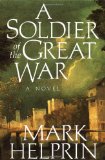
A Soldier of the Great War - Mark Helprin

In A Soldier of the Great War, Mark Helprin has created characters who are so real that they take up permanent residence in your mind. I first read this when it came out in 1991, and I've read it again every year.

The novel opens in 1964 when Alessandro Giuliani is an old man, on his way out of Rome on a bus to visit his granddaughter. He ends up walking most of the way with a new acquaintance, and to this young man he tells the story of his life, most particularly the story of the first world war and the way it swept away one world and replaced it with another. It's a huge novel in its scope, moving from the trenches to encounters with royalty and a dwarf named Orfeo, a darker version of the Wizard of Oz.

The dominant theme has to do with the role of women in the aftermath of war and loss. The theme is a fruitful one for Helprin, although the one thing that continues to bother me about this novel is his tendency to create women who are more symbolic than real, and always extreme in their beauty or lack of it. The love story is not an easy one, but it is powerful.

I was thinking of Alessandro when I wrote the character Francesco who plays such a pivotal role in Homestead (published under the Other name). They are not the same person -- their fates and backgrounds are very different -- but I imagined them fighting next to each other in the Alto Adige.

This is one of my top ten all time favorite novels.

Literary Lynching

Literary Lynching: When Readers Censor Writers -- by Dorothy Bryant

This is really worth reading, and it's over there on the Holt Uncensored website (thank you, Pat Holt and Dorothy Bryant) in its entirety.

one inch frame

Lamott's Bird by Bird is a book I often read through when I'm feeling overwhelmed by the project at hand. As I am just now. Her "one inch frame" is a reminder that I'm supposed to be thinking about the character in front of me, and just her, and what she's up to right now. Forget the War of 1812, the British Navy, the complicated politics, the fact that I've got characters waiting for me up there in Paradise and on l'ile de lamatins, too. Just concentrate on Giselle at her breakfast table looking at the ships in the harbor.

The problem is, Giselle is still a little put out at me for leaving her to her own devices.The last we saw her was about half a million words ago and now she's being standoffish. However, she tolerates me as she would a portrait painter.

I wish her husband would come along so I could get a look at him, because I've got a sneaking suspicion that he's somebody I've seen before.


November 10, 2003

About Schmidt - screenplay by Alexander Payne **

About Schmidt

My question: how does price fixing actually work among professional film critics? Is there a meeting every year where they decide these things? Jack Nicholson movie = good. Well, this one isn't. Not for my money.

A story can be about awful people, but somehow or another there's got to be enough dramatic tension to keep me in my seat, and I almost walked out of this one. Schmidt is so limited in his perception of the world that it's torture to watch him, and not character-building, Kafka-esque torture, either. Worse, everybody around him is just as boring, but most of them are disagreeable for other reasons as well. Even the ones who are supposed to provide comic relief are pathetic (his daughter), revolting (his son in law) or just plain nasty (Roberta, played by Kathy Bates).

The worst thing of all is the fact that they set the plot up around Schmidt's 'adoption' of a 6-year-old Tanzanian named Ndugu through a world charity, so that we can hear Schmidt's inner thoughts by means of the letters. This is not only ham-handed, but it backfires because if anything, those letters make Schmidt less likable. If that's possible.

My friend Bruce has dubbed this a man-of-pain-movie, the highest praise he can give. We don't see eye to eye on movies, obviously. I'll gladly leave him this one.

Love, Actually - screenplay by Richard Curtis *

A failure, sadly. All the funny stuff is in the previews, and otherwise the braided story technique really doesn't work, mostly (I think) because the director/writer lacks the courage of his convictions. A holiday movie about love and hope and optimism, unapologetic? That's what I was expecting. A movie like that has its charms though it may bore film students and critics. But no. For whatever reason they felt compelled to sneak a few unhappy endings in (and I mean unhappy as in tragic, specifically the Laura Linney storyline). So we end up with something neither fish nor fowl. All those great actors, it's really too bad. Oh and, why do all the middle age men end up with twenty-year olds?

what I'm writing today

I'm starting the fourth chapter of Queen of Swords, and Daniel is hiding from me. I wonder how long it will be before he shows himself. Nathaniel, on the other hand, wants to talk. Better go listen.

Something else: Giselle is back. To my surprise.


November 9, 2003

Pursuit of Alice Thrift -- Elinor Lipman ****

Elinor Lipman's novels either delight me or leave me cold. This one was a little different -- it almost delighted me, but I needed a sweater while I read it. Alice is a hard kind of character to write. She's incapable of accessing her own feelings or reaching out to others, something that Lipman conveys so successfully that the reader feels just as alienated from the main character as she does from her life. All in all this novel glides along on the surface, and it never really digs down to where the interesting stuff might be. What's really frustrating is that Lipman actually gets Alice to the point where things are going to happen, and then she ends the book. I will grant that there are some quirky characters, very memorable --but even they float above the narrative.

free speech & snobbery

Harold Bloom is a Very Big Name in literary circles, and a man of strong opinions. This is what he told the New York Times when the National Book Foundation gave the most prestigious award it has to offer to Stephen King:

"He is a man who writes what used to be called penny dreadfuls...That they could believe that there is any literary value there or any aesthetic accomplishment or signs of an inventive human intelligence is simply a testimony to their own idiocy."

This kind of thing makes me (1) mad; (2) melancholy; (3) really glad I got out of academia. Do I think King is the best writer ever? No. Does he understand how to tell a story? Yes. Has he made a significant mark on American literature of the present day? Absolutely. Does he deserve this award?

There's the issue, and here's my answer: I don't know. It's not something I've given a lot of thought, mostly because my opinion doesn't really matter on this. What I do know is, Harold Bloom epitomizes what bothers me about the literary elite, so ready to get out knives and cattle prods and go to work. I would bet that Harold Bloom has never read Stephen King. I certainly wonder how he defines 'inventiveness'.

At any rate, the reason I got into this was, I wanted to point you to a very good essay by Steve Almond on this Bloom on King business: The Bloom is Off the Mark. I don't agree with every premise, but I think he nails Bloom quite nicely. On the same site there's Almond's excellent piece on blurbs.

While you're over there, have a look around MobyLives. It's an interesting place and you might want to visit Steve Almond's webpage too.

story prompt: Beanie Babies

At the border between United States and Canada, an irate father slugged a customs officer who was trying to pry excess Beanie Babies from his daughter.

The Economist
12/5/98

Is this the beginning of the story, or the end?

Is this guy a divorced father trying to win his daughter's approval? Is his name George, Newman, Claude, Muhammed?

Is the customs officer an old girlfriend?

Is the kid manipulating her father or is she a pawn? Is her name Tiffany, Harriet, Meg, Susie?

November 8, 2003

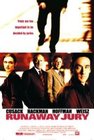
Runaway Jury - screenplay by Brian Koppelman ***+

Runaway Jury

I am a big fan of John Cusack's, and ever since Enemy at the Gates I have been following the career of Rachel Weisz. Add in Gene Hackman and Dustin Hoffman (and others) and you've got a great cast. They take a solid script and do their magic, and the result is a really good legal thriller. Like most thrillers, this movie does require some suspension of disbelief, but this one a little more than others.

Gary Fleder has done mostly television directing up to now (with the exception of the mediocre Don't Say a Word), but this movie bodes well for him.

November 7, 2003

frequently questioned answers

Since this blog has been up, I've been getting quite a lot of email from various people, 99.9 percent of it fine and good and interesting. I often hear from people who are struggling with their own writing, and they've usually got one of two questions: 1) who is my agent and will I introduce them; 2) will I have a look at their work.

My agent is a matter of public record (I dedicated Lake in the Clouds to her). Like all agents she gets a lot of inquiries from potential clients. Over the years I have sent a few people her way (by this I mean, I've mentioned their names and said they might be in touch). Of all those names, only one is now her client. So getting an introduction from me really doesn't help one way or the other. If your work is something she feels she can represent, you may work something out with her, but that's between the two of you.

As far as getting people to read your work, I'm not the right person for that. I've got a longer answer about that on my FAQ page but I'm going to reproduce it here:

I get mail now and then from readers who are working very hard on their own stories. These are people who are struggling with the very issues and questions and doubts I faced some years ago, and that I still face, in a different way, today. I understand very well what they are experiencing but the help I can offer is limited....

It is a great responsibility to read the work of aspiring authors, and it is also a delicate, involved, and time consuming one. When I have a piece of work in front of me, I hold a person's hopes and dreams in my hands. The wrong word or approach could crush those aspirations.

This is true no matter what the relationship. I exchange work with my best friend, and we both step carefully even though we give each other honest criticism. Over tea I can say to her "This just doesn't work for me," or "The transition here falls short" and she will not be crushed, because she knows that I respect her and her work. She can say to me "You just can't use that name, it evokes too many associations to X" or "You've used this image before" or "huh?" and I'll just nod, because she's right and I know she is.

But an author who is just starting out may need commentary on many levels. From how to open a story to where to end a paragraph, from word choice to dialogue, from story to character. When I teach introduction to creative writing I don't let my students write a whole story to start with, simply because they will give me ten pages that require so much commentary it would take me longer to comment than it did for them to write it.

I once had a graduate student in creative writing who was very talented. She was writing her master's thesis -- a collection of short stories -- under my direction. She had a whole file of stories she said were "junk", but I asked to see them anyway. She believed that they were junk because a previous teacher had handed them back to her with the words "not worth the effort" written on them. But in that pile of rejected stories (about seven of them) I found four that had wonderful promise. Strong characters in interesting conflicts, but the rest of the story was in poor shape and needed extensive work. Over a summer I worked with her on those four stories. Each went through ten or even fifteen revisions, and she worked them into something wonderful. But it took tremendous effort.

The moral of that story is that the wrong reader can do a great deal of damage; the right reader is just the beginning of a long writing process.

I am sure that some or even many of the people who ask me to read their work are talented. They may need direction and help, and need it very sincerely. If I am not the person to provide it, what other choices do they have?

My strongest suggestion is to make connections to other writers around you. Community colleges often have classes in creative writing. Even if a new writer feels they are beyond the "introduction" stage, this can be a great way to make contact to others with the same interests and concerns. I found my first writing group (an excellent one) through a creative writing class. The other real advantage of taking such a course is this: it teaches you to accept constructive criticism gracefully, something that is often very hard for beginning writers, but absolutely necessary.

If for whatever reason it isn't possible to take a course, then there are very good writing communities on-line. Finally, I am always happy to suggest two books which were (and still are) helpful to me. The first one because it looks at the nuts-and bolts of putting together fiction with great insight, wonderful examples, and most of all, common sense; the second one because it is hopeful and wise and funny.

Jane Burroway. Writing Fiction: A Guide to Narrative Craft. Addison-Wesley Pub Co. ISBN: 0321026896
Anne Lamott. Bird by Bird. October 1995. Anchor Books/Doubleday. ISBN: 0385480016

Writing is a demanding business, but a rewarding one. It's hard for everybody; take comfort in that. And then get down to work.

story ideas

it's a really good idea to keep a notebook of story ideas. Bits of conversations you overhear that strike your imagination, newspaper stories, a photo from a magazine. I have tons of these kinds of prompts. Here's one:

UPLAND, Calif. (AP) — When Maria Blackburn opened the contents of an abandoned storage unit she bought at auction, she found wedding pictures, champagne glasses and the body of the groom. ... Darlene Bourk, 31, pleaded innocent to killing Robert Bourk, the San Bernardino County district attorney's office said Thursday. Investigators believe he died in December 1996 when he was 27. It was unclear when the couple married. Upland police Lt. Ed Gray wouldn't elaborate on the events that led to Bourk's death or say how he died, but he said Bourk would have remained listed as missing had his wife not ...
failed to pay the Stor-King self-storage facility in Upland, about 50 miles east of Los Angeles. After two missed $25 payments, Stor-King auctioned off the unit, and Mrs. Blackburn paid $20 for its contents, which she planned to use to stock a thrift store in Los Angeles. As she began opening the 20 to 30 boxes in the unit, she pulled out wedding photos, champagne glasses and then bloodstained clothing. In a carefully wrapped wardrobe box, stuffed with two tarps, a blanket and a layer of thick roofing plastic, she found Bourk's body. Stor-King manager Susie Gonzalez said Mrs. Bourk called in a panic after receiving notice her belongings had been sold. She left two notes on the storage unit, saying she'd "give anything, anything to get the storage back,'' Mrs. Blackburn told The Press Enterprise of Riverside. Police arrested Mrs. Bourk on Sept. 15, the day after the auction, in nearby San Dimas where she lives. Although most of the contents of the storage unit were taken by police as evidence, Mrs. Blackburn said she was able to keep some of the items, including wedding pictures of a smiling Bourk. "He looked like a nice, handsome man,'' she said. She said she plans to send them to Bourk's mother.

So here's the thing: if you look at a traditional story arc (ala Cinderella, below), you have some choices here. Where does the story really start? Who are the main characters in conflict? What does each of them want? Does Susie Gonzalez (a great name, by the way) have a real role to play here? You could take this in a dozen different directions, from a dozen different points of view.

Every once in a while I'll post one of these bits I collect that I call story-prompts.

November 6, 2003

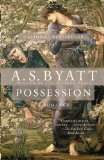
Possession: A Romance - A.S. Byatt *****

Byatt is a former academic, and she dissects academia with laser-like precision in this novel. It's everything in one: a well-plotted mystery, an intriguing love story (times two), an academic satire, a wonderfully done historical, a clear and striking picture of the lot of women (and especially women artists and writers) in Victorian England, and an ode to the poetry of that period. How this book didn't get onto the lists of the century's best is beyond me. Stunning prose, and first class storytelling. Possession is a demanding novel, one that has to be read closely and re-read many times to get all the complexities, but it's so worth it. (I have also listened to it on tape, which was another wonderful experience).

In the Cut - Susanna Moore

Detachment, isolation, despair, poetry, sadistic murder, erotica. The prose is evocative, the narrative disturbing. I would have been able to buy into this more easily if Moore had not outreached herself in terms of the main character's academic research, the details and context of which do not ring true.

The Bronze Horseman - Paullina Simons

The final line of this novel moved me greatly. This really could have been a great love story. Certanly the main characters are engaging and I wanted a happy ending for them, something that didn't quite happen in the way I expected it to -- another plus point. But the novel is terribly bloated and needed a sharper editorial eye. Also, the author indulges in the kind of sex scenes that go on too long, so that the erotic gives way to the merely sensational.

Hardcase - Dan Simmons ***+

There are three novels in this series of ultra-hardboiled thriller? detective? tough guy? (the genre is in flux, and at present there isn't really a term for it that I like) novels. The hero is Joe Kurtz, and he's is the hardest fictional case I've run into who still comes across as three dimensional and interesting in a variety of ways. In hardboiled fiction, the main character(s), no matter how tough, have to have limits to what they will do. Often they have partners who are happy being larcenous. Patrick and Angie in Dennis Lehane's series have Bubba Rugowski.

Joe Kurtz is Bubba and Patrick rolled into one, and Bubba has got the upper hand.

living history

Pepys

One of my favorite websites is dedicated to Samuel Pepys' diary. Pepys was born in 1633 and was a prolific diarist in a period of great political and social upheaval:

In September 1658, Oliver Cromwell died, passing the title of Protector (king in all but name) to his son Richard. Pepys’ employer, Edward Mountagu was closely associated with the Cromwells’ reign and the 1656-7 attempt to make Oliver king (Oliver refused because he feared the army’s republicanism). Following Richard’s overthrow in April 1659 Mountagu found himself increasingly at odds with the government’s growing republican elements.
I find the Pepys diary website addictive because it is so well annotated -- by the readers themselves, for the most part, who contribute to the text and discussion of the text. There are links to provide background on just about anything you don't know about living in England circa 1660: the currency system, the difference between ale and beer, pancake day customs, the history of Bartholomew fair, 17th century coffee houses, and so on. I often consult the diary when I'm trying to sort out some sticky historical detail.

November 5, 2003

dialogue exercise

Three basic rules:

1. There are no superficial people; there are only less articulate people-- in fiction.

2. Even dumb characters have to say interesting things.

3. Dialogue has to accomplish more than one thing in order to earn its keep (see on writing dialogue, an earlier entry).

One character asks a question in direct dialogue; where do these possible answers lead the story and the characterization?

"Do you live around here?"

--Hey. I wouldn’t be caught alive in a place like this, pal.
--I’ll have you know, young man, that my grandfather built this house. I have never lived anywhere else. Never cared to.
--What kind of question is that? Did you think I was sleeping on the street? I look like a bum to you?
--Sure do. That little yellow job over there is mine, all nine hundred fifty square feet. Shingled the roof myself, which is how I come to do such mischief to my back.
--The hell out of my face.

Two kinds of exercises that are useful: take a well known character in literature and try to get them to answer similar questions. How might Captain Ahab reply if a stranger were to ask him if he'd like some coffee? How would your main character? The other thing to do is construct twenty possible answers that take the storyline in twenty possible directions. Something to get you started below.

"What did you get up to over the weekend?"

--"There's mustard on your tie, did you know that? Mustard." (father and teenage daughter)
--"Amazing. You look like a functioning human being, and yet you comprehend nothing." (man and woman being pursued)
--"You know very well where I was this weekend, and let me tell you that your grandmother was very dissappointed not to see you at her tea party. She made that jello you like so much, with the grated carrots and the marshmallows, and then she had to eat the whole thing herself." (mother and adult son)

These exchanges might work in a given piece of fiction if they moved the scene along and contributed to characterization. See what you can do; make up a character and see how they answer the question.

November 4, 2003

Crais Controversy

Martin at Legends of the Sunpig has got a very well considered and documented essay on the recent controversy around Robert Crais and his filing of a copyright infringement lawsuit against Activision. Copyright issues around characters are very complex and growing more so as different medias develop. It's something every author needs to think about.

I have given these issues a lot of thought, from a number of different angles, and I've written a little bit about copyright in relationship to genealogical research. That essay is here.

Die Trying - Lee Child ****

Lee Child is one of the top names in hard-boiled thriller fiction. His hero, Jack Reacher, is an ex-military policeman, and a good guy of the first order. This is my favorite of the books, sparse, tight, clean, a great deal of action. Sometimes the gun talk gets a little much for me, and the female character is a bit of a stretch. But all in all, this is a great escapist read.

Farscape: The Princess Trilogy *****

Every season the Farscape folks come up with a trilogy. This is the least dark in tone of them, but it's still chock full of the stuff that makes Farscape work. And the final scene of the third hour is, in a word, priceless.

The Ice Weaver - Margaret Lawrence *****

This novel is a follow-up to Lawrence's three Hannah Trevor novels, some of the best historical fiction I have ever read. The Ice Weaver is in many ways my favorite, in part because the author doesn't feel bound by the tenets of the mystery genre (as she was for the first three). It's the story of Hannah's daughter Jennet, a young deaf woman, newly orphaned, struggling to stay alive and sane and keep her dignity. Set in upper New-York state in the late 1700s, it has some similarities to my own novels, but is very different in tone and approach.

where things go wrong

most usually if a novel or a movie falls flat, it's because the author/writers/director lost track of the story arc. Some basic points:

1. Almost always, a satisfying story has three basic elements: conflict, crisis and resolution of the conflict. This is true of stories on a screen or stage or on a page. Think of: Romeo & Juliet, Terminator, Moby Dick, Emma, Clueless, A Thousand Acres, Master and Commander.

2. Good, balanced, healthy people in happy situations are sweet, but boring. You want to be related to them, but you do not want them populating the only novel you've got to keep you busy on an eight hour flight.

A problem (conflict) is what makes a story. There's always SOMETHING in conflict. Two people fall in love, BUT their families object... he's black and she's white...she's old and he's young....she's got a PhD and he's got grease under his fingernails...she's married...she's democrat and he's libertarian...he's a professional violinist and she's Deaf.

3. The conflict can be between people, or not. Sometimes conflicts are completely inside one person's understanding of themselves. (It looks like the conflict is between Sue and this granddaddy of a trout that has been eluding her for so long, but it's really about.... her inability to let go of relationships that are over; her lack of faith in herself; the doubts she has about going to shipbuilding school). But sometimes a person or persons will be in conflict with a place, or the idea of a place. Other conflicts might be: A man and a machine; a woman and a horse; a town and a river. A conflict can be very obvious and in-your-face (he loves her but she loves somebody else) or very subtle (can he face the truth about himself?). But almost always, the conflict ON THE SURFACE is masking some larger conflict. "I want you to pay my parking ticket" might really be "I want you to accept responsibility for me and everything I am." "You never take out the garbage" might be "I'm angry at you for messing up my life and I'm going to make you pay."

4.

It might not look on the surface to be the case, but they do. The power passes back and forth, and this is how tension is created, and you keep the reader interested. A woman incapacitated in a wheel chair, unable to feed herself, hardly able to talk, can be a poweful presence in the life of a young, healthy daughter. Power takes many forms.

With those points in mind, have a look at this simple schematic of how tension and story arc work together is adapted from Janet Burroway's classic text on writing fiction, now in its sixth edition (click on the image to enlarge). If you study it, you'll see how power moves back and forth between the forces of good (Cinderella) and evil (the Stepmother). Kinda like capture the flag, but without the flag.

You can take any novel or movie or play or episode of television and look at it in these terms to figure out how it's structured (or where the narrative begins to lose its rhythm).

One of the movies I sometimes use when I teach this stuff (specifically because it is seriously flawed) is Notting Hill. If you think through the points above and try to fit that movie into this schematic, you'll see where it goes wrong.

An important point: sometimes a novel or a movie goes wrong, but you forgive it because some other element you truly admire (the acting, the cinematography, something) convinces you to overlook the flaw. But the flaw is still there, and figuring it out will help you with your own writing.

November 3, 2003

research & craft

I know there are a lot of aspiring writers out there. Do y'all want me to continue to post how-to bits now and then? Are they helpful? Any preferences on topic? Dialogue, characterization, naming, plotting, point of view, etc etc. Let me know.

obsessive compulsive perfectionist disorder

I made that up, but it fits. I spent this last weekend (a) searching for my daughter's most beloved and currently-still-missing cat; (b) trying to console said daughter (c) trying to read; (d) trying to write; (e) failing everything else, spending many hours tweaking the stylesheet for the various websites. You'll see that this one looks somewhat different. Of course there's always something wrong, in this case the spacing between date and entry. Isn't obsession interesting? I can stand back and look at how ridiculous it is to worry about something like this, and then blithely go back to worrying.

Then there's the subsidiary reviews & recommendations blog that I'm trying to get to work, with help from Martin at Legends of the SunPig. Thus far, no joy, but you can have a look at it in its less than perfect state, if you like.

I did get some writing done yesterday, and a lot more today.

Also, a Big Discussion is brewing with my editor and publisher, who, it turns out, really really dislike the title for the new book. Thunder at Twilight. Which, I hasten to say, I love. I adore this title. But they don't. They worry it is too romance-like. Huh? To me is sounds far more military than romance, and in fact it has to do with the launching of the Bonners into yet another war. So the negotiations begin, again, and I'm very sad about this. But I haven't given up hope completely.

A note: as of today, thirteen of you voted in the Farscape poll thus: Farscape?

You must, all thirteen of you, report after school for tutoring. I'll bring cookies and milk while you go back through this blog and read all the carefully constructed, thoughtful essays I have written about quality storytelling and support for storytellers.

One more Farscape note: the nominations are now open for the annual Sparkey awards, which brings recognition to the folks who write fan-fiction. There are some really, really good writers of fan fiction, and I'm gonna bring a few of them to your attention. Note: I am not one of them. My own characters give me enough grief.

November 2, 2003

In the Cut - screenplay by Jane Campion

This is a flawed movie, but it has some things going for it. First and foremost is Meg Ryan's performance: understated but intense none the less. She meets difficult material with a lot of poise, and makes drama out of situations that could easily have slipped over the line into the ridiculous.

The second thing I liked about it was the camera work. I anticipate that critics will complain that it's too self conscious, but I've rarely seen a movie that really captures what Manhattan can feel like when it's at its rawest. The camera's eye makes some surprising and revealing moves. It also over -does it at times, but the high points are many.

With the exception of the young man who plays Ryan's student -- he felt a little too packaged for my tastes -- the performances ranged from excellent (Ryan herself) to okay (Ruffalo's partner).

What really went wrong, I think, is that the director was supposed to be making a thriller/suspense/murder mystery and she kept getting sidetracked (or maybe she doesn't really like the genre she was working in). So the last ten minutes are pretty awful, in terms of plot.

Two other points: the violence around the murders is explicit, as is the sex (the most explicit I've seen in a long time), and some of the symbolism (especially the language play) is a little forced.

November 1, 2003

lying for fun and profit

listen

storytelling is about being creative, or, to put it more bluntly, lying. A successful liar storyteller is somebody who a) has a really good memory; b) knows the value of detail; c) can make the listener want to believe what he or she has to say. Suspension of disbelief is what makes storytelling work.

Here's a good exercise I use when teaching. Have people make three statements about themselves, one of which must be a huge whopper of a lie. For example, Louie writes down:

1. I once was questioned by the FBI because they thought I was connected to a cigarette highjacking gang.

2. When my mother was growing up, she lived across the street from a man who had no arms who had a wife who had no legs.

3. Last summer I got a cool job: I was a roadie for Garth Brooks.

Louie has had an interesting life, but one of these is a lie. To survive the game, he must be ready to answer questions. It's not enough to say, yeah, it was cool, when asked about being a roadie. He's got to have the details down, ala:

Well, my only job was to keep his hats in shape and ready to go. He's got this whole setup in the bus, just for the hats. Brushes, spot cleaners, molds, the whole thing. And it was my job to have them ready for him, off stage, for when he soaked through a brim -- you would not believe how that guy sweats. I almost got fired in Amarillo when a huge guy --must have been three hundred pounds, and he smelled like a dog kennel-- barged back stage waving a toilet plunger and nabbed Garth's favorite white suede ten gallon cowboy hat. I thought he was a janitor but it turns out he's this nutcase who follows the band around Texas, just begging to Garth to let him play in the band. His name is Hewey Red Dog Cross, and he makes music with that plunger, you've got to hear it to believe it.

Take a shot, it's fun. Make up a really outrageous claim and then back it up. Oh and here's a hint: if Louie knows nothing about Garth Brooks or concert tours, then setting up a lie story like this will fail unless he's willing to do a lot of research first. People who write historicals or alternate universe fiction have the most research to do; those who write what they know (and nothing else) have the least.

Burr -- Gore Vidal

Vidal (one of the great minds of our age) is a master of historical fiction. This novel brings the early 19th century to life, and provides a sober yet amusing perspective on the famous and the modest alike.