" /> storytelling: May 7, 2006 Archives

« May 6, 2006 | Main | May 8, 2006 »

May 7, 2006

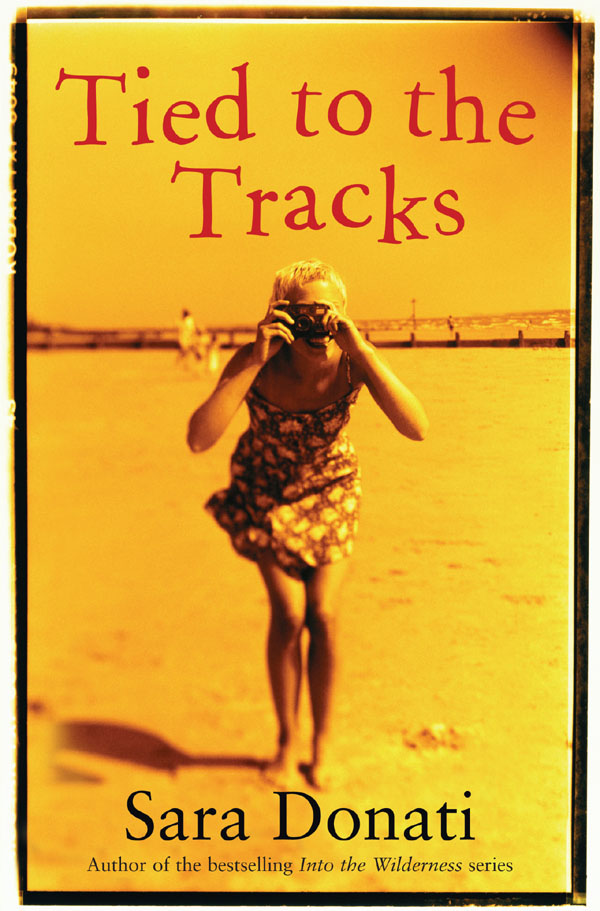
Tied to the Tracks: Australia/NZ


Jacqui came up with this: The Australian cover for Tied to the Tracks. It is nothing like the American cover, as you can see. In addition to the fact that it's coming out under the Sara Donati name downundah, the whole feel is different. You might not see a connection to the story straight off.

For what it's worth, I see a connection and more than that: I love the image. I was hoping they'd fix the wobbly type, but the image? I am delighted.

a question for you

Here's the thing. I'm getting a lot of comment spam lately. It's depressing, because for a good four or five months, I had none at all. Those slee sneeky spammers have obviously found a way around the safeguards currently in place.

/aside/ This is the kind of thing I obsess about when I'm procrasting about writing. I tell you this is the spirit of full disclosure. /aside/
So I have been thinking about solutions.

The most drastic choice would be to dump Movable Type for software that has got the spam thing more under control. It would be tremendously time consuming to export everything here, learn the new software, set that up, and import things. Not to mention the long list of glitches that would almost certainly ensue.

The easiest thing would be to find a plugin for MT 3.2 that puts one of those funny little boxes on the comment page that you have to interpret so your comment will be posted. Except, no such plugin exists (or at least, I haven't been able to find one that I can have even a hope of installing).

So an experiment. I set up a month long trial at Type Pad (which is really Movable Type for dummies -- everything set up already, pretty easy to make changes to design and import everything from here). I imported everything. You want to see it? Here.

Good things: all the infelicities that have snuck into the guts of this weblog over three years are gone. Everything clean and tidy. They have one of those boxes on the comment page, which should take care of 95% of comment spam. I never have to worry about software upgrades again.

Bad things: Lots of my bells and whistles would have to go. Maybe some of them are retrievable if I want to invest the time in figuring out how to make "posted last year on this date" work over at Type Pad. Which right now, I don't. The categories list is not nested, which bugs me. There's no search function. It's quite pricey. And worst of all, I'll have to fiddle with domain mapping or change the url of the weblog, which always brings along a huge number of problems. Now, on that last point, I am probably going to have to change the url anyway, so that's nosobad.

I'm sure I lost most of you three paragraphs ago, but if you're still here and you have an opinion, would you share it?

Yours in procrastination
the management

repeating myself: on mentoring

Given the fact that I've had four emails in a month touching on this topic, I'm going to pull this q/a from the FAQ page.

Q: I have been working on a novel for quite a while now and I would so much appreciate input. Could you possibly find time...?

I get mail now and then from readers who are working very hard on their own stories. These are people who are struggling with the very issues and questions and doubts I faced some years ago, and that I still face, in a different way, today. I understand very well what they are experiencing but the help I can offer is limited.

It is a great responsibility to read the work of aspiring authors, and it is also a delicate, involved, and time consuming one. When I have a piece of work in front of me, I hold a person's hopes and dreams in my hands. The wrong word or approach could crush those aspirations.

This is true no matter what the relationship. I exchange work with my best friend, and we both step carefully even though we give each other honest criticism. Over tea I can say to her "This just doesn't work for me," or "The transition here falls short" and she will not be crushed, because she knows that I respect her and her work. She can say to me "You just can't use that name, it evokes too many associations to X" or "You've used this image before" or "huh?" and I'll just nod, because she's right and I know she is.

But an author who is just starting out may need commentary on many levels. From how to open a story to where to end a paragraph, from word choice to dialogue, from story to character. When I teach introduction to creative writing I don't let my students write a whole story to start with, simply because they will give me ten pages that require so much commentary it would take me longer to comment than it did for them to write it.

I once had a graduate student in creative writing who was very talented. She was writing her master's thesis -- a collection of short stories -- under my direction. She had a whole file of stories she said were "junk", but I asked to see them anyway. She believed that they were junk because a previous teacher had handed them back to her with the words "not worth the effort" written on them. But in that pile of rejected stories (about seven of them) I found four that had wonderful promise. Strong characters in interesting conflicts, but the rest of the story was in poor shape and needed extensive work. Over a summer I worked with her on those four stories. Each went through ten or even fifteen revisions, and she worked them into something wonderful. But it took tremendous effort.

The moral of that story is that the wrong reader can do a great deal of damage; the right reader is just the beginning of a long writing process.

I am sure that some or even many of the people who ask me to read their work are talented. They may need direction and help, and need it very sincerely. If I am not the person to provide it, what other choices do they have?

My strongest suggestion is to make connections to other writers around you. Community colleges often have classes in creative writing. Even if a new writer feels they are beyond the "introduction" stage, this can be a great way to make contact to others with the same interests and concerns. I found my first writing group (an excellent one) through a creative writing class. The other real advantage of taking such a course is this: it teaches you to accept constructive criticism gracefully, something that is often very hard for beginning writers, but absolutely necessary.

If for whatever reason it isn't possible to take a course, then there are very good writing communities on-line. I highly recommend the authors' forum at CompuServe, which includes sections where people submit and critique each other's work, according to genre. CompuServe was very helpful to me when I was in the early stages of writing Into the Wilderness. Finally, I am always happy to suggest two books which were (and still are) helpful to me. The first one because it looks at the nuts-and bolts of putting together fiction with great insight, wonderful examples, and most of all, common sense; the second one because it is hopeful and wise and funny.


Jane Burroway. Writing Fiction: A Guide to Narrative Craft. 5th edition July 1999. Addison-Wesley Pub Co. ISBN: 0321026896

Anne Lamott. Bird by Bird. October 1995. Anchor Books/Doubleday. ISBN: 0385480016


Writing is a demanding business, but a rewarding one. It's hard for everybody; take comfort in that. And then get down to work.
The Camerons, Robert Crichton


This is one of those novels that I had forgot about, unearthed in the quest to catalog all our books on LibraryThing.

I read it in 1974 or '75, shortly after it came out. When my old copy showed up in a box the other day, I had an instant jolt of recognition: ah, a good story. So I sat down to read it again, but very carefully. My copy is brittle and the binding is loose, but you most probably can find a hard cover copy at your library. I just ordered a used hardcover, as the book is long out of print.

So, historical fiction set in a mining village in Scotland. Maggie, born into a family that has been digging coal for generations, wants more. The first step, she believes, is to find the right husband, and that means going elsewhere. On her sixteenth birthday she sets off for a resort town where she finds and beguiles an empoverished highlander who lives on kelpie soup and seaweed, but he's tall and blond and strong, and he can work. His name is Gillon Cameron.

She exacts a promise from him, that he'll come back home with her and take up coal mining until they've saved enough money to move on. Twenty years later, their five boys are now working in the mines along side Gillon.

Gillon is the most intriguing character here. He makes a life for himself, reads books about coal, comes to understand the geology, stumbles across a tiny and unvisited library and begins to read more widely. He gains the respect of the town and the miners, and he acts quickly and courageously to save the life of a young man caught underneath a slab of coal.

Little by little he comes to a place where he understands he has to challenge to mine owners, which puts him in direct opposition to Maggie, who is so focused on saving money that she can't bear the thought of any disruption. This is the heart of the story, and the resolution is not the one you might expect.

This is a first class historical novel, closely observed, excellent detail, but most of all, a story that works in all its parts.