intrigues literary and criminal
Various writers out there in the blogosphere have been posting about writerly envy, and so now I'm going to jump on the bandwagon. But first I want to get some clarity on what these words mean. Because for me, there's a difference between envy and jealousy:
envy: you've got something I would like to have for myself.
jealousy: I've got something I don't want you to have.
Now, the semantic fields for envy and jealousy are starting to merge, so some people will use jealousy and envy interchangeably. But here, at least, I'm trying to keep them distinct.
There's also a big difference between 'to envy' and 'to covet'. I might envy Rapunzel her beautiful long hair (I'd like to have hair like that) but to say that I covet Rapunzel's hair would mean that I plan to snatch her baldheaded and run off to make a wig for myself out of her hair.
So this extended example:
I love your house, someday I'd like to build one just like it. (I envy you your house.)
I love my house so much, I'm going to copyright the plans and make sure nobody ever builds one like it. It's all mine and nobody else's (I'm jealous of my beautiful house.)
Honey? You know the neighbor's house I love so much, the one they don't really deserve? Well I've taken care of it. Just don't go digging around in the vegetable garden, okay?
All clear?
So now the question: who to envy.
There are many, many writers whose talents I admire so much that I'd have to admit to envy. Of course. Wouldn't it be lovely to write as quickly as Joyce Carol Oates? Imagine having Dorothy Dunnett's ability to weave complex story lines together, and her talent for historical setting. And while we're at it, why not admit that I'm envious of dozens of poets? If I could go out and imbibe a quart of Emily Dickenson and have her inhabit my mind so I could write poetry for the ages, I surely would do that.
One definition of envy: the ability to observe, analyze, admire and set goals for yourself. I aspire to be as good at blank as writer x is.
Envy gets really complicated when money enters the equation. Am I envious of the success of other authors? Let's put this another way: when Stephen King's next book comes out and debuts at the number one spot, and then sticks there for weeks and weeks, do I envy him that success?
Yes, and no. Sure, it would be great, but the feeling I get is fleeting and almost without emotion. No unhappiness or regret or anger. I'm fairly easy with this kind of thing. I think that as a kid, any uge to compete was systematically drummed out of me, and now I just automatically avoid any competitive situations. Really, what sense would there be in coveting King's success? That's not a realistic goal to set for myself. What I can do is to carry on as I have until now, trying to write good stories that people will want to read.
Where I have really been envious, it has almost always had to do with being excluded from some group activity that appeals to me. The only example I can come up with here is a workshop being taught in a really, really nice place. Another writer, who teaches at this workshop regularly, introduced me to the organizers (without prompting -- how's that for a good, kind friend?) but no invitation ever resulted. So am I envious of her? Yes, I envy the opportunity, but have no wish to take it away from her. I don't covet it.
As far as jealousy is concerned, is there anything I already have that I don't want other people to have? I'm talking about myself as an author. Do I feel threatened in my own (moderate) success if you are also successful as a writer? If you come up from behind and make a tremendous success of yourself while I continue to plod along? Do I wish you ill, so I can feel better about myself?
I think not. I've been digging around in my memories for any sins that fit into this rubric, I can honestly say I can't think of any. There are books out there that are successful for reasons I don't understand, but that's not the author's fault; it's my problem. On the other hand, if another writer who has irritated me one way or another falls flat, am I above schadenfreude? Of course not. I'm human, after all, and though I might feel guilty about such a lack of generosity, I would definitely get a thrill if tomorrow everybody woke up and said, wait a minute. The DaVinci Code really wasn't very well written and the story was full of holes, so you know, I think I'll just get Dan Brown's next book out of the library.
I'll admit: that would make me smile, and that smile would be mean of me.
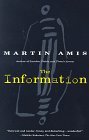 Before I forget, the best fictional treatment of this question that I have ever come across is The Information by Martin Amis. From the inside flap:
Fame, envy, lust, violence, intrigues literary and criminal--they're all here in The Information. How does one writer hurt another writer? This is the question novelist Richard Tull mills over, for his friend Gwyn Barry has become a darling of book buyers, award committees, and TV interviewers, even as Tull himself sinks deeper into the sub-basement of literary failure. The only way out of this predicament, Tull believes, is the plot the demise of Barry.This novel is guaranteed to make any writer squirm, because Amis peels the writerly ego like a banana, and it's quite a painful process. It's also black humor of the first rank. For example, Richard Tull, enraged and completely powerless in the face of his friend's (he believes, undeserved) success, comes up various ways to make him pay. For example, he searches all over London and comes up with the full Sunday edition of the Los Angeles Times, which weighs what, about five pounds. On top of this huge pile of a newspaper he puts a note that says something like 'thought you'd be interested to see the reference to your work' and then it leaves it on the other guy's doorstep. He then has a gleeful week, imagining Gwyn going through the whole Sunday LA Times, page by page, only to discover that there's no mention of his novel in it anywhere.
Who but a writer would think up something like that? It has the absolute ring of truth. And of course the newspaper caper doesn't work out for Barry as he hoped it would.
So yes, writers are capable of envy and of coveting a friend's success. Authors are artists, and egos get wrapped up in the work. You invest a year or two years or more of your life in a story, and it's hard, sometimes, to remain objective when things don't go as you'd hoped. But there are ways to handle it that don't involve digging holes in the vegetable garden or lugging around piles of newspaper. Like, you could write a novel.