dialogue with a twist (part the first)
I have to admit, first off, that the part of me that is a linguist cringes a little at the shortcuts I'm going to take here. By rights I should start with a discussion of what accent is (everybody has some kind of accent, okay? You do, too.) and the differences between social evaluations of speech and the idea of grammaticality. But that would mean a whole course on introductory linguistics, and you're not interested, and I don't have time.
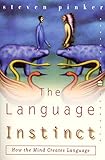 So this shortcut: linguists don't judge language as it is used, they observe, record, analyze. Steven Pinker's quick explanation:
A taxicab can flout the laws of the state of (insert where you live here) but it can't flout the laws of physics.
The same is true of language. There are grammatical laws which nobody violates because in the process of acquiring your native language, they became embedded in the way language works in your mind. If you are a native speaker of English, so you'd never have to correct your child in this way:
Lucy! Stop putting your articles after your nouns!
But you might say:
Lucy! Don't say ain't!
The first case is parallel to the laws of physics; the second case to man-made laws. People have opinions about language, which they work hard to enforce. What I'm going to be talking about here has nothing to do with that. I'm going to try to make clear what goes into capturing the natural variation in language that signals a person's social and geographic allegiances.
Ok. Now I feel better.
If, as I've suggested before, it's best to avoid playing with spelling to get across language variation, what's left? There are three primary kinds of variation that are helpful in representing dialect in dialogue.
The first is syntax, or the order in which words are strung together. Every language as physics-type rules about this, things you don't think about because they are so deeply engrained. In English, for example, how do you build a question? You need some kind of helping verb (as my fifth grade teacher called it) or a modal verb. Do you want something to eat? This strategy is particular to English syntax. Most other languages don't take this approach. In German: willst du was essen? would be translated word for word as want you something to eat? If you've got a waitress in your scene and she asks a woman at the counter want you to order something? You know this is not a native speaker of English.
The second area is lexical choice. You remember that Peter, as an African-American slave in Georgia circa 1862, used the word hoppergrass for what most people call a grasshopper. That kind of regionalism is very useful, and there are tons of them. At the grocery store I ask for my stuff to be put in a paper bag, but there are regional alternates. The same is true of pancake and gymshoes and dozens of other words.
The third area, the last one I'm going to talk about, is idiom, or turns of phrase. This is something that is often overused by writers of fiction, but if you do your research it is possible to come up with really useful idioms that move beyond faith and begora for a stereotypical Irishman.
So I'll start to look at syntax tomorrow. If you speak a language other than English, you should think about how that language is different in the way it strings together sentences. The same is true for regional varieties of American or British English.