Lost in Translation -- screenplay by Sofia Coppola *****
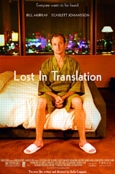 This is a quiet, thoughtful and ultimately rewarding love story, but it isn't a romance. Two people, very different in every way except one, meet in a Tokyo hotel. Charlotte is a Yale philosophy graduate, a young woman in a faltering marriage, ignored by her photographer husband and adrift in her own life and of course, in Japan. Bob Harris is an over-the-hill action movie star with a faltering twenty-five year marriage held together by interior decorating and ballet recitals. He's there because the Japanese are willing to pay him two million dollars to endorse Santori whiskey.
 The casting of Bill Murray as Bob Harris was inspired. He brings a gentle self-mockery and a sadness to the role which are palpable. In his hands the character is likeable because he knows that he's teetering on the edge of the ridiculous. His lonliness is all the more real because of that self-awareness.
So these two people are thrown together by their insomnia, and they provide for each other a way out. Out of the bar, out of the hotel, out of the bubble they have each been inhabiting as they float through a neon lit, frantic Tokyo. Out of preoccupation with disappointment to a place where each of them comes to understand better where they want to be.
There is no sexual encounter, and in fact the lack of that encounter is the turning point in the story; Bob Harris turns to a lounge singer (there's a very funny bit where the woman is doing her rendition of Scarborough Fair, ala Murray's recurring lounge lizard character on Saturday Night Light so many years ago). I had the idea that he did it in part to establish a certain boundary between himself and Charlotte. She reacts badly ("I guess you two have a lot in common. You both grew up in the fifties. She probably remembers you from the seventies, when you were still making movies.") In negotiating this crisis, their friendship is solidified.
The ending of this movie was especially fine. Neither of them know how to say goodbye, and so they settle for platitudes and half gestures. But in the end that's not enough, and the scene where Bob gets out of his limosine to hug a trembling Charlotte was one of the most understated and powerful I've ever seen.