happy new year
We're eating Indian food, playing Boggle and Taboo, and yawning a lot. The last time I actually went to a New Year's Eve party I think I was maybe 21. New book review up, by the way.
take me to the front page of the tttt weblog | back to the current weblog
« November 2003 | Main | January 2004 » canaafrica.org this resource
First, a bit of background about this series of novels. Stephen Hunter has two main characters: Earl Swagger, a veteran of WWII, a state trooper, tough, quiet, capable, tormented. Earl has a son, Bob Lee, who follows in his father's footsteps in most things. In Vietnam, Bob Lee (trained as a sniper) is known as Bob the Nailer. The first novel in the Bob Lee series starts twenty years later, when he is reluctantly drawn out of retirement.
Here's the challenge: Hunter jumps around in time, and back and forth between related storylines. My strong advice is to read the novels in the order you see here, although it will seem at first that Dirty White Boys doesn't belong where I've put it. It does. You won't see why until Black Light, and you won't appreciate Black Light unless you read Dirty White Boys first. Unfortunately there's almost no indication of this when you pick up on the books in a bookstore, and you might somehow miss what can only be called a near-classical tragedy if certain things don't happen in order. So I'm telling you. My suggestion would also be to read the Earl Swagger books before the Bob Lee books. But that's not strictly necessary.
Bob Lee Swagger
1. Point of Impact (1993)
2. Dirty White Boys (1994)
3. Black Light (1996)
4. Time to Hunt (1998)
Earl Swagger
1. Hot Springs (2000)
2. Pale Horse Coming (2001)
3. Havana (2003)
So you've got two interrelated series of books about a father and a son, jumping around in time. Why bother? Because when Hunter is on top of his game, these are fantastic stories. Bob Lee and Earl are both fascinating, frustrating, engaging, over the top and believable at the same time. Earl's difficult boyhood (which makes for some of the best reading in the series) shores up what might otherwise feel like Hunter's fraught characterization.
However. The novels are not all equal (and how could they be?) Dirty White Boys has one of the most provocative opening paragraphs I've ever run into. It's a great story, flawed by what I can only call a shallow characterization of a mentally disabled character and Hunter's (failed) attempt to portray his inner monologue.
Havana, which is the newest in the series, was a disappointment to me for a couple of reasons. First, it feels rushed and under-edited. There are passages that are simply hard to read. There are two-dimensional characterizations and passages of dialogue which border on the cartoonish. (It pains me to say that, but I must.) There is a lack of cohesiveness in the subsidiary plot lines. And still Earl is there, and I am as drawn to him as I have ever been to a character. Unfortunately, given Hunter's back and forth, I know what's ahead for Earl in the near future, and it gives this novel an edge I'd rather have done without.
I'm the first to admit that I have a weak spot the size of Wyoming when it comes to strong, quiet, capable, physical men. Bob Lee and Earl fit that bill exactly, and Hunter tells their stories with the kind of sharp authority, intelligence and wit they deserve. Except that this time, he fumbled a little. I'm hoping and trusting he can recover.
When I was studying for my doctoral exams deep in the bowels of Firestone library, I would sometimes sneak out into the stacks and wander. You understand I'm talking about looking at books that had nothing to do with my PhD program. No generative grammar, no comparative reconstruction, nothing about statistical analysis... I went into the fiction stacks, and picked up book after book without even reading the spine.
Doctoral exams are stressful, and it was the way I coped. I would read a chapter from the middle of a novel and put it back. After doing this three or four times, I snuck back to my study carrell (a tiny space with a rolling door much like a cell) to have another look at the morphology of Gothic. Yes, it is as awful as it sounds. And yes, once upon a time, I could read (and translate) the page you see here.
Now, seventeen years later, I remember very little about my doctoral exams. I found the written portion in my files last year and I was astounded. I have no idea how I answered those questions, because they mean nothing to me anymore. I did answer them, obviously, because I do have a dusty PhD diploma sitting around here someplace. I remember nothing of Early New High German variation patterns in subordinate clauses, but I do remember some of those chapters I read in the dark corners of the library in the deep of the night.
One in particular stays with me, and I have always wondered about it. It was science fiction, and the bits I remember are all very odd. A few people won a lottery and got to pick the planet they wanted to live on (in a universe apparently crowded with inhabited planets, each very distinct); there was a horse/unicorn-like species that was born with full possession of human language, who could tell the future (or maybe not; but it had some kind of power).
I've never been able to track down this novel, though I've tried. If anybody knows of it, please do tell me. Or maybe there's a website out there I haven't found yet where people describe novels they've lost and other kind readers with better memories supply the titles. There is one such website for chldren's books run by Loganberry Books in Ohio, called Stump the Bookseller. It's a lot of fun.
You know that I love my map. Over there in the right hand column. O so corny of me, but then I've made a life's goal out of being easily amused. If you don't know about the map, you should go have a look and maybe even (she said hopefully) put yourself on it.
Here's the strange thing. I have a lot of readers in Australia and NZ, and I mean, a lot. Once I even knocked John Grisham off their bestsellers number one spot. I'm not sure why, really, but I get such great letters from the readers downunder, and I am thrilled that they like my stories so much.
First the mystery: why are there so many NZ readers piled on top of each other on the north island, and none at all on the south? I'm referring to the map, again.
Second, the answer to a question posed over there on the map on whether I will ever come tour in NZ. The answer is, unless the publishing business picks up, probably not. This kind of thing is always arranged by the local publisher (Bantam Australia) and the industry is in a slump just about everywhere, it seems. It's hard for publishers to justify the cost of bringing an author so far at such great expense* for what must seem to them a relatively small return.
One more thing about my map obsession. I'm thinking of scraping the trivia quiz idea and instead doing this: On a date yet to be given, I'll erase all entries on the map. Then the first hundred people who put themselves back on the map (or do so for the first time, it doesn't really matter) will be entered into a drawing. The prize will be an advance reader's copy of the new book, when it becomes available (probably in March or April). I'll post it anywhere in the world, which might encourage readers from far off have a go. Any thoughts?
*not that I charge anything to come tour or read, because I don't. But transportation and hotels and all that good stuff adds up.The funniest parts here are how the non-earplings (who are quarantined from the media and the rest of the world) react to the culture they see around them, most particularly Christmas.* Chiana and Noranti try to get into the swing of things and Rygel gorges on junk food (cop porn being one of his favorites), while Aeryn and D'Argo are trying to educate the NASA types about pulse weapons and advanced technologies.
Through all of this John is suffering. This episode does the most to move his character along because it makes him face many truths about earth (and I fear we'd be just about as awful as portrayed here, if we were suddenly presented with this situation) and about his own life that he had been avoiding. Unfortunately the long-awaited confrontation between John and Aeryn is interrupted by an alien with a lot of teeth, and an agenda. But then this is Farscape, and resolutions are never easy.
**In the previous episode, Kansas, Aeryn (remember, she is a life-long Sebacean soldier and fighter pilot) becomes completely entranced by... yes, Sesame Street and the Muppets. Here she's frustrated with the little girl who fumbles the alphabet song, and announces in no uncertain terms: "This girl is slow! She's slow!"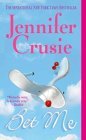 Release date: February 10, 2004.
Reading all the excellent early reviews of this book (even Kirkus, curmudgeons that they are, rave) a person might get the idea that Jenny Crusie is a bit of light hearted fun, somebody you can count on to make you laugh. Which is, in fact, true.
Her prose is deceptively accessible, her characters quirky and interesting (Min, the sensible actuary who has given up on love and is looking for a cat; Cal, the self-possessed, easy going partner in a firm that does software seminars and who doesn't believe in 'forever'), her plots just twisted enough to keep you wide awake and eager to turn the page without giving you a headache. You can read this book like that, and you'll enjoy it. But that would be a shame, because there's a lot more going on here. You know that old chestnut about the spoonful of sugar and the medicine? Crusie knows it too.
This is a wonderfully funny novel, a romp of a novel, and it's also a scalpel-sharp look at the way men and women approach each other these days, for better or for worse. Most readers will catch at least some of the veiled nods to the fairy tale: the rose bushes gone to thorn outside Min's house, the fact that Cal has to climb a steep hill to get there. But if you read carefully (which is hard, because you will be caught up in the repartee and the romance) you'll see that Crusie, a former academic, has taken a run at a dozen theories about love and attraction, and skewered them all. From the fairy tale to modern psychology to string-theory, everybody's take on what brings two people together and makes them stick is examined and found to be full of holes.
Except, in an odd way, the fairy tale itself. Cal and Min, non-believers, fight it, and can't quite escape fate or each other.
The biggest chance that Crusie takes here is the issue of Min's weight. She's plump, or chubby, or fat -- all of these adjectives get tossed around. She loves carbs. So does Cal, but he's got two things she doesn't: a great metabolism, and (this is the leap of faith) his head on straight when it comes to body image. He looks great, tall and well built; Min stays away from purple jumpsuits because they make her look like Barney's slut cousin. In one of the most interesting discussions between them, she finally comes out and asks him what he thinks about the f-word, and he gives it to her straight: she'll never be thin, no matter how hard her mother pushes dieting. Her genes won't allow it. And more than that, he doesn't mind.
This is what's so great about this novel. It takes on the thorniest issue of all -- women's bodies and sexuality -- and deals with it. As a woman made more in Min's image than a model's, I certainly identified. But did I believe Cal? In spite of the fact that I've been married to somebody a lot like him for a long time (tall, slim, good looking) and the fact that my genes are winning the battle to turn me into a small, round Italian matronly type, I *still* find it hard to believe Cal. That's the power of the modern myth.
Crusie takes it on and looks at it hard, and she makes you laugh while you look at it too. She gives us a great love story, a tremendous lot to think about, and a happy ending. What else could you possible want?
Like many writers of fiction (especially historical fiction) I have a deep love of names, and I'm always on the lookout for interesting ones. Old documents are the best source, I find. These names came from property descriptions in the early 1800s. I'll probably use some of them sooner or later.
Eppy BroomUnfortunately, the best names are often hard to use well. Case in point is the real personage Dr. Valentine Seaman, whose name caused such a ruckus among my beta readers than I had to change it. Very sad.
excerpt from Fire Along the Sky
forthcoming Bantam Books
All Rights Reserved
Copyright Sara Donati
She found Nathaniel by himself rumbling through the baskets in the workroom.
"Am I glad to see you, Boots." He thrust a bloody hand toward her. "I'm no good at bandages. Can you tie this up for me?"
"You're no good at stitches either," she said, catching his hand to look more closely at the gash that ran just below his knuckles from thumb to little finger. Blood trailed down and over the Kahnyen'kehàka tattoos that circled his wrist.
He put his head down next to hers to look at the wound more closely. "It's just a scratch. I already cleaned it out, so bind it up for me now and let me get back to work. We were in the middle of bringing down that dead oak on the other side of Squirrel Slough."
Elizabeth touched her forehead to his and looked him in the eye. "Nathaniel Bonner," she said. "I want you to listen to me very closely. You need stitches or this wound will not close properly, and you know it very well yourself. You must go to Hannah or Curiosity -- that much you may choose." Then she pressed a piece of linen to the wound and began to wind it firmly.
He pushed out a frustrated sigh that rippled through the muscles in his shoulders and down his arms, giving in without more argument.
"And there's company coming," she added, tying off the linen and avoiding his gaze. "You'll want to be here."
A little spark of interest replaced the resignation in his expression. "Good company, I hope."
"The very best," Elizabeth promised, and kissed him on the forehead. He pulled her closer with his free arm around her waist and kissed her properly before he let her go. He smelled of honest sweat and pennyroyal ointment and pine tar and blood, and his mouth tasted of mint. Then he swung her around to pin her where she stood, his arms stemmed to either side of her head. It was one of Elizabeth's greatest pleasures in life, to have her husband catch her up against a wall to kiss her. He knew this very well, and he used it now to his advantage.
"Are you going to tell me or will I have to tease it out of you?"
"Promise me first that you'll let Hannah see to your hand straight away."
He grinned at her, a flash of teeth that made him look half his age and up to no good, her wild backwoodsman of a husband, too clever by half.
He departed. So, in due course did Messer Pigello, followed by Claes and his satchel. Lacking a good astrologer, no one saw any harm in it.I have re-read this novel and the rest of the series many times, but some things never change, no matter how many times I pick them up.
First, I have to read Niccolo very, very slowly. Dunnett has absolutely no patience with lazy readers. The plot is very complex and she doesn't coddle: you read closely, or you will be lost. It's amazing, really, (and heartening) that these stories are so popular and widely read in a day and age where people seem to lean toward the easier options available to them.
Second, I don't mind being a little confused and having to read slowly or even to re-read, because there are riches here to be enjoyed. She writes like a Brueghel painting: there's so much going on, you have to dedicate all your attention but when you do, you'll be amazed and rewarded.
Which brings me to this short paragraph I've quoted from Niccolo Rising. This is, of course, historical fiction. the Niccolo series starts out in fifteenth century Bruges, which was the capital city of Flanders and today is widely considered to be the best preserved medieval city in Belgium. The main character, Claes, is introduced as an awkward, good natured, good looking eighteen year old with a penchant for getting himself and others into trouble, for romancing housemaids, and mostly for surviving the beatings everybody seems to heap on him. But that's just the early impression. Claes (who undergoes a transformation and will be known, eventually, as Niccolo) is about as complex and interesting a character I have ever run into in print.
The reason this paragraph delights me is that Dunnett manages to do so many things in a few words. She sets us up for more of Claes' macchinations, and she also points this out, an author intrusion of the gentlest sort: Lacking a good astrologer, no one saw any harm in it. She keeps the tone and the voice of the time, which is very difficult to do. Strictly speaking, this kind of authorial intrusion should be disruptive in a novel that otherwise limits point of view very strictly (which is one of the reasons the plot comes across as so complex -- Niccolo has got a handle on everything, but she never lets us in his head, because that would give far too much away, and Dunnett intends to make the reader wait). But it works anyway. Why? I don't know. I do know that she's got a truly distinctive authorial voice, something that is rare and to my mind, precious.In a comment about yesterday's post, Rachel made what she called an embarrassing confession, but the truth is, she's got lots of company.
A few years ago I did a reading at the PEN/Hemingway award ceremony at the Kennedy Center in Boston. They gave me twenty minutes so I read the shortest chapter from Homestead, which is in letter form.
Now you have to remember that this was a big deal, in literary terms. There were people like Annie Proulx and Derek Wolcott and Nadine Gordimer in the audience (that year happened to be the hundredth anniversary of Hemingway's birth, so they really went all out). I was especially nervous wondering if someone would ask some question I couldn't answer in an intelligent way, but I managed to get through it. Then came the reception, and a very, very wealthy and well-known business man (who shall remain nameless, except to say he's not in any part of the publishing business himself) came up to me while I was standing with a bunch of these big literary names trying to look nonchalant and at ease. 'So,' sez he. 'Are you telling me that this woman lost her husband and all her brothers in the war? How did she cope with that?'
While I was searcing for some reasonable answer to this rather surprising question, he carries on: 'And how did you get that letter, anyway? Did she just give it to you?'
To which I said something along the lines of 'uh, I wrote the letter. It's part of the novel. It's fiction.'
He went very still for a second, coughed into his fist, turned on heel, and walked away. The rest of us were quiet for about ten seconds, and then somebody changed the subject.
I think that's why I like letters, because readers get so caught up in them that they really do suspend disbelief to the point that it's hard to remember, sometimes, that it's all a story.
The acting, too, is pretty much without flaw, and there's not a misstep in the casting anywhere. Nothing like the Harry Potter movies where the inexperience of some of the actors really jumps out at you; these are all dyed in the wool professionals, easy in their roles, in command.
The obvious sore point must be the common problem to any movie like this, when a long book or series of books are adapted for the screen. Choosing among storylines, balancing conflicts, leaving details go or emphasizing others. But even in this most difficult of areas, they did very well indeed.A few things I could have done without: the jaunt into the mountain to recruit the dishonored soldiers (I won't say anything more here, except, it was an addition, and one that distracted, I thought, rather than adding to the story); and the long, long, long treatment of What Happened Next to the Hobbits. Really, we didn't need to see it all in such excruciating detail. I for one would have much much more interested in seeing The King settled down with (well, okay, I won't go into it. But it would have been good to see more of that, and less of tearful goodbyes).
I do like this trilogy, but it's not something I'm in a hurry to see again. Simply because it's hard to sit still for so long and retain a congenial frame of reference.
So here's Julia Roberts as a young academic who wants to go teach at Wellesley because she's got the idea (in 1953) that women there are smart and aware and not caught up in the fairy tale. She finds out things are more complicated than she expected, and we follow her through the year as she struggles with her conception of herself and her goals and the way she approaches the world.
I liked this move, though it was clumsy at points. It didn't take cheap shots or resort to easy answers, for the most part, and Julia Roberts gains more presence with every movie.
I personally like letters. No, I love the occasional letter between characters. But maybe I'm wrong about this. Anybody?
Your books are wonderful and I have reread all three several times. The conversations, relationships and natural surroundings are depicted so well, I feel as if I am in the book. I would also like to add that Kate Reading's narration/reading is fabulous. I hope she will be selected for your next books.I'm reproducing the email here because, well, Kate Reading is wonderful and everybody should know that. She's a theater and voice actor and I count myself very fortunate to have had her read the first three books in the series on tape. I believe she will be reading Fire Along the Sky, but I'll let you know here when I get final confirmation.
"I'm looking for work that sings off the page," she says simply. "But I don't like the terms literary and commercial fiction, because if you love a book you love it whether it's Marcel Proust or Terry McMillan."As far as my own writing is concerned, it doesn't happen so often anymore but for a long time people would stop me to say how much they loved Homestead, (which got a lot of critical acclaim, but sold modestly) and when was I going to write a real book again? The idea being that historical adventure/romance wasn't real, or serious enough, or good enough, or something else equally off-putting.
It's a common problem for novelists who move back and forth between genres, this open disapproval of what is seen as divided loyalties. Mario Puzo wrote The Fortunate Pilgrim (he called it his best and most literary work, and the one that made no money). Then he wrote The Godfather and the rest is history. I wonder if people stopped him to ask when he was going to write a real book again, and if they did, whether or not it bothered him.
I love that whole genre of movies where reality and fictional worlds get mixed up. Pleasantville, for example, and I would even count Groundhog Day in here. Kinda. Sorta.
Dickens is not in vogue these days. He is no longer the staple in humanities courses on this side of the Atlantic that he once was. And yet, asserts Peter Ackroyd, the distinguished British author and Dickens specialist, "Charles Dickens is the greatest novelist in the English language." Big words. Fighting words. Henry James addicts will moan -- maybe the odd Faulkner fanatic, too -- but Ackroyd is on solid ground. At the very least, Dickens is the greatest storyteller in the English language, if not its greatest stylist. His command of his time, early Victorian England, is peerless from top to bottom. His eye for its cruelties is acute. His themes of lost innocence and struggle -- "The Battle of Life," in his own words -- are timeless.The three hour BBC special on Dickens aired last night. And I was in the kitchen. Sniff.
Is it really the case that people don't read Dickens anymore? I love the guy. Look at this page from the Pickwick manuscript. I can't imagine the kind of mind that could write David Copperfield or Great Expectations or any of the others by hand, on paper. Yikes.
I just met a wonderful new man. He's fictional but you can't have everything.
Baseball may be a religion full of magic, cosmic truth, and the fundamental ontological riddles of our time, but it's also a job.and a particular favorite of mine:
I am the author. You are the audience. I outrank you!
Your luck's about to change, cher.I know Jenny Crusie would get this one, but will anybody else?
Hello. My name is Inigo Montoya. You killed my father. Prepare to die.
So the weekend was taken up with more seasonal insanity, including dinner with some neighbors (one of whom produced the X-Files, and tells wonderful stories about his many years in the business), and baking cookies (put two of my favorite recipes up on the forum) and otherwise running around. Except for Farscape, of course, and Angels in America (on HBO) I've had little sit-down time at all.
But I wrote well on Friday and today I've already got some serious words down, including finishing a possible foreword for the new novel that recaps the first three. While I was putting it together I wished for some heavy duty concordance software that would just chug away and spit out all the details nicely formatted. Tell me, oh software, on what page in ITW do we first get a good look at Curiosity's eyes?
As a part of the process I did a full family tree on my genealogy software (Reunion, which is excellent, by the way, but only for us sensible enough to be on a Mac). It produces nice graphics if you ask it politely, like this waterfall tree of the Bonner family genealogy. you can click on it to get a better look. WARNING! The chart contains spoilers... as Erin points out in a comment, below. Thanks, Erin.
Here are the titles of the books in the series as they were first envisioned, along with final title as it was published
| Into the Wilderness | |
| Dawn on a Distant Shore | |
| Lake in the Clouds | |
| Fire Along the Sky | |
| Queen of Swords | ? |
I'm not unhappy with this title, but I would have liked to keep Thunder at Twilight. I'm looking forward to seeing the cover art, and I'll put it up here when I do.
I just looked at the fifth volume of King's Gunslinger series in the bookstore, and in his intro he does a very brief background on each of the books. But he ends by saying: this is part of a bigger story, go read the other volumes first or walk away from this one. ha! I can just see my editor's face if I tried to pull that. King can afford to send readers away, she'd tell me.
I'm wondering about a timeline, where all the major happenings are listed... what do y'all think about that? Maybe I'll put part of one together and post it for comments over in the forum.
In the meantime, I'm trying to get ready for the trip to New Orleans next month, where I'll be doing research for the book I'm working on now.
They paused, both breathing hard, like statues in the moonlight. Kitty's clothing was disturbed; a white breast glinted between the edges of the bodice she clutched in one hand. Her loosened hair hung in frowzy ropes to her waist. Her complexion was gray, but her eyes glittered.
The 'statues in the moonlight' thing irks me, far too cliched. I'm uneasy with the glittering eyes (but maybe that has to do with my current study of eyes in print). But worst of all: the bodice she's clutching in one hand.
Okay, so the detail is historically correct. But it's a bodice. A bodice, and I'm always telling people that I don't write bodice rippers (that is, books full of sex scenes that are there for no other reason than to arouse, rather than to move characterization or story along). And here's Kitty, clutching her bodice. Yikes.
Mea culpa.
On another front: the hardest thing about writing a series is the constant challenge of bringing new readers along for the ride without confusing them too greatly, and at the same time, not boring everybody whose been on board since the beginning. I'm at that point in the fifth volume where readers will need some background on the village, but I hate recapping. Wendy (my editor) says, people will be confused, to which I want to say, well hell, let them go read the first four volumes, right?
Now she's wondering about a foreword for the fourth novel, in which the Author Recaps formally and thus saves the uninitiated reader from having to go read the first three. Stephen King did this in the new editions of his Gunslinger books -- there's an introduction that tells you what happens in one, two, and three if you happen to pick up four first.
Does this sound like a good idea?
I've found quite a few authors who have allowed eyes to twinkle, though none have resorted to exploding with merriment. Most of what I found was not good. I've decided not to give you citations, because in one case the author is dead, and I have no urge to beat anybody up.
"He eyed them with a twinkling eye. "
"He laughed, his green eyes twinkling impishly."
"...Paul said, grinning and narrowing his eyes, which were the twinkling blue of a boy's, though he was fifty-five years old"
And then I came across Tim O'Brien, who shook things up, as he always does. O'Brien is best known for his collection of short stories about his experiences in Vietnam, The Things They Carried. In the story in question, there's a dead American soldier in the road.
"The one eye did a funny twinkling trick, red to yellow. His head was wrenched sideways, as if loose at the neck, and the dead yong man seemed to be staring at some distant object beyond the bell-shaped flowers along the trail."
There's cliche, and then there's what you can do to turn cliche on its ear and make it work again. This is one of the many things O'Brien does so well. The right detail, the right twist, and you're on that road in Vietnam looking at this unfortunate young man and seeing him clearly, as painful as that must be.
PS I haven't listed The Night Before Christmas (which somebody mentioned yesterday in a comment) as a good or bad example. That one you'll have to deal with on your own terms.Browsing through novels while I waited in line at a local store, I happened on this line:
Her eyes exploded with merriment.
Now where do we even start with a sentence like that? The author wants to ... what? Show us this woman is in a playful mood, I suppose. The author (this is an author; the book is in print) chooses to focus on the expression in the character's eyes to establish her mood.
I put the book down immediately, but now I wonder, who in the heck had the point of view? Who was watching her eyes explode? The man she was talking to? Is this an omnicient narrator, seeing and knowing all things?
Eyes are hard. My advice? Stay away from them. Faces in themselves are hard -- every face is basically the same, and eternally different -- but eyes are the hardest. Mouths do contort, but eyes? None I have ever seen, thank dog. Eyebrows, wrinkles at the corners of the eyes, yes. But not the eyes themselves.
Now I have this urge to go look for prose about eyes that works. I wonder if I'll find any.
PS There are other things wrong with this sentence, but I don't think I can go on.Stephen King's Misery is (I think) one of his most interesting novels. It's the very creepy and effective story of an obsessed fan (Annie Wilks) who keeps the author of a beloved series locked up in her home until he produces the sequel she wants to read. Never mind that he doesn't want to write one. When he does write one, eventually, under duress, the axe-wielding psycho Annie is dissatisfied and makes him do it all over again.
And of course, it's hard not to see King in his main character; who else is he going to draw on but himself, the man with legions of adoring readers? (The movie, directed by Rob Reiner, is one of the few successful attempts to translate King to the screen -- Kathy Bates as Annie (above, left) is priceless.)
One thing that struck me in the story is the part where Paul Sheldon tries to explain why he couldn't produce the novel Annie wants: he doesn't have his bible with him. By which he means, all his notes about the series, the characters, the background, the timetable, all that good stuff. Paul sneers at Annie's lack of understanding of how these things work.
Well, I write a series (when the next novel is published in early summer, I'll have over a million words in print), and I don't have a bible. No well organized book of background material for me to refer to. If I can't remember what color somebody's eyes are, I have to go find that (luckily, I can search through the manuscripts on the computer quite quickly). If I don't remember how old so-and-so is, I've got to reconstruct that. And I often forget what I've named minor characters.
Sloppy me. I've tried many times to organize my copious notes. Because I do keep them. Somewhere around here are character studies for all the major and many of the minor characters. But I can never find them when I want them. I can never find the notes from my reading of histories, either. Very sloppy me.
I'll try to do better. But if I became super organized about these things, and never made a mistake, I might put the copy editor out of work, and I certainly would deny some readers the pleasure they get from pointing out my errors. Wouldn't that be unkind and inconsiderate of me?
That's my story, and I'm sticking to it.
This episode is called Coup by Clam, and it's one of those episodes that people love or hate. It is rather on the gooey side. The BBC synopsis is: A blackmailing doctor and malignant molluscs put Moya's crew in peril.
Lots of gastro detail, and John Crichton in drag.I like to think of this as a basic commandment: never underestimate your readers; treat them with respect, and they'll hang with you.
That means, in part, that you don't shove things in their faces. Let them watch the characters act and interact, and if you've done your job right, they will figure the important stuff out for themselves.
Maria Capstone was 87 but she was still sharp as a tack.
Boring, and a cliche, too. Try this:In the ten seconds the Maguires spent wondering if they should offer to help the dignified old lady with her groceries, Mrs. Capstone had already hatched a plan to separate the newlyweds from their savings.
She liked to gamble.
Maria Capstone could get a craps game going in a nunnery.
As you may well have figured out by now, this is the same old "show don't tell" thing you'll hear every writing teacher spout. Because like most cliches, it's true. So you give it a try with this boring, empty sentence.Mr. Mahoney was very rich.
Empty words, wasted words. Let the reader see Mahoney being his priviledged, clueless self. Try it here:
A few basic rules about writing dialogue:
(1) wherever possible, use "said" instead of an alternate. Usually you don't want to draw the reader's attention to the tag line:
"So what?" he said.In the first case, you don't really register the "said" while you're reading -- it's a signal rather than a real bit of language. This is usually the better choice, although there are times when you need to draw specific attention to the way things are being said. You might find sometimes that using a tag other than "said" --called a not-said tag here-- is effective.
"You ruined my hat!" she cried. "You've broken the feather!"(Note I've used exclamation points here. I'm trying to make something clear, so bear with me.)
This leads us to the second rule:(2) avoid adverbs. Those -ly words will cause you to trip and fall all over yourself.
"You ruined my hat!" she said angrily. "You've broken the feather!"You don't need these adverbs, especially not with an exclamation point. Trust your reader to get some things without hitting her over the head with them.
Now that we're wallowing in the mire, we might as well go all the way: you can compound your sins, if you really are feeling self destructive. Pile it on: "You ruined my hat!" she spat angrily. "You've broken the feather!"Now you may be saying: But I like adverbs. I love exclamation points. I sleep with a dictionary under my pillow, and I've got all these great synonyms for "to say" stored away, tucked into corners everywhere. To which my reply: Go to it, then. Like most things having to do with writing fiction, this is a matter of aesthetics, and all aesthetics are personal.
Now on to the final point.
(3) Play with the rhythm of the dialogue (and everything else, too).
"You ruined my hat. You've broken the feather!" she cried.Read these through and it's clear that each of them evokes a slightly different picture, first of the person speaking (is she calm, or distraught, or out of her mind crazy?) and second of the way she delivers her dialogue. If you're going for a comedic effect, timing is everything.
I'm not saying you should write twenty possible versions of every piece of dialogue, but it is good to experiment now and then. And dump the adverbs.
If there are any particular questions or issues you'd like to see addressed here, please speak up. Otherwise I'll just continue doodling as topics occur to me. Also, I'd be interested in knowing if regular visitors to the blog (who don't participate in the Yahoo discussion group) might be interested in a discussion forum.
Two new map entries yesterday -- thanks!
Odd photos can sometimes be the start of a whole novel, if you take the time to study them and think hard about the character. Looking at this guy, the first things that occur to me have to do with my father's family (which doesn't really make sense -- but in this process, the associations don't have to make sense and it's usually more productive if they don't).
So I look at this guy and I think: mope. Some young guy hanging out on the corner making rude noises at girls going by, bumming smokes. Goes home to his mother and expects to be waited on. His name (and this is a crucial step) might be Harry or Rollie or Steve. He looks like a Schneider to me, or maybe his name is more Dutch. Rollie Toon. Steve Staal.
Here's the thing: there's not much I can do, story-wise, with this mope called Rollie Toon. He's not very interesting yet. Because I haven't looked hard enough.
So I imagine him at work. For some reason, I see him delivering flowers. He makes jokes with the lady who owns the flower shop, but never gets much of a reaction from her. The money's lousy. He could go work for his father in the (butcher shop? hardware store? train station?) but he keeps the flower delivery job, and he's never late. None of his friends get it. Rollie, who was always the biggest screwup in highschool, never could get to class on time, rushing out of the house in the morning to deliver flowers. Bringing old ladies corsages. Rollie? Doesn't make sense.
Except it does. How about this: Rollie does get in trouble at work, because he's slow. Mrs. Woo (or maybe Mrs. Jackson or Mr. Price) is always asking why he takes twice as long as the other delivery guy. She's always threatening to fire him, lazy bum that he is.
But here's the thing. Rollie's deliveries are always late, because as soon as he leaves the shop, he pulls around the corner to an old deserted strip mall. He opens up the back of the truck and looks at the flower arrangements, and he just can't stand it. Mrs. Woo is a nice lady and all, but she should let somebody else do the flowers. Yellow carnations and pink roses, Christ, he says, I could do better blindfolded. So he does. He lines up all the arrangements, and goes to work. When he's done he stands back and studies them. Now he's satisfied, and he goes to make the deliveries.
Now, this just the start of a story waiting to be told. It's what comes to me when I think hard about the guy in the photo. It's a good writing exercise -- try it. Study pictures in magazines and newspapers, and see who jumps out at you.