
« Letters from an Age of Reason, Nora Hague | Main | I was afraid of this email » canaafrica.org this resource
racism
It's blog against racism day. Big topic, eh? I fear I can't do it justice, so first I'm going to point you to two other posts: the ever articulate Monica Jackson, and BumblebeeSweetPotato.
So two works (one film, one a short story) that have influenced the way I think about racism:
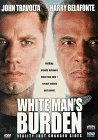 BBSP's post reminded me of the 1995 movie White Man's Burden. The script is weak, and there are multiple problems with the way the movie is put together, but you know what? It does what it set out to do. I showed it twice when I was on the faculty at University of Michigan, both times in what was then my signature course: Language and Discrimination. And both times I showed it, chaos ensued. Because white kids were shocked out of their heads by it. It really upset them, and in a good way.
White Man's Burden is on the surface a pretty simplistic idea. Just swap colors, so that white America now has the history and social standing of black America. Now tell a story about racism and discrimination. The movie fails on some levels because of the way it approaches this task, but what matters is that white kids came up to me afterwards and said, oh. I get it now.
Did they really get it? Maybe. Did they keep it? Maybe. But at any rate, it was a step in the right direction. Because those white kids in my class had never personally experienced any kind of racism, but through the movie they got the slightest taste of what it would be like. And they didn't like it. This was a 'click' moment (as described by BumblebeeSweetPotato), which are hard to come by when the subject is racism.
A short story that I often re-read because I simply love it (for its language and characters and imagery) is Toni Cade Bambara's "My Man Bovanne". It's about mothers and adult children, about getting older, about racism. It's about the importance of oral tradition (now, there's something we need to talk about -- another big topic, one nobody takes on). It's far more subtle and interesting than White Man's Burden...
Cause you gots to take care of the older folks. And let them know they still needed to run the mimeo machine and keep the spark plugs clean and fix the mailboxes for folks who might help us get the breakfast program goin, and the school for the little kids and the campaign and all. Cause old folks is the nation.A true masterpiece of storytelling. And this brings me to my final point.
In my last post I was very critical of Letters from an Age of Reason specifically because the author, who is white, attempted to portray the character of a young black slavewoman by means of manipulating the spelling of her dialogue, as though this could tell us something about her command of language, and in turn, her intelligence, her view of the world, her potential.
So here's my request: unless you grew up speaking the language of the black community, don't try to wing writing it down, okay? Because disaster will ensue. If you need to represent dialectal differences, which sometimes really is a necessary element in telling the story, then do your homework. And do more homework. Read Toni Cade Bambara, and Alice Walker, and the other writers who grew up speaking the language you are trying to emulate. To do anything else is a disservice to the community of people who speak the language. It is, in a word, disrespectful, and another word: lazy.
December 1, 2005 05:29 PM
Trackback Pings
TrackBack URL for this entry:
http://www.tiedtothetracks.com/cgi-bin/mt/mt-t.cgi/631
Comments
Hi, just came over to say thanks for the link and the compliments. I agree with your analysis of the White Man's Burden, but it was oh-so-much fun watching Harry Belafonte in that role!
Posted by: landismom at December 2, 2005 07:13 AM